The US can currently produce enough solar and battery energy storage system (BESS) modules to meet domestic demand, according to clean energy trade body American Clean Power Association (ACP).
ACP published its second annual ‘State of Clean Energy Manufacturing’ report on 21 May, which states that “Rapid growth in solar and storage production, sustained wind manufacturing, and rising investment in critical minerals are reshaping the nation’s energy supply chain.”
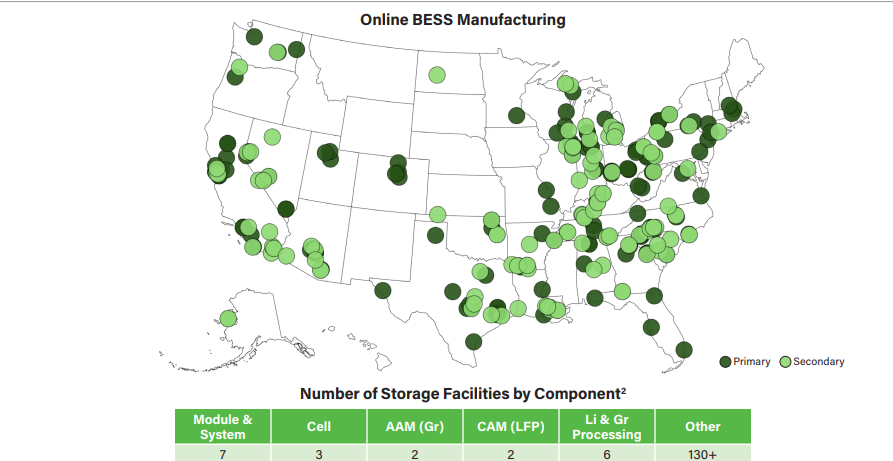
According to the report, 70 new manufacturing facilities opened in 2025, bringing the total to over 825 facilities across all 50 states. Large concentrations are located in Texas, Tennessee, Georgia, Ohio, and North Carolina.
Further highlighting the economic advantages of domestic manufacturing, the report states that there are 215,900 manufacturing jobs, with total earnings of US$15.8 billion, contributing US$30.8 billion to annual US GDP and supporting US$61.5 billion in annual domestic spending.
Try Premium for just $1
- Full premium access for the first month at only $1
- Converts to an annual rate after 30 days unless cancelled
- Cancel anytime during the trial period
Premium Benefits
- Expert industry analysis and interviews
- Digital access to PV Tech Power journal
- Exclusive event discounts
Or get the full Premium subscription right away
Or continue reading this article for free
Solar manufacturing facilities account for half of this economic impact, with land-based wind and BESS making up approximately 25% each.
Over 55 of the 70 new plants manufacture primary supply chain components. This outpaced 2024’s 60 new facilities and 2023’s 40, reflecting consistent annual growth in clean energy manufacturing. The expansion continues in 2026 with nearly 10 plants, half producing primary components, already online in Q1.
Meeting demand
ACP’s report shows that US battery module and cell production has surpassed the average 2026-2030 demand, with the trend beginning in 2025.
ACP shows the 2026-2030 modules and cells demand at approximately 75GWh/year. In 2022, domestic production capability for modules was less than 10GWh/year, increasing to the approximately 75GWh/year figure by 2025. It further projects a capacity of nearly 180GWh/year in 2028.
For cells, there is no domestic production capability recorded for 2022, approximately 20GWh/year for 2025, and a projection of approximately 140GWh/year for 2028.
Speaking with Energy-Storage.news, Ravi Manghani, senior director of strategic sourcing at procurement platform Anza Renewables, stated, “Many of the cell and module manufacturing facilities currently in the pipeline are likely to reach completion, which should secure sufficient domestic supply over the next decade.”
He continued, “Midstream and upstream projects, however, face a more uncertain path. These investments require consistent, robust downstream demand signals, and the timelines to commission and reach cash-flow positivity are substantially longer. Whether the US market can sustain the patience and policy discipline these projects require—even with strong growth projections in hand—remains an open question.”
For 2026, ESC noted a US ESS annual energy storage project demand capacity of 60GWh. The report highlighted a capacity of just 69MWh, with 146GWh total pending additional capacity by the end of the year.
In May 2025, ACP announced a commitment on behalf of the US energy storage industry to invest US$100 billion in building and buying American-made grid batteries, including capital for building new manufacturing facilities and procuring US-made BESS.
ACP further stated that an investment of that level would create an estimated 350,000 jobs across the energy storage industry and advance domestic manufacturing. It also noted that this investment would create “a clear pathway to supplying 100% of US energy storage projects with American-made batteries by 2030.”
By 2030, ACP projects that there will be over 950 manufacturing facilities supporting approximately 374,000 jobs.
Jason Grumet, ACP’s CEO stated, “To maintain this manufacturing boom, it is critical that we have targeted, transparent international trade policy in America. Congress needs to provide reasonable tariff compliance timelines and regulatory certainty on trade to support the manufacturers that are powering American communities.”