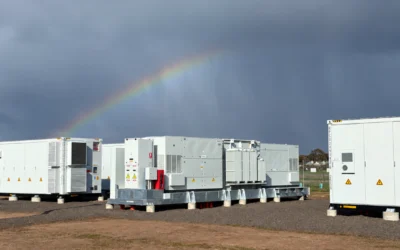
A 1,200 hectare site in South Australia has been secured by a developer hoping to use it to build a 300MW solar power site with 3.6GWh of energy storage, based on a novel technology solution.
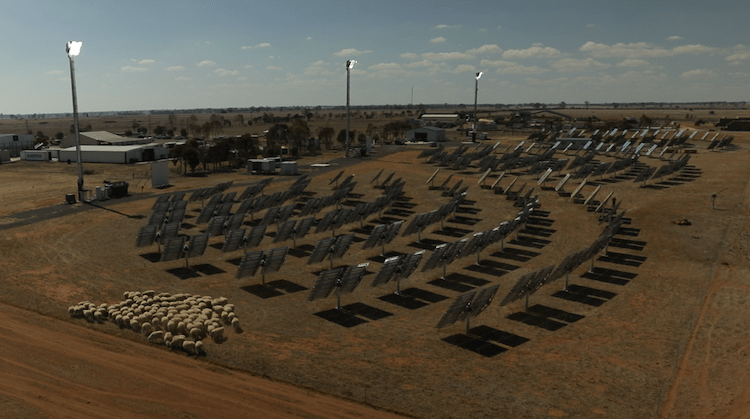
Europe-headquartered renewables company Photon Energy is working to roll out the technology created by Australian company RayGen. It combines a kind of concentrating solar power (CSP) + solar photovoltaics (PV) hybrid that RayGen calls ‘PV Ultra’, paired to a long-duration energy storage tech dubbed ‘thermal hydro’.
PV Ultra generates both electricity and heat using both PV modules and angled mirror towers (heliostats) to generate CSP. The thermal hydro portion is thus called, because rather than using water reservoirs at different heights like a pumped hydro plant, it uses reservoirs at different temperatures, one hot, one cold, to store energy: the PV and grid electricity cools one, the CSP heats the other.
The difference in temperature is then used to generate electricity using an Organic Rankine Cycle engine, using thermodynamic cycles to convert steam into mechanical energy with a roundtrip efficiency in the region of 70%.
Try Premium for just $1
- Full premium access for the first month at only $1
- Converts to an annual rate after 30 days unless cancelled
- Cancel anytime during the trial period
Premium Benefits
- Expert industry analysis and interviews
- Digital access to PV Tech Power journal
- Exclusive event discounts
Or get the full Premium subscription right away
Or continue reading this article for free
Photon Energy, which has developed and operates and maintains PV plants in Europe and Australia, announced its strategic partnership with RayGen in April 2020, teasing the potential grand-scale their projects could achieve and the enabling of round the clock renewable energy that could result.
The technology has already been used in a 1MWac demonstration plant in the Australian state of Victoria, in operation for six years so far. Photon Energy is developing multiple possible sites for the technology it described as “unique,” and earlier this year RayGen closed a Series C funding round for another project in Victoria, this time of 4MW solar with 3MW / 50MWh energy storage.
That AU$55 million funding round was closed after the Australian Renewable Energy Agency (ARENA) contributed AU$15 million, alongside private investment, and followed ARENA helping to fund a feasibility study. Investors in the round included Australian energy major retailer and generator AGL, Schlumberger New Energy, Chevron Technology Ventures and Equinor Ventures.
That project, in the Victorian town of Carwarp, is already under construction and is due to go online in the middle of next year.
On the South Australia project, Photon Energy said that preliminary designs see it being built with 300MW of solar to a 150MW grid connection. Although in previous press releases Photon and RayGen had said the technology is aimed at providing up to about 17 hours of storage, this week Photon said the South Australia project’s 3.6GWh storage capacity would equate to more like 24 hours of storage duration.
The process of obtaining permitting and grid connection has already begun and Photon Energy wants to get its giga-plant to the ready-to-build stage by the end of 2023.