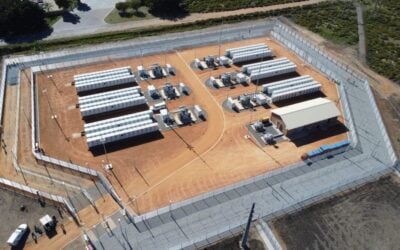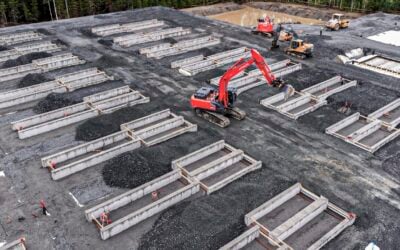
Utility EWEC (Emirates Water and Electricity Company) has invited developers to submit expressions of interest (EOI) for a 400MW battery energy storage system (BESS) project in the UAE.
The EOI process for the greenfield BESS was announced this week (7 March) by the utility, which operates primarily in Abu Dhabi, the capital Emirate of the United Arab Emirates (UAE). The deadline for submissions is 22 March 2024, noon local time.
EWEC said the BESS would provide flexibility to the system and ancillary services such as frequency response and voltage regulation. The BESS is crucial to the utility’s plan to increase solar PV capacity to 7.5GW by 2030, part of an aim to reduce carbon emissions by 42% by 2030 from 2019 levels, it added.
Othman Al Ali, CEO of EWEC, said: “Compared to traditional grid storage solutions, BESS offers unmatched advantages, including increased flexibility, scalability, cost-effectiveness, and improved efficiency. EWEC continues to see BESS as a critical investment to manage system operability when large amounts of renewables are synchronised to the power system.”
Try Premium for just $1
- Full premium access for the first month at only $1
- Converts to an annual rate after 30 days unless cancelled
- Cancel anytime during the trial period
Premium Benefits
- Expert industry analysis and interviews
- Digital access to PV Tech Power journal
- Exclusive event discounts
Or get the full Premium subscription right away
Or continue reading this article for free
Al Ali didn’t clarify what he meant by traditional solutions, but most energy storage capacity is pumped hydro energy storage (PHES), but this is typically slower reacting than BESS and has a lower round-trip efficiency (RTE). Dubai Electricity and Water Authority (DEWA), a utility in the neighbouring Emirate of Dubai, is building a 250MW PHES plant for a reported 2024 operation.
The project will involve the development, financing, construction, operation, maintenance and ownership of the BESS system and associated infrastructure, with EWEC then entering into a long-term power purchase agreement (PPA) for the project’s offtake.
It follows EWEC’s recommendation made this time last year that the UAE should deploy 300MW/300MWh of BESS capacity by 2026. It didn’t reveal when it hoped the 400MW (MWh capacity undisclosed) would come online, so it’s not clear whether this is part of a longer-term target or whether its forecasted needs have increased.
Interested parties should submit their EOI to [email protected], after which EWEC will issue a request for qualifications to parties wishing to proceed to the next stage.