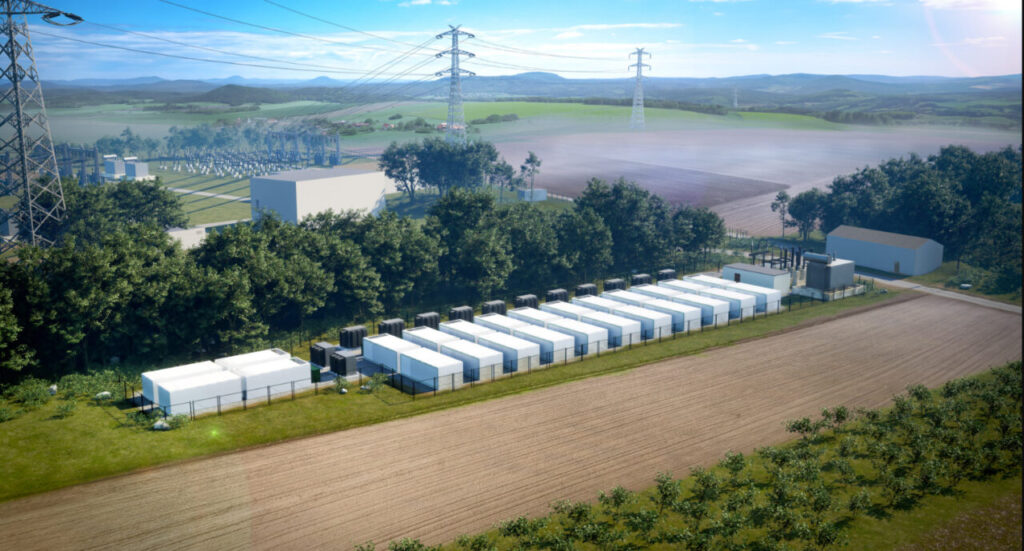
Oil and gas major TotalEnergies will build a 100MW/200MWh BESS project from Kyon Energy’s pipeline, its first project after buying the developer.
TotalEnergies has taken a financial investment decision (FID) on the 2-hour project in Dahlem, North Rhine-Westphalia, seven months after buying Kyon Energy.
The oil and gas firm will invest €75 million (US$81.4 million) in the project which is expected to enter commercial operations in the second half of 2026.
Another TotalEnergies subsidiary, system integrator Saft, will provide its ‘iShift’ lithium iron phosphate (LFP) battery containers for the project, as Energy-Storage.news speculated it might when the transaction occurred in February. Saft has in the past deployed projects for TotalEnergies in the US, France and Belgium.
Try Premium for just $1
- Full premium access for the first month at only $1
- Converts to an annual rate after 30 days unless cancelled
- Cancel anytime during the trial period
Premium Benefits
- Expert industry analysis and interviews
- Digital access to PV Tech Power journal
- Exclusive event discounts
Or get the full Premium subscription right away
Or continue reading this article for free
Another subsidiary, startup Quadra Energy, will provide optimisation services on the BESS project, operating its charging and discharging activity in the electricity market to maximise revenues.
France-headquartered TotalEnergies has been busy buying up companies across the renewable energy value chain in Germany, having also acquired Nash Renewables last year, a firm involved in optimising the design and operating parameters of renewable projects.
The 100MW/200MWh project in Dahlem is the joint-largest in Germany on which FID has been taken, with others including a system being built by developer MW Storage and system integrator Fluence.
The sector has picked up in Germany in the last few years as high ancillary service prices and wholesale arbitrage have substantially improved the business case, leading even companies from tangential segments to enter the space.
That includes commercial & industrial (C&I) focused provider Tesvolt launching its largest ever project recently and vehicle-to-grid (V2G) software specialist The Mobility House announcing it would go into the grid-scale segment.
The ‘Innovation Tender’ subsidy scheme for solar-plus-storage projects, which pays out an operating grant per kWh discharged, is also helping drive deployments with 512MW of co-located projects awarded contracts in the last round.