A small municipal utility will be the recipient of what is thought to be one of the first US projects to try out a combination of revenue streams from a storage battery linked to a solar farm.
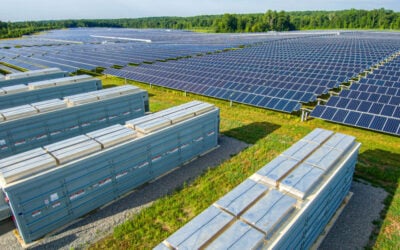
Village of Minster, the local utility for Minster, Ohio, is the somewhat unlikely sounding location for the biggest combined solar-plus-storage project to date, according to grid system integrator and storage specialist S&C Electric. S&C has been asked by Chicago-based developer Half Moon Ventures to build a 7MW storage facility linked to a 4.2MW solar power plant.
The 3MWh of lithium-ion batteries will allow Village of Minster to add backup power to its network and help it manage energy demand during peak times more effectively, shaving the peak demand experienced by the local area by using solar power.
At the same time, the device will be used to bid into the PJM frequency regulation market, which has been seen by the worldwide storage industry as an effective example of how energy storage with batteries can be financially rewarded, through competitive tenders, for the fast acting grid-balancing services it can provide. PJM’s service area extends through numerous US states and the company serves more than 60 million people. The local utility will also use the battery system to defer the cost of upgrades to its transmission and distribution networks.
Try Premium for just $1
- Full premium access for the first month at only $1
- Converts to an annual rate after 30 days unless cancelled
- Cancel anytime during the trial period
Premium Benefits
- Expert industry analysis and interviews
- Digital access to PV Tech Power journal
- Exclusive event discounts
Or get the full Premium subscription right away
Or continue reading this article for free
Stacked up
Using an energy storage device to confer multiple benefits to the network is known as benefits stacking or revenue stacking.
PV Tech Storage reported in January this year that Oncor Electric Delivery Company in Texas, a regional transmission and distribution operator, commissioned consultancy The Brattle Group to put together a study, “The value of distributed electricity storage in Texas: Proposed policy for enabling grid-integrated storage investments”. The document evaluated both the potential uses for storage in Texas and how it could be compensated for providing services, or paid for in a manner determined by market forces.
At the time, engineer Melissa C Lott told PV Tech that reconfiguring electricity markets to accommodate benefits stacking could help energy storage overcome its “crippling” economic challenges.
In reaction to another recent story, the news that a French grid pilot of energy storage had “failed” due to a lack of available revenues to recompense the project’s cost, Lott explained further, saying that “…in order to support the widespread deployment of energy storage technologies, we need to create an environment where storage can be compensated for the multiple services that it can provide.
“Battery storage can be used for much more than just storing solar energy during the day and discharging it at night. By allowing these systems to supply a range of energy and power services – and compensating them for it – the cost-benefits balance will be greatly improved.”
S&C Electric’s PureWave storage management solution (SMS) will be utilised on the project.
The CEO of developer Half Moon Ventures, Michael Hastings, said the new storage system would improve the network’s reliability and capacity.
“With the new system, we are able to improve reliability and capacity while leveraging renewable energy sources without costly investments into grid expansion. S&C helped us prove that multiple revenue streams in energy storage deployments can help solve our customer’s financial and operational needs,” Hastings said.
Despite its relatively small size, the Village of Minster’s attempt to “stack up” revenues – and benefits – of services provided by storage makes its solar-plus-storage project something of a first among utilities in the US. Image: Southern California Edison.