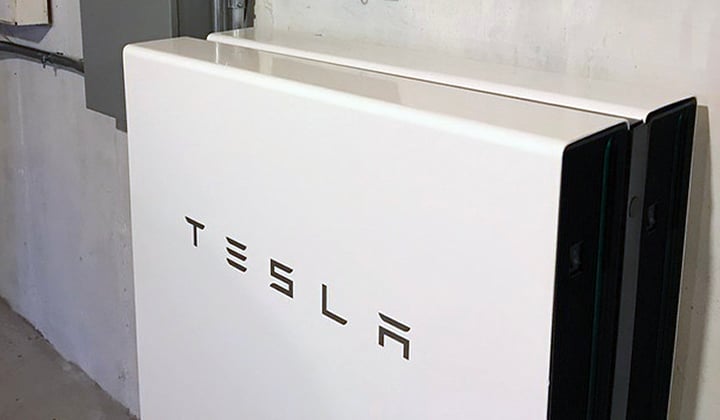
Tesla has issued a product recall on its Powerwall 2 residential battery storage solution across Australia due to a “battery cell defect” from a third-party supplier.
The Australian Competition and Consumer Commission (ACCC) confirmed that Tesla has already remotely discharged most affected units. Reports indicate that the affected battery cells were smoking or emitting flames, resulting in minor property damage.
The issue is limited to a specific group of Powerwall 2 customers and does not affect Powerwall 3. No injuries have been reported.
Despite most of the units having been remotely discharged, consumers are being asked to confirm that their Powerwall 2 system is online and check the Tesla App for a notification about whether their unit is affected.
Try Premium for just $1
- Full premium access for the first month at only $1
- Converts to an annual rate after 30 days unless cancelled
- Cancel anytime during the trial period
Premium Benefits
- Expert industry analysis and interviews
- Digital access to PV Tech Power journal
- Exclusive event discounts
Or get the full Premium subscription right away
Or continue reading this article for free
Affected units will be replaced at no cost, and Tesla will consider compensation for lost energy savings from discharged Powerwall 2 systems on a “case-by-case basis”.
The ACCC confirmed that the affected Powerwall 2 units had been sold from 1 November 2020 to 30 June 2022. Tesla said it is “prioritising affected customers” and will coordinate directly with customers and installers to schedule removal and installation.
Battery cell suppliers to Tesla
Tesla’s Powerwall product line was first introduced in 2015, and currently features three distinct models: Powerwall 2, Powerwall+ and the latest Powerwall 3. Last year, Tesla’s CEO, Elon Musk, noted that its energy storage business was “growing like wildfire” thanks partly to the Powerwall lineup.
The recall documentation does not explicitly name the supplier of the problematic cells, referring only to “a batch of lithium-ion battery cells sourced from a third-party supplier.”
This suggests that while Tesla worked with multiple cell suppliers during this period, a specific batch from one supplier has been identified as problematic.
Tesla’s Powerwall 2 units manufactured between November 2020 and June 2022 contained lithium-ion battery cells from multiple suppliers, with CATL recognised as a major supplier during this period.
CATL has been a battery supplier for Tesla since 2020, primarily providing cells for Tesla’s electric vehicles, including Model 3 and Model Y. The relationship between Tesla and CATL expanded during this timeframe, coinciding with the production period of the affected Powerwall 2 units.
While CATL appears to be a major supplier, Panasonic also maintained a relationship with Tesla during this period. The Powerwall 2 uses lithium Nickel-Manganese-Cobalt (NMC) battery cells developed in collaboration with Panasonic.
LG Energy Solution was also Tesla’s battery supplier during this period. The South Korean company has been providing cells for various Tesla products and first started supplying battery cells around 2019-2020. LG Energy Solution experienced a spate of recalls in Australia for units of its own-brand residential battery systems from around 2021 to 2024, pertaining to systems sold between 2017-2018.
However, without a public statement, it is not readily apparent which among the multiple suppliers to Tesla the cells in question could have come from.
Additional reporting by Andy Colthorpe.