Britain’s transmission system operator (TSO) National Grid has said it wants a new procurement process for ‘black start’ capabilities up and running by the mid-2020s, and wants it to involve renewables and battery energy storage.
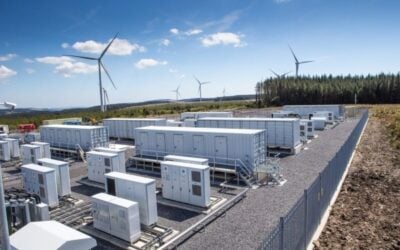
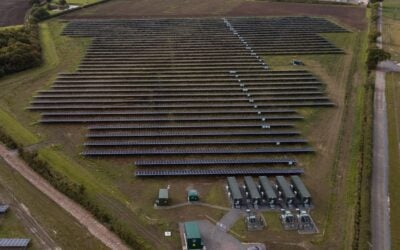
Vattenfall has brought online its 22MW battery project co-located with the Pen y Cymoedd onshore wind farm in Wales, becoming the latest company to start delivering sub-second frequency response to National Grid in the UK.
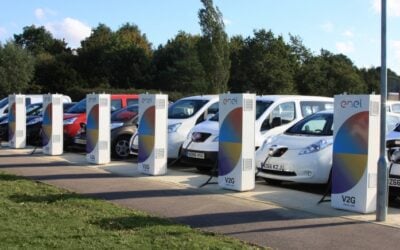
A new consortium, V2GB (Vehicle to Grid Britain), will develop driver-centred business models to support the rapid roll out of vehicle-to-grid (V2G) technologies, enabling millions of electric car batteries to become a vital part of the UK energy system. National Grid, carmaker Nissan’s European Technical Centre, Moixa and energy consultancy Element Energy have come together to help work out how to reward drivers who use electric vehicle (EV) batteries to support the power network. Chris Wright, the Chief Technology Officer of UK home battery company Moixa, talks us through the mission behind V2GB and the potential impact of the study.
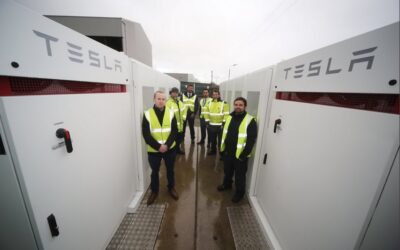
A glass packaging facility in Scotland is getting a 2MW Tesla battery on a ‘no-money-down’ deal after Irish state-owned utility ESB agreed to take on the risk for raising commercial revenues from the asset.
Guidance issued by Britain’s transmission grid operator on how to co-locate energy storage with generation facilities has been welcomed by an analyst at industry group the Renewable Energy Association.
Regulators, policymakers, experts, developers, utilities, aggregators and of course, energy storage industry participants will fill out the Victoria Park Plaza in London next week to discuss everything impacting the deployment of energy storage.
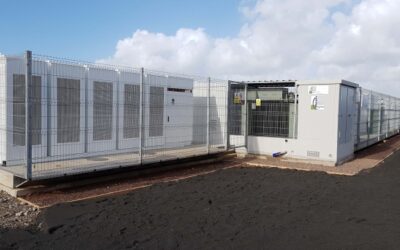
UK demand response and energy resource aggregation company Kiwi Power has unveiled its largest behind the meter battery to date with the completion of the 4MW / 4.8MWh Tesla battery at Cenin Renewables in south Wales.
The vast majority of battery projects set to compete in Britain’s upcoming Capacity Market (CM) auctions will face significantly decreased de-rating factors after it emerged that most projects are still set to use either 30 minute or one hour duration batteries.
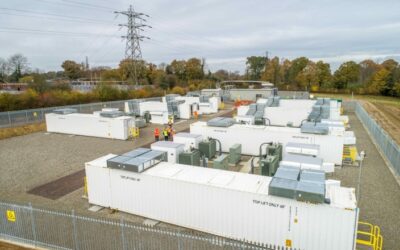
VLC Energy has become the latest firm to finish its Enhanced Frequency Response (EFR) battery projects following the completion of two projects totalling 50MW.
Distribution network operators (DNOs) in Britain should be able to own and operate a minimal amount of battery storage capacity in certain cases, and be able to compete in the ancillary services market to fund the projects, according to the head of regulation and strategy at Northern Powergrid (NPg), one of the country’s seven DNOs.