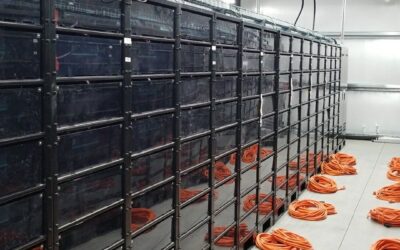
US-based energy storage technology provider Powin Energy has claimed it has a pipeline close to 500MWh of projects under contract, including recent awards totalling 70MWh for customers in North and Central America and in Italy.
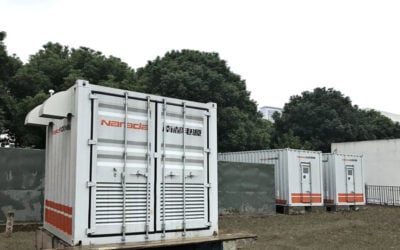
Energy storage projects were under construction across four provinces of China, amounting to 340.5MW of new capacity during the first half of this year in the country, according to the China Energy Storage Alliance (CNESA).
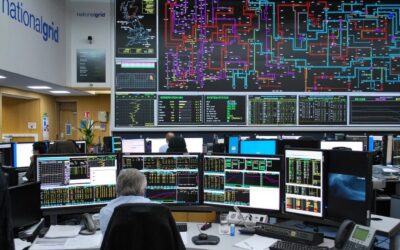
Britain’s transmission system operator National Grid has confirmed it will roll out the use of its Ancillary Services Dispatch Platform (ASDP) to a number of services over the next year following the successful dispatch of fast reserve using battery storage last month.
UK transmission network operator (TNO) National Grid has used a new web-based platform to dispatch ancillary services using battery storage in the first example of the new system being implemented across its reserve products.
After reporting last week on the findings from EMMES, the European Market Monitor on Energy Storage from Delta-ee and trade association EASE, which demonstrated a big rise in installations by MWh in 2017 across the continent, we delved further behind another record-breaking year with the report’s lead author, Valts Grintals of Delta-ee.
The “devil is in the detail” when it comes to making regulatory changes in the US to open up wholesale markets for energy storage to participate in, a regional chief of regulator FERC has said.
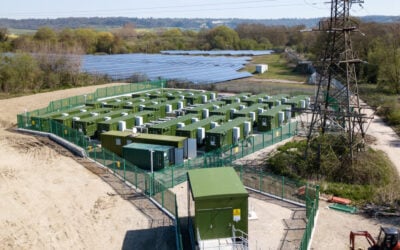
VLC Energy has become the latest firm to finish its Enhanced Frequency Response (EFR) battery projects following the completion of two projects totalling 50MW.
German-American system integrator and technology provider Younicos has completed a two-phase operation to upgrade a lead acid energy storage system for lithium batteries, at the 36MW Notrees facility in Texas.
The UK government’s Department of Business, Energy and Industrial Strategy (BEIS) has refused to provide any clarity over when a decision on the potential de-rating of energy storage assets within the capacity market (CM) will be made despite a senior policy advisor stating the judgement is “imminent”.