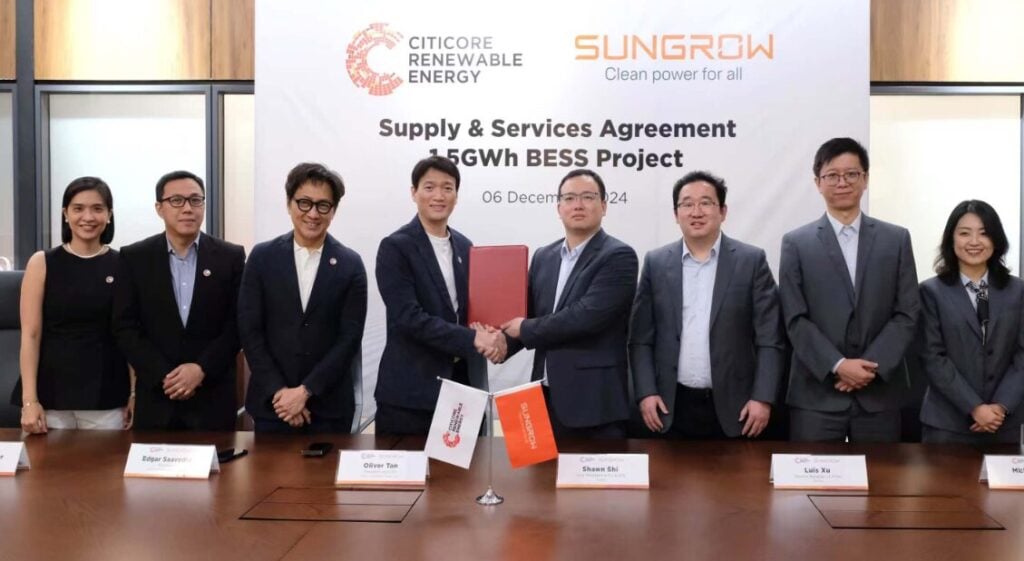
Chinese solar PV inverter and energy storage provider Sungrow has inked an agreement with Citicore Renewable Energy Corporation (CREC) to supply 1.5GWh of battery energy storage systems (BESS) in the Philippines.
The system will be co-located with 302MW of solar PV power plants nationwide, however the specific projects set to benefit were not disclosed. CREC currently has a project pipeline of 5GW, with 285MW of solar PV installed in the Philippines.
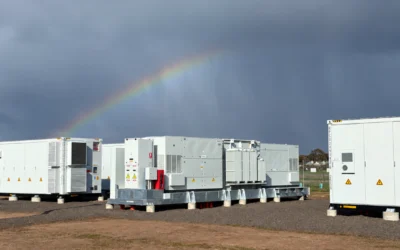
Under the agreement, Sungrow will supply its PowerTitan2.0 energy storage system. The liquid-cooled PowerTitan 2.0 integrates a 2.5MW Power Conversion System (PCS) and 5MWh battery into a single 20-ft container.
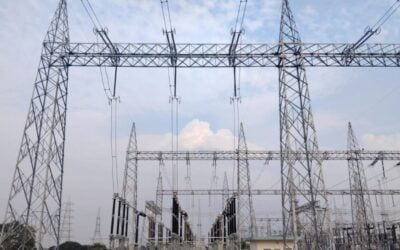
Sungrow noted that one solar-plus-storage site in CREC’s portfolio features 302MWp of solar PV which will be connected to the Philippine electricity network, owned by the National Grid Corporation of the Philippines (NGCP). Surplus energy that cannot be transmitted to the grid will be stored within the batteries and released at night, relieving grid congestion and promoting stability.
Try Premium for just $1
- Full premium access for the first month at only $1
- Converts to an annual rate after 30 days unless cancelled
- Cancel anytime during the trial period
Premium Benefits
- Expert industry analysis and interviews
- Digital access to PV Tech Power journal
- Exclusive event discounts
Or get the full Premium subscription right away
Or continue reading this article for free
Sungrow also announced its intention to streamline the delivery of the BESS to CREC. The company said that usual delivery times often take six months from signing to delivery, but in this case, the delivery of the BESS will take approximately two months.
Shawn Shi, Sungrow vice-president of PV and energy storage systems, believes the partnership will help support the energy transition in the Philippines.
“We are happy to support CREC in its goals to advance energy storage systems in the Philippines, and through our technology, we will be able to help CREC and the Philippines with its power needs,” Shi said.
Research firm S&P Global ranked Sungrow second in its global energy storage system integrator rankings for 2023 in a report published earlier this year. Tesla overtook the Chinese player from the top spot it held a year previously. However, S&P noted that Chinese system integrators overall had increased their market share in the Asia-Pacific region year-on-year.
Huawei secures 4.5GWh BESS supply agreement
This announcement comes just days after China-headquartered electronics firm Huawei secured a supply agreement to provide a 4.5GWh BESS for the Meralco Terra Solar PV project in the Philippines, which is claimed to be the largest solar-plus-storage project in the world.
The agreement was confirmed in a statement released by project developer Terra Solar Philippines, a company set up specifically for it as a subsidiary of independent power producer SP New Energy Corporation, which is, in turn, a subsidiary of developer Solar Philippines. The BESS supply agreement marks Huawei’s largest to date.
The project will include 3.5GWp of solar PV generation capacity and a 4.5GWh BESS to be built across 3,500 hectares of land in the two provinces of Bulacan and Nueva Ecija. It will begin commercial operations in two phases, with the first scheduled for February 2026 and the second for February 2027.
The opportunity for energy storage in Southeast Asia
One of the key takeaways from the Energy Storage Summit Asia 2024 (ESS Asia), which took place earlier this year in Singapore and was hosted by our publisher, Solar Media, found that there are significant opportunities in Southeast Asia for energy storage developments, although there are major barriers and bottlenecks too.
“Yes, there are huge opportunities, but there are many challenges. There are many regulators in this room. When I reflect on the challenges, I do want the regulators to think about some of these challenges,” Vikram Kumar, regional head for Infrastructure and Natural Resources, Asia-Pacific at the World Bank’s International Finance Corporation (IFC) said.
“They might be in creating revenue streams for energy storage systems and their services, come out with possible business models in different countries. There are, and we are all aware of policy gaps.” Kumar said, which might be filled with incentives and tariffs for energy storage, and “balanced policies that balance inter-sector interests”.
The technical capabilities and institutional improvements needed for widespread deployment, especially in planning departments for load dispatch, still have significant development to undergo. Kumar noted that the gaps between the supply and demand for energy storage are leading to long lead times for deployment.