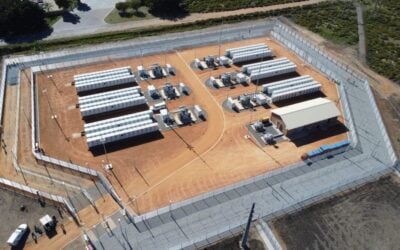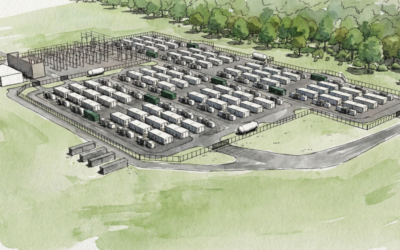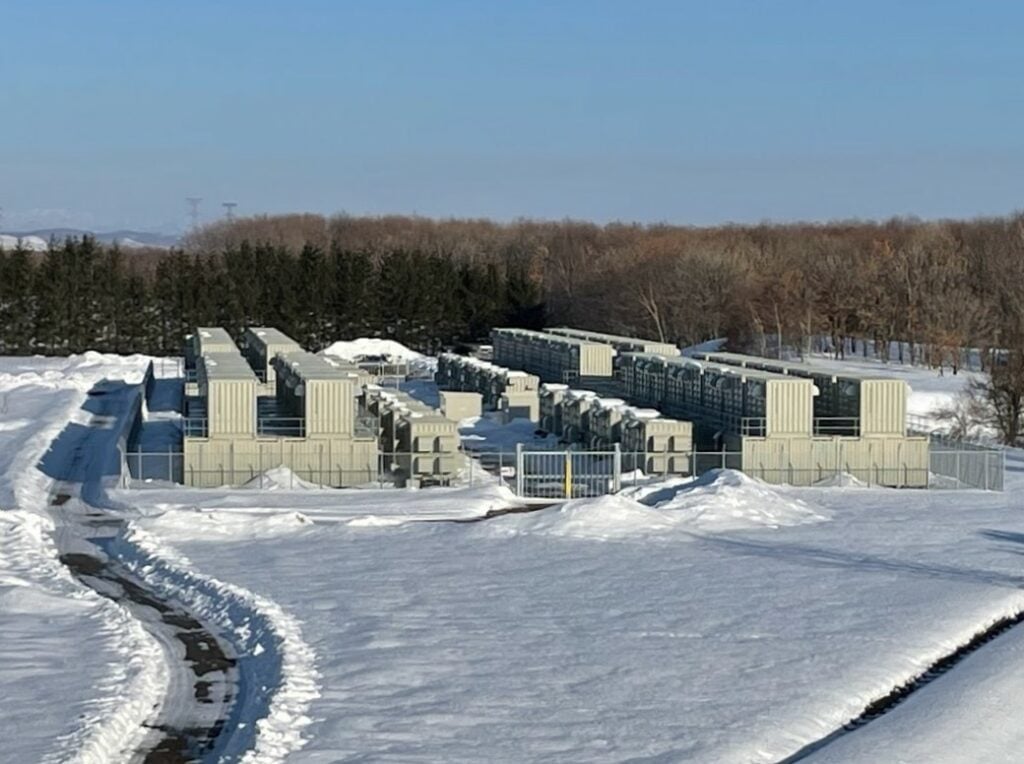
One of the world’s biggest vanadium redox flow battery (VRFB) energy storage systems has come online on the northern Japanese island of Hokkaido in the last few days.
Technology provider Sumitomo Electric said that the 17MW/51MWh VRFB system it installed to help integrate local wind energy onto the grid has been in operation since 1 April after installation was finished a day earlier.
The project has been commissioned in line with a schedule announced by the company in July 2020, as reported by Energy-Storage.news at the time. It will directly contribute to decarbonisation and increased renewable energy penetration on Hokkaido.
Due to large areas of suitable land, Hokkaido has become a hotspot for clean energy but has struggled to accommodate the increased energy capacity on its grid, which has only limited interconnection to Honshu, Japan’s main populated island to its south.
Try Premium for just $1
- Full premium access for the first month at only $1
- Converts to an annual rate after 30 days unless cancelled
- Cancel anytime during the trial period
Premium Benefits
- Expert industry analysis and interviews
- Digital access to PV Tech Power journal
- Exclusive event discounts
Or get the full Premium subscription right away
Or continue reading this article for free
As a consequence, Hokkaido Electric Power, one of the country’s main, regional monopoly electric utilities and operator of the region’s grid introduced rules in 2015 that new renewable energy facilities must be paired with energy storage.
This has lead to various battery storage projects on the island including the first installations in Japan for Tesla’s Megapack BESS solution and a recently-completed solar-plus-storage project supplied by Sungrow.
For Sumitomo Electric, the project follows up an even bigger VRFB project in Hokkaido, a 15MW/60MWh system commissioned in 2015. Currently still the largest flow battery project in the world — although several bigger systems are in development in China — that system has been functioning well since its installation in collaboration with Hokkaido Electric, the company said.
Vanadium flow batteries offer a potentially long lifetime energy storage resource, capable of heavy duty cycling over an expected 20+ years in the field. They also offer the ability to scale up energy storage capacity simply by increasing the size of liquid electrolyte tanks, unlike lithium batteries, which need to add more cell stacks and more balance of plant equipment as they add capacity.
VRFBs are also considered to be safer than other batteries, due to their operation at room temperature and lack of combustible materials used in their construction.
The new system will support the grid-side and has been installed by Hokkaido Electric at its Minami-Hayarai substation. The power and grid company solicited offers from applicants that want to interconnect their renewable energy facilities to the grid and 15 companies will share the capacity the flow battery systems helps to free up. Costs of the battery will be shared by Hokkaido Electric and the other stakeholders.
Sumitomo Electric’s 2MW/8MWh VRFB project in California, inaugurated in 2017 and the biggest project of its type in the US to date has been used to trial the use of VRFBs for microgrid applications by California utility San Diego Gas & Electric, as well as being used to provide grid services.