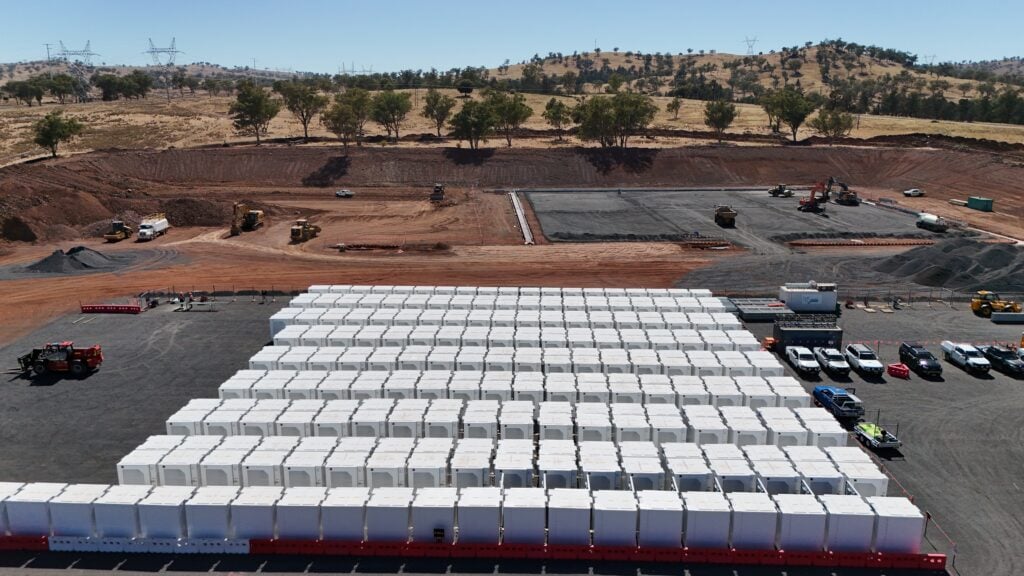
Ampyr Australia has secured a 15-year battery storage agreement with Denmark-based energy trading company InCommodities for the 300MW/600MWh Bulabul battery storage system near Wellington, New South Wales.
The agreement, valued at more than AU$450 million (US$195 million), represents InCommodities’ first long-term commitment, exceeding ten years in the Australian market.
The commercial arrangement involves a capacity swap agreement covering up to 120MW of the Bulabul project’s total 300MW power output.
Under this structure, Ampyr Australia will serve as the developer, owner and operator of the battery energy storage system (BESS). At the same time, InCommodities will leverage its global trading expertise, spot market experience, and energy technology capabilities alongside Ampyr’s asset management and operational expertise.
Try Premium for just $1
- Full premium access for the first month at only $1
- Converts to an annual rate after 30 days unless cancelled
- Cancel anytime during the trial period
Premium Benefits
- Expert industry analysis and interviews
- Digital access to PV Tech Power journal
- Exclusive event discounts
Or get the full Premium subscription right away
Or continue reading this article for free
The capacity swap model represents a departure from traditional power purchase agreements (PPAs) and merchant revenue structures that have dominated Australia’s battery energy storage market.
Instead of fixed-price energy sales or pure merchant exposure, the arrangement allows InCommodities to access battery capacity for energy arbitrage, frequency regulation and other grid services while providing Ampyr with long-term revenue certainty across a substantial portion of the project’s capacity.
Fluence recently commenced delivery of its Gridstack battery energy storage equipment to the Bulabal BESS site near Wellington.
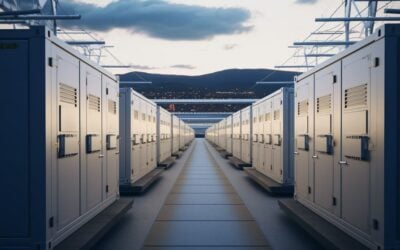
The Gridstack technology serves as the core battery storage platform for the Bulabul project, delivering utility-scale energy storage capabilities specifically engineered for grid applications.
It incorporates lithium-ion battery modules, power conversion systems, thermal management and advanced control software within a modular architecture.
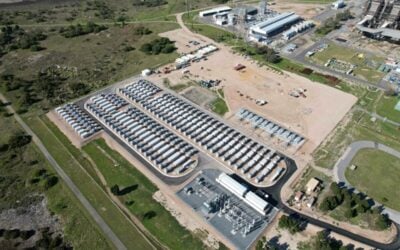
Located within the Central-West Orana Renewable Energy Zone, approximately 2km northeast of Wellington, the Bulabul project consists of two distinct development phases designed to optimise construction sequencing and operational deployment.
The 200MW/200MWh Bulabul 1 commenced construction in August 2025 and is expected to achieve initial energisation in mid-2026, with full commercial operations scheduled to begin by 2027.
The second 100MW/400MWh phase, Bulabul 2, is expected to begin construction in the second quarter of 2026, with operations scheduled for 2027.
Ampyr Australia began construction on the project following extensive development and approval processes that included environmental assessments, grid connection studies and community consultation programs.
The company has prioritised community engagement throughout the project development, including the implementation of a benchmark Aboriginal equity model that provides ongoing economic benefits to local Indigenous communities. The deal resulted in the BESS being renamed from Wellington to Bulabul.
The Wambal Bila Indigenous Community Corporation holds the option to acquire a 5% equity stake in the project, representing an AU$22.5 million investment opportunity based on the total project value.
Ampyr has several projects it is pursuing across Australia. It recently acquired a 540MW/2,160MWh grid-forming battery energy storage system project in South Australia.
The South Australian acquisition incorporates advanced grid-forming technology capabilities, which enable battery storage systems to provide enhanced grid stability services and support renewable energy integration in areas with limited synchronous generation.