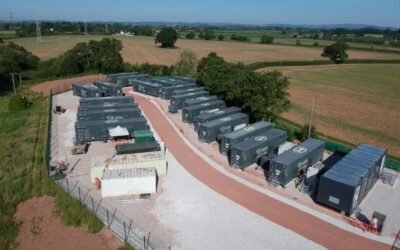
The UKs largest council-owned battery storage site, the 30MW Fideoak Mill site, is now fully operational and able to participate in delivering multiple revenue-generating services.
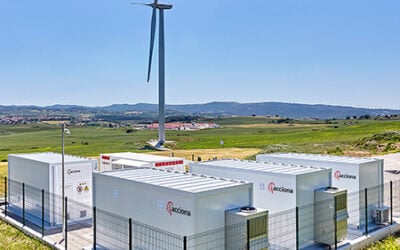
Combining energy storage with generation helps to unlock the core value of batteries and other storage, the US Energy Storage Association (ESA) has said, while data is now available on the status of installed and proposed utility-scale hybrid power plant projects throughout the country.
Peer-to-peer (P2P) energy trading using distributed battery storage in Japanese households could be a scalable business once prohibitive rules change in a couple of years’ time, a provider of renewable energy equipment in the country has said.
A newly released standard creates nationally applicable guidance for DER manufacturers on how grid support functions in their products will be tested. Brian Lydic, chief regulatory engineer at the Interstate Renewable Energy Council (IREC), talks about what this means for enabling the grid modernisation that will be needed to support high levels of renewable energy and energy storage.
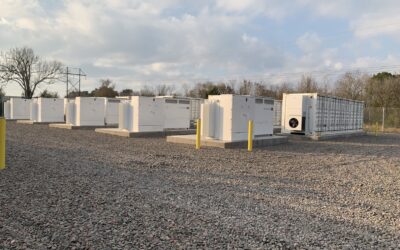
The first grid-scale battery energy storage project in the Canadian province of Alberta is on-track to go into operation this month, while TransAlta, the company behind the project, has expedited plans to retire a coal plant citing “future market conditions”.
A “first-in-the-nation” policy called the Clean Peak Standard has been launched in Massachusetts, US, whereby a proportion of electricity used on the grid at times of highest demand must be considered ‘clean’.
The US Federal Energy Regulatory Commission (FERC) hosted a technical conference on hybrid resources – pairing storage with generation – examining in order to overcome barriers that exist to the otherwise fastest-growing phenomenon of the grid.
Eskom, the state-owned electricity utility of South Africa, has begun tendering for a battery energy storage system (BESS) of minimum size and capacity 80MW / 320MWh.
More electricity storage and longer durations will be needed for the UK to meet net zero, according to electricity system operator National Grid ESO’s latest modelling.
Lithium battery cells will be rolling off a production line at a 16GWh-capacity factory in France in 2023, with manufacturing startup Verkor then planning to scale up to 50GWh “in line with market dynamics”.