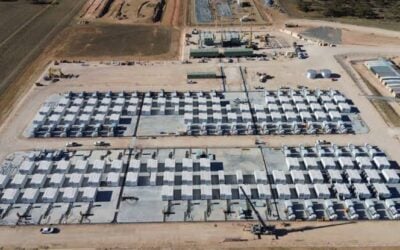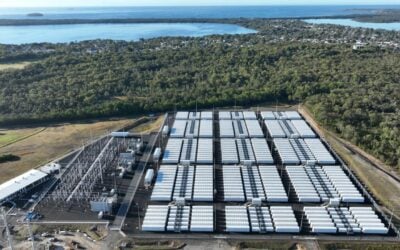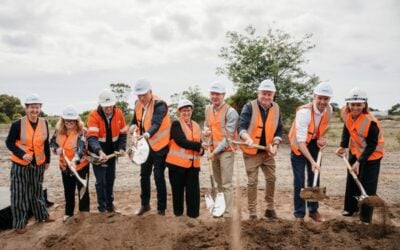
Shell Energy Australia will build, own and operate a planned 500MW/1,000MWh battery storage asset in New South Wales for which development approvals have already been granted.
Fossil fuel major Shell’s energy solutions and renewable energy arm said this morning that it has acquired development rights for the Wallerawang 9 battery energy storage system (BESS) project near Lithgow, New South Wales (NSW).
The seller, Greenspot, is an Australian real estate investor focused on sustainable and impact investments. One area that includes is in ‘rehabilitating’ fossil fuel generation sites and repurposing them for new uses, with clean energy assets a prime example.
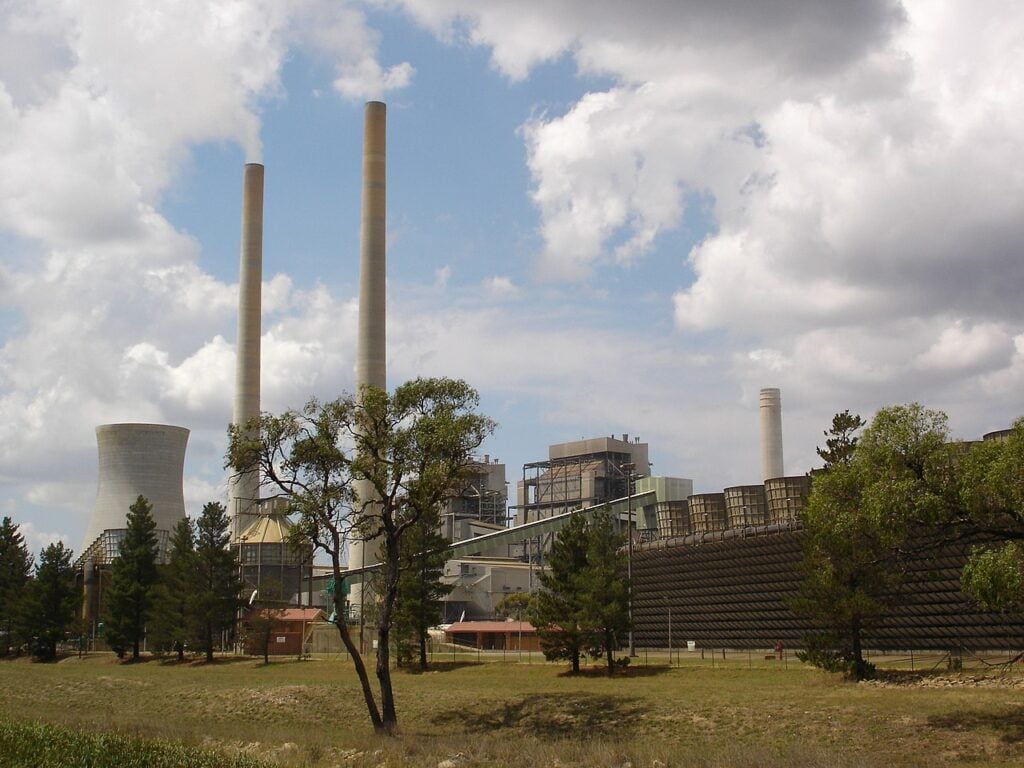
Greenspot has been developing the site at Wallerawang, which formerly housed eight coal power generation units until the power station’s closure by owner EnergyAustralia in 2014. The name of the BESS, Wallerwang 9, is an acknowledgement of the site’s importance as a centre of the region’s energy sector, according to Greenspot.
Try Premium for just $1
- Full premium access for the first month at only $1
- Converts to an annual rate after 30 days unless cancelled
- Cancel anytime during the trial period
Premium Benefits
- Expert industry analysis and interviews
- Digital access to PV Tech Power journal
- Exclusive event discounts
Or get the full Premium subscription right away
Or continue reading this article for free
The real estate developer will lease 20 hectares of land for the BESS project to Shell Energy and the battery system will be connected to an existing 330kV substation adjacent to the site if a Final Investment Decision is made in its favour. Financial terms of Shell Energy and Greenspot’s partnership were not disclosed.
Repurposing legacy thermal power plant sites not only has the potential to create societal benefit through enabling higher renewable energy utilisation and helping regenerate local economies. It can also reduce the costs of large-scale clean energy assets, through leveraging of existing infrastructure, including, but not limited to, grid interconnection points.
Greenspot was handed development approvals in August, as reported by Energy-Storage.news. The New South Wales state government waved it through as a State Significant Development Project, meaning its development was deemed worthy of accelerating due to it being in the public interest.
Region transitioning from coal-based industry
“As the economy decarbonises, and new energy technologies are adopted, it is critically important that strategies are implemented to attract a range of new businesses to areas like Lithgow which have traditionally relied heavily on coal-based industry,” Greenspot CEO Brett Hawkins said.
“Proximity to the high-voltage transmission network, access to major road, rail transport and significant existing and proposed water infrastructure, and proximity to high-integrity data networks, makes the Wallerawang site highly competitive to attract the investment needed to propel the local economy forward.”
Wallerawang 9 will not be the only gigawatt-hour scale BESS connected to the substation, if another project of equal size and capacity, French developer Neoen’s Great Western Battery, also goes ahead. Neoen is currently building three other large-scale BESS assets in Australia and recently won local authority approvals for Collie Battery, a project in Western Australia which could be up to 1GW/4GWh when completed.
Meanwhile, Shell Energy’s other battery project involvements in Australia include its partnership on the Wellington BESS in Central West NSW, which is another 500MW/1,000MWh project. That one is being developed adjacent to Central West Orana Renewable Energy Zone (REZ), a major mixed technology clean energy hub.
Shell Energy Australia has also secured operational rights to a 60MW/120MWh portion of Riverina, a 300MWh BESS portfolio being built in NSW by Edify Energy, a state government-owned developer and investor of renewables and energy storage.
Energy-Storage.news’ publisher Solar Media will host the 1st Energy Storage Summit Asia, 11-12 July 2023 in Singapore. The event will help give clarity on this nascent, yet quickly growing market, bringing together a community of credible independent generators, policymakers, banks, funds, off-takers and technology providers. For more information, go to the website.