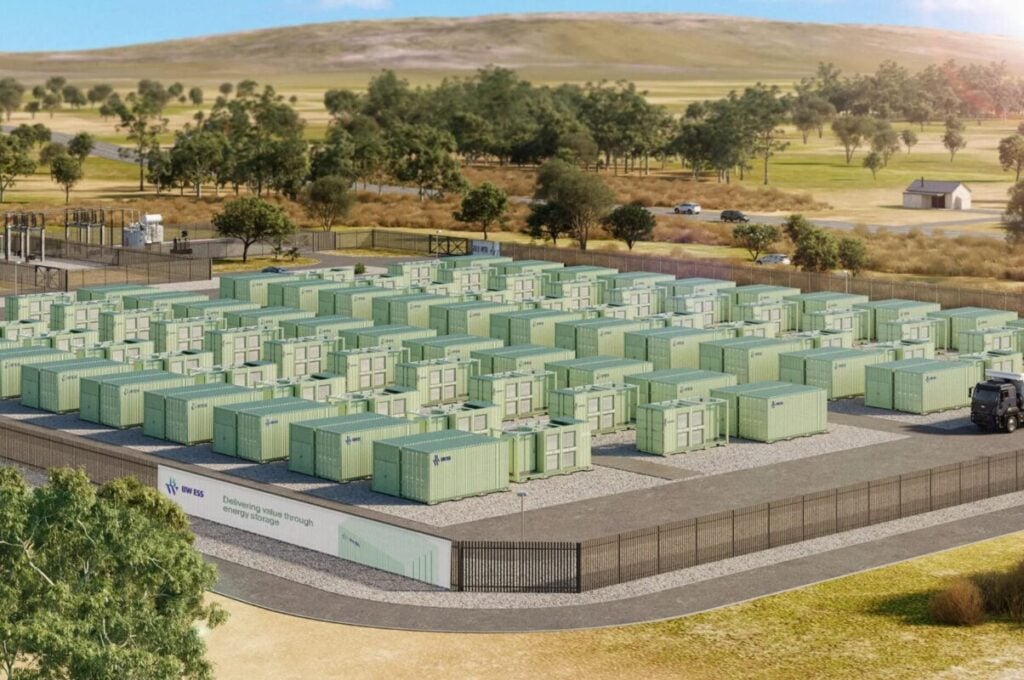
Energy storage owner-operator BW ESS has submitted a 700MW battery energy storage system (BESS) project to Australia’s Environment Protection and Biodiversity Conservation (EPBC) Act for environmental assessment.
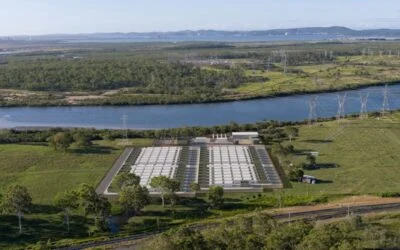
The Bannaby BESS, located approximately 18km east of Taralga in the Upper Lachlan Shire in New South Wales (NSW), would occupy a 68-hectare project area across three properties at Hanworth Road.
According to the EPBC Act application, the facility would connect to the existing Bannaby 500kV substation, which forms part of the NSW high-voltage transmission network.
The duration of the battery storage system has not been disclosed at the time of reporting.
Try Premium for just $1
- Full premium access for the first month at only $1
- Converts to an annual rate after 30 days unless cancelled
- Cancel anytime during the trial period
Premium Benefits
- Expert industry analysis and interviews
- Digital access to PV Tech Power journal
- Exclusive event discounts
Or get the full Premium subscription right away
Or continue reading this article for free
Construction is anticipated to commence in 2027, subject to obtaining necessary approvals, with an 18-month build period requiring a peak workforce of 150 personnel over approximately five months. The project is designed for a lifespan of at least 30 years of operation, with remote monitoring 24 hours a day, seven days a week.
The project area overlaps partially with the approved HumeLink transmission project, which commenced enabling works in February 2025 and main construction in September 2025.
Around 18 hectares of the Bannaby BESS project area intersects with the HumeLink footprint, where vegetation has already been cleared under separate approvals.
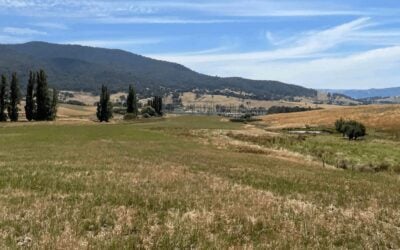
The site comprises predominantly modified agricultural land historically used for grazing, with patches of planted native vegetation forming boundaries between paddocks.
Two native plant community types occur within the project area: Wollondilly-Shoalhaven Slopes Grassy Open Forest and Southern Tableland Box Woodland, across five distinct condition classes totalling approximately 55 hectares. The project area also contains 1.78 hectares of exotic grassland and 7.76 hectares of formed tracks, existing farm buildings, and the existing substation infrastructure.
The Bannaby project is subject to approval by the Minister for Planning and Public Spaces and will be assessed in accordance with section 4.36 of the Environmental Planning and Assessment Act 1979.
The Bannaby referral arrives as New South Wales confronts an accelerating storage deployment challenge.
The state now requires 56GWh of energy storage by 2030, representing a 40% increase from the 40GWh projected in mid-2025, according to Paul Peters, CEO of the Energy Security Corporation, speaking at the Energy Storage Summit Australia 2026 in March.
The revised target reflects fundamental shifts in grid management requirements driven by accelerating solar deployment. NSW currently has only 12.5GWh contracted or in delivery, meaning the state must deliver more than four times its current contracted capacity within four years to maintain grid stability as coal-fired generation exits the system.
The Bannaby project joins an ever-increasing pipeline of battery storage projects either under construction or in planning across NSW. Recent activity includes Octopus Australia’s acquisition of the 1.2GW/4.8GWh Hanworth BESS near Bannaby in February 2026.
Federal environmental assessment pipeline
The Bannaby BESS project adds to a growing queue of battery storage projects navigating Australia’s federal environmental assessment process across multiple states.
RES Australia submitted a 400MW/2,400MWh BESS to the EPBC Act in April 2026 for a site approximately 80km southeast of central Melbourne in Victoria’s Cardinia Shire. The 6-hour duration Bunyip North project would occupy 30.8 hectares of predominantly modified agricultural land, with construction anticipated to commence in mid-2027.
In Western Australia, Synergy submitted a hybrid renewable energy project featuring up to 1,000MW of wind generation capacity, 500MW of solar, and a 500MW BESS to the EPBC Act in April 2026. The Tathra Wind Farm, located approximately 15km east of Eneabba in the Mid West region, would occupy a 15,847-hectare development envelope.
Interested in Australia? Read Energy-Storage.news’ Energy Storage Summit Australia coverage and related content.