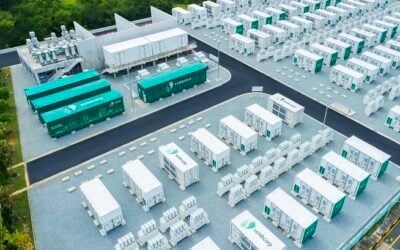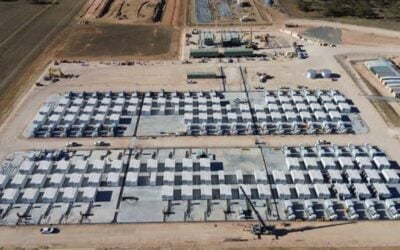
Scatec, the European Investment Bank (EIB), the European Bank for Reconstruction and Development (EBRD) and the African Development Bank (AfDB) have signed an investment agreement for the Dandara solar-plus-storage project in Nag Hammadi, Egypt.
Norwegian renewables developer and independent power producer (IPP) Scatec agreed a non-recourse project financing deal with the development banks for US$217 million, which is around 80% of the planned 1GW solar PV and 100MW/200MWh BESS project’s first of two construction phases. Scatec hopes to begin construction of the second phase in the first half of 2027. When complete, the project’s expected annual generation will be 1.4TWh.
The solar PV and battery energy storage system (BESS) project will supply electricity to Egypt Aluminium under a 25-year power purchase agreement (PPA) signed in March 2025. Egypt Aluminium is the North African country’s biggest industrial consumer of electricity.
At the time of the PPA’s signing, Scatec said the decarbonising impact, estimated at >550,000 tonnes of CO2 per annum, would enable Egypt Aluminium to meet the European Union’s (EU’s) Carbon Border Adjustment Mechanism (CBAM) requirements.
Try Premium for just $1
- Full premium access for the first month at only $1
- Converts to an annual rate after 30 days unless cancelled
- Cancel anytime during the trial period
Premium Benefits
- Expert industry analysis and interviews
- Digital access to PV Tech Power journal
- Exclusive event discounts
Or get the full Premium subscription right away
Or continue reading this article for free
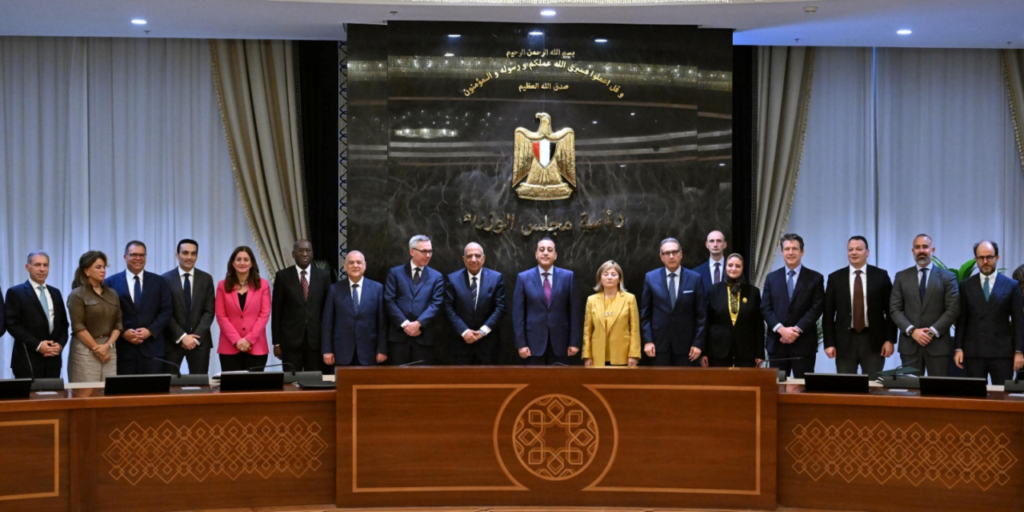
The closing of the finance deal came at an announcement event attended by Egyptian prime minister Mostafa Madbouly and minister of electricity and renewable energy Mahmoud Esmat, and Scatec provided additional information on the agreement yesterday (28 October). An official Egyptian state news announcement put the total investment value of the project at US$650 million. Scatec previously said it aims to fund this through a combination of 80% non-recourse finance and the remainder through equity from the company and its partners.
The AfDB, in particular, will contribute up to US$66 million to the Dandara project, which will consist of US$46 million taken from the bank’s ordinary resources and US$20 million in concessional financing from the Climate Investment Funds’ Clean Technology Fund (CTF).
Scatec holds a 56% ownership stake in the Dandara project, with 36% of that through a total US$221 million renewable energy investment platform recently agreed with the EBRD. The developer aims to attract further investors and secure equity bridge loans (EBLs), with equity injections deferred until the end of construction. Scatec’s in-house teams will provide EPC, asset management and operations and maintenance (O&M) services
A letter of intent (LOI) for the development financing was signed by Scatec subsidiary Dandara Solar Energy Company and the three finance institutions in October last year, overseen by Norwegian and Egyptian state officials. The Norwegian state and Equinor are among shareholders in Scatec, which is listed on the Euronext exchange.
Agreements were also signed at the event on Monday to connect the Dandara project to the Egyptian national grid, and for the National Bank of Egypt to contribute to the project company. In May this year, the National Bank of Egypt bought a 20% equity stake in the Obelisk solar PV project, for which Scatec is the constructor and operator. Scatec holds a 40% share in the Obelisk project.
Additional reporting by Andy Colthorpe.