Solar Energy Corporation of India (SECI) is planning to develop its own renewable energy projects at the Indian archipelago of Lakshadweep, with an eye on coupling the projects with battery energy storage.
We asked Dr Rahul Walawalkar, executive director of the India Energy Storage Alliance, three simple questions to illuminate what was achieved in 2018 and what held the market back, if anything. We also look ahead to this year and what we might expect to see going forward.
VRB Energy, a maker of flow batteries headquartered in Canada and owned by a metal resources and mining company, said the first phase of a 40MWh flow battery project in China has now been commissioned.
In today’s third and final instalment of our series to welcome in 2019, we look at what our respondents are expecting to see this year, what they would like to see happen and some of the ways they will be trying to fulfil those expectations.
In the previous instalment of this blog, we looked at how our respondents from across the energy storage industry had viewed 2018’s biggest challenges. This time out we look at what some of 2018’s biggest successes were.
After another record-breaking year, in which the US surpassed 1GWh of deployed energy storage and China began its programme of building flow batteries several hundred megawatts in size each, we canvassed opinion on what 2018’s biggest challenges and successes were. In this first part, we look at the challenges faced by the industry in 2018.
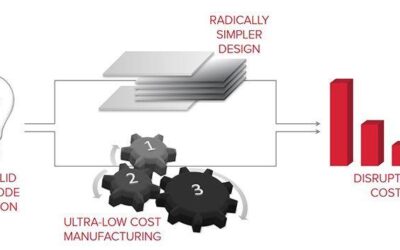
24M, a start-up angling to disrupt the already-disruptive lithium-ion battery industry with the design and production of semi-solid lithium cells, has raised US$21.8 million in a Series D funding round.