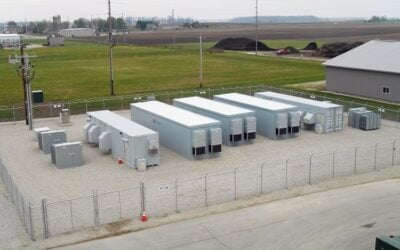
Arizona utility Salt River Project (SRP) has followed up the recent completion of a 10MW battery storage system at a solar farm by beginning work on its first standalone grid-scale battery energy storage project.
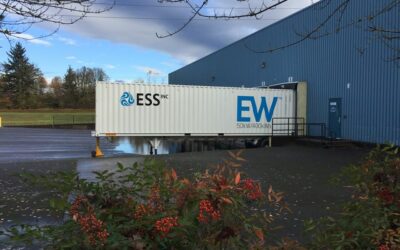
ESS Inc, US maker of the only flow battery that uses a battery chemistry based on iron and saltwater electrolytes, is making its first incursion into the Brazilian energy storage market.
A community microgrid in Chicago will be supplied with lithium-ion battery storage from aerospace and defence giant Lockheed Martin, allowing it to be ‘islanded’ from the local grid network.
Solar industry veteran and PV Tech blogger Edgar A. Gunther was told by the New Jersey Governor Phil Murphy’s office that clean energy legislation proposed for the state is “on his desk” but appear to be no closer to receiving his approval.
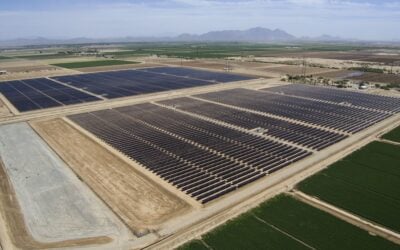
NextEra Energy Resources and utility Salt River Project (SRP) have completed the Pinal Central Solar Energy Center in Arizona, an integrated PV plant equipped with a battery system that will store energy and allow SRP to provide power to its customers.
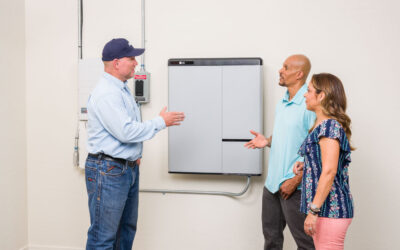
JLM Energy, a US maker of residential ’microstorage’ systems that pair with individual solar panels, is leaning on its US$25 million project finance fund to develop larger storage projects for commercial businesses.
Axiom Exergy, a US manufacturer of energy storage units that use stored energy for cooling buildings and produce, has netted close to US$8 million from investors including Shell’s venture capital unit and Tesla battery guru JB Straubel.
Hawaii’s position as one of the leading US states for energy storage deployment shows no sign of weakening as Hawaiian Electric Co last week announced 120MW of new battery storage across two projects in Oahu.
Solar Media, the publisher of sites including Energy-Storage.News and PV Tech, has just launched the latest edition of the annual Global Energy Storage Opportunity report for this year – available now as a free download.