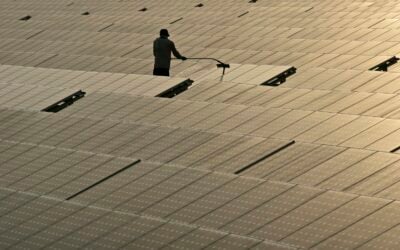
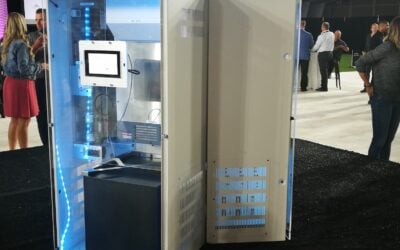
In this month’s episode of the Solar Media Podcast, Liam Stoker and Andy Colthorpe discuss how the clean energy economy is responding to the coronavirus, Andy reports back from PV Expo in Tokyo and Liam explores what the return of solar and other established renewables to the UK’s Contracts for Difference process means.
Dimitrios Pappas, analyst at new energy consultancy Delta-EE, considers the impact the novel coronavirus (COVID-19) could have on the energy transition, particularly for batteries used in EVs and ESS, while Energy-Storage.news editor Andy Colthorpe adds his own take.
The fire unit at global multinational engineering firm Honeywell made its first move into lithium-ion safety in recognition of battery storage’s “huge potential” for decarbonisation and to help the world move “in a more energy efficient way”, the company has said.
New study predicts the energy storage industry will grow to employ millions by 2050, fuelling a renewables jobs boom as fossil fuel industries shed millions of workers.
While pumped hydro plants still account for around 96% of installed capacity of stationary energy storage worldwide, there will be more than 28GW of lithium batteries deployed for stationary storage applications by the year 2028, Navigant Research has predicted.
In today’s episode, ESN’s Andy Colthorpe and Liam Stoker explore the way grids are changing in the Middle East to accommodate clean energy, the role virtual power plants are playing in Italy, and the contrasting role coal is playing in Germany and bush fire-stricken Australia.
While lithium-ion batteries get most of the headlines, long-duration solutions of various types are gaining ground. Alice Grundy and Andy Colthorpe profile some of the established and emerging concepts in this increasingly important field.