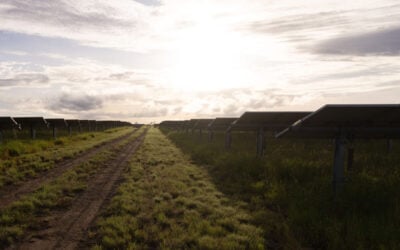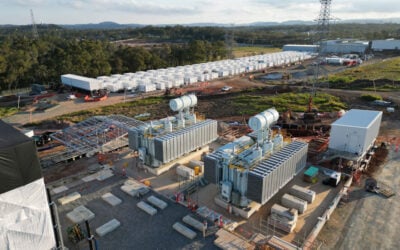
Queensland gets about 21% of its energy from renewable sources today, but the Australian state’s government has just set an increased target of 70% renewables by 2032.
State Premier Annastacia Palaszczuk announced an Energy and Jobs Plan this morning, which aims to reduce emissions from energy by 90% by 2035, add 22GW of new renewables capacity in Queensland, establish a ‘SuperGrid’ and convert coal power station sites into clean energy hubs.
At the heart of that sits the Queensland Renewable Energy Target (QRET), which aims for the steep trajectory of reaching 50% by 2030 and then 70% within two years of that, then 80% by 2035. The state government is now preparing legislation to put the new target into law.
Other highlights of a multi-faceted plan, the total value of which is claimed by the government to be AU$62 billion (US$39.6 billion), include an aim to deploy 11.5GW of new rooftop solar PV and 6GW of embedded battery storage and stop burning coal at state-owned power plants by 2035.
Try Premium for just $1
- Full premium access for the first month at only $1
- Converts to an annual rate after 30 days unless cancelled
- Cancel anytime during the trial period
Premium Benefits
- Expert industry analysis and interviews
- Digital access to PV Tech Power journal
- Exclusive event discounts
Or get the full Premium subscription right away
Or continue reading this article for free
A AU$4.5 billion Queensland Renewable Energy and Hydrogen Jobs Fund will support investments and although the government highlighted the key role of private investment to enable the energy transition, it emphasised that public ownership of transmission and distribution (T&D) and the majority of generation infrastructure will continue.
The government has also recognised the vital role that energy storage will play in that energy system of the future, with AU$500 million from the Fund to be invested in large-scale and community-level battery storage.
Alongside that, long-duration energy storage (LDES) capacity in the form of two of the world’s biggest pumped hydro energy storage (PHES) plants will be added, and like T&D and generation, these new assets will remain in public ownership.
The PHES plants will be built by 2035 at the Borumba Dam and in the Pioneer/Burdekin region, and Queensland Deputy Premier Steven Miles said they will be even bigger than the Snowy 2.0 scheme, which is currently under construction and adding 2,000MW/350,000MWh of new capacity to existing pumped hydro capacity at the Snowy Mountains Hydroelectric Scheme in New South Wales.
Queensland aims to be ‘renewables capital of the world’
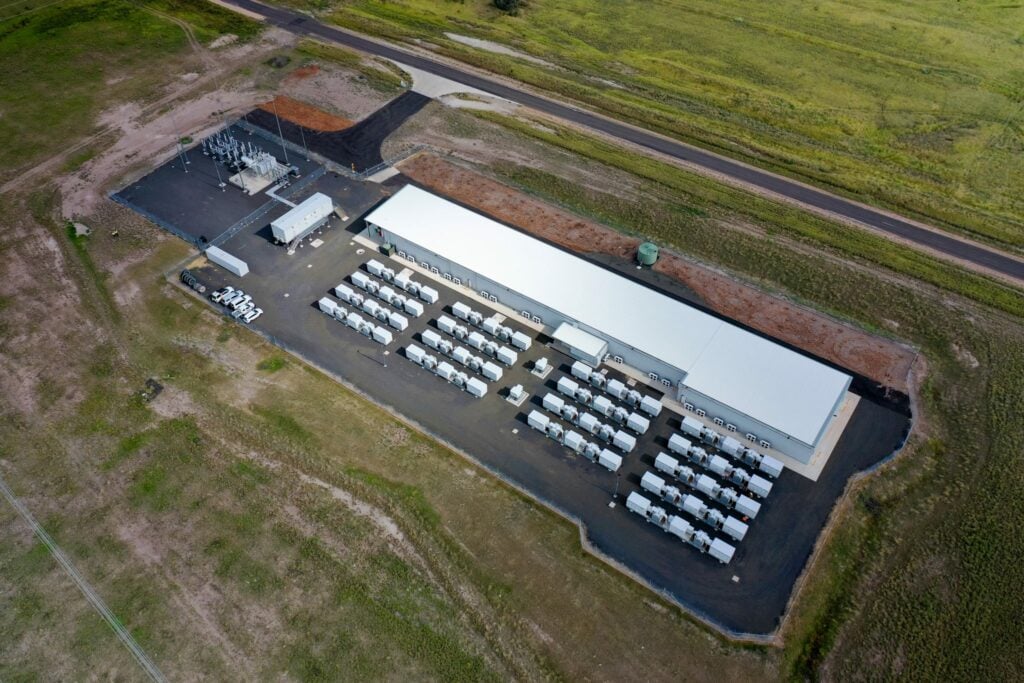
A state Energy Storage Strategy is being prepared for release in 2024. In August, Queensland’s biggest battery energy storage system (BESS) project to date went online, the 100MW/150MWh Wandoan South BESS project in the state’s Darling Downs region.
The government plan’s launch comes just after Victoria announced its first-ever target for energy storage deployment, one of the biggest in the world, with the state aiming for 6.3GW on its grid by 2035.
Victoria Premier Daniel Andrews said his state is already Australia’s renewable energy capital and now targets being the energy storage capital too.
Meanwhile Queensland’s Palasczczuk went one step further to claim her state will become the world’s renewables capital, which sounds like a healthy sort of competition.
“This plan is all about cheaper, cleaner and secure energy for Queenslanders. It is about turbo-charging new investment in new minerals, batteries and manufacturing. Renewable energy is the cheapest form of new energy. This plan makes Queensland the renewable energy capital of the world,” Premier Palasczczuk said.
“It also takes real and decisive action on climate change providing the biggest commitment to renewable energy in Australia’s history.”
The government claims the plan will help create 100,000 new jobs by 2040 and stimulate activity and investment in manufacturing.
Other aspects of the plan include an ambition to build gas turbines in which hydrogen can be combusted, while the planned SuperGrid will connect up solar, wind, batteries and hydrogen generation across the state.