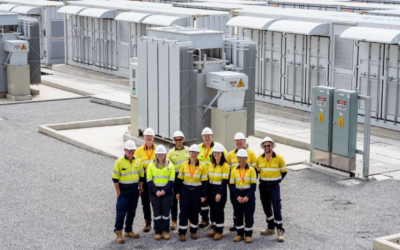
Global battery energy storage system (BESS) integrator Powin Energy is expanding its battery cell and system testing lab in Oregon, US.
Renovations of the Powin Battery Lab in Tualatin are scheduled to be completed by the end of this year. The upgraded lab will expand the company’s cell, module, and system testing capabilities which, it said, will add an important layer of transparency to understanding battery cell performance in an industry that typically relies on vendor self-reporting.
The company expects the expanded lab to open its supply chain to new cell vendors. In an interview with Energy-Storage.news published this week, CEO Geoff Brown said the lab gives the company an understanding of the direction and improvement in the overall science of batteries, and that Powin wants to bring new industry leaders’ products to the storage market.
Brown added that the company’s research to-date had shown that lithium iron phosphate (LFP) is the best existing chemistry “…by a wide margin, so that’s why we’re LFP. I don’t expect I will be saying the same thing 10 years from now.”
Try Premium for just $1
- Full premium access for the first month at only $1
- Converts to an annual rate after 30 days unless cancelled
- Cancel anytime during the trial period
Premium Benefits
- Expert industry analysis and interviews
- Digital access to PV Tech Power journal
- Exclusive event discounts
Or get the full Premium subscription right away
Or continue reading this article for free
The lab will allow the company to characterise cell performance and longevity through long-term and advanced life-cycle testing using its custom-built environmental control room, and to test at both the cell and system-level. Testing results will be summarised in Cell Vendor Reports for Powin’s customers. The lab has logged hundreds of thousands of channel-hours in performance testing to-date.
Part of the expansion will involve the introduction of an advanced grid simulation test bed, which will enable Powin to simulate grid behaviour and renewable assets like solar PV projects. That should, the company said, provide its team with insights into Powin systems’ response to grid events, streamlining the interconnection and integration process in complex electricity markets globally.
Powin SVP Danny Lu, who Energy-Storage.news also recently interviewed, added: “The data and reports generated by Powin Battery Lab will be critical in comparing initial characterisation and long-term cell performance, to the end of life and past the warranted period, of market-leading cell suppliers to the up-and-coming vendors.”
“We will also have the capability to test next-generation and alternative battery chemistries such as sodium ion, solid state, & other chemistries, allowing Powin to stay ahead of the curve. The data and analysis are paramount to creating a landscape of competition and cell optionality in the ESS cell space and in turn providing our customers with the best commercial terms in a challenging battery supply chain environment.”