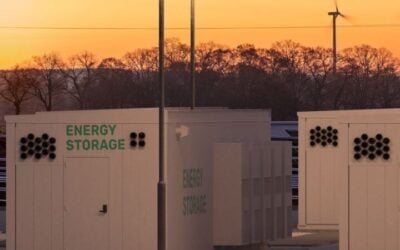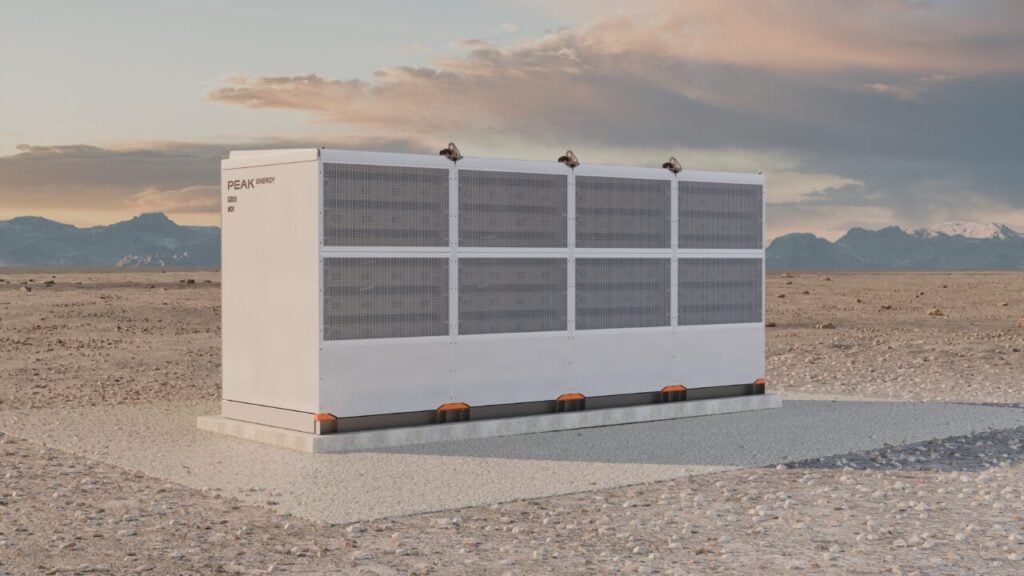
Sodium-ion battery energy storage system (BESS) startup Peak Energy has launched and shipped its first sodium-ion BESS to be deployed in a shared pilot with nine utilities and independent power producers (IPPs).
The company says the system is the “first ever fully passive MWh scale battery storage system, the largest sodium-ion phosphate pyrophosphate (NFPP) battery system in the world and the first grid-scale sodium-ion storage solution ever deployed to the US.”
Peak Energy’s BESS is designed without moving parts and features active cooling and ventilation components, which, according to the company, helps eliminate the most common failure points in typical BESS setups.
BESS that use lithium-ion (Li-ion) battery cells need active cooling and ventilation systems to extend cell lifespan and prevent fires. The liquid cooling system in Trina Storage’s Elementa 2 Li-ion BESS solution recently earned a 20-year full lifecycle Environmental Product Declaration (EPD) certification from UL Solutions.
Try Premium for just $1
- Full premium access for the first month at only $1
- Converts to an annual rate after 30 days unless cancelled
- Cancel anytime during the trial period
Premium Benefits
- Expert industry analysis and interviews
- Digital access to PV Tech Power journal
- Exclusive event discounts
Or get the full Premium subscription right away
Or continue reading this article for free
Peak also states that its performance testing of the company’s sodium-ion BESS showed record-level cost savings and reliability.
These findings include “at least US$1 million in annual operational cost savings per GWh installed, representing up to 90% reduction in auxiliary power use, approximately 20% in lifetime cost savings vs. lithium iron phosphate (LFP) in an average deployment and a 33% reduction in battery degradation over a 20-year project lifespan.”
The company says that after this pilot, it will deploy several hundred MWh of commercial-scale storage products to multiple IPPs and hyperscaler partners over the next two years, with further announcements expected in the fall.
In the announcement for the pilot, the company highlighted the importance of onshoring manufacturing of BESS material following the enactment of H.R.1, or the “One Big Beautiful Bill”.
In a recent interview with Energy-Storage.news, following the enactment of H.R.1, Peak Energy president and CCO, Cameron Dales, said of BESS technology:
“In the end, from a national security perspective, it’s one of a handful of really critical technologies that there’s a bipartisan consensus that we need to control our own destiny, and the ability to store energy is one of the critical needs in the economy.”
At the end of 2024, Peak Energy opened a sodium-ion battery cell engineering centre in Broomfield, Colorado, in partnership with the Colorado Office of Economic Development and International Trade (OEDIT).
The company’s first US cell factory has been under development and is planned to start production in 2026.