With Saudi Arabia’s major renewable energy uptake plans in years to come and Australia’s battle with grid stability due to renewables penetration, two partnerships have been formed to use flow battery technology and its long duration energy storage capabilities to support the network.
Grid issues in Australia hit global headlines in recent years, resulting in a famous ‘100 days’ tweet by Elon Musk and installation of the world’s largest lithium-ion battery from Tesla to solve the issues. Australian authorities are now pushing developers to opt for long-duration storage to make it possible for even more intermittent renewable energy to be added to the grid.
Pangea Energy, founded by Southeast Asian developer Sen Teck Energy Solution, was formed in 2016 specifically to focus on supporting the network in South Australia. From the off, Pangea had its eye on Vanadium Redox-Flow technology, seeing advantages over lithium-ion technology when it comes to long-term operating costs over a 20-30 year lifetime. The company has also taken note of recent improvements in flow batteries.
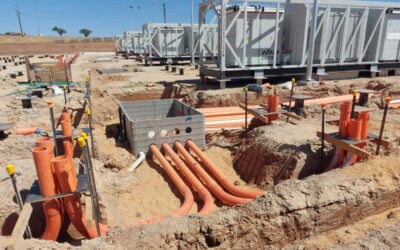
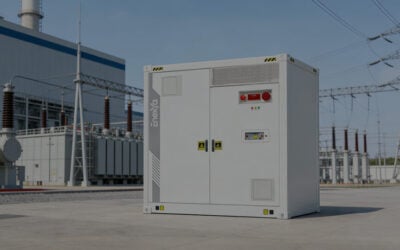
As a result, Pangea has now signed a letter of intent with a subsidiary of Canadian firm Cellcube Energy Storage Systems, known as Enerox, to procure its battery technology. Under the agreement, the two parties would work on a 50MW / 200MWh battery at the same site as a 50MW solar PV project in Port Augusta, South Australia.
Try Premium for just $1
- Full premium access for the first month at only $1
- Converts to an annual rate after 30 days unless cancelled
- Cancel anytime during the trial period
Premium Benefits
- Expert industry analysis and interviews
- Digital access to PV Tech Power journal
- Exclusive event discounts
Or get the full Premium subscription right away
Or continue reading this article for free
The Pangea Storage Project, on which development started in 2016, would support various grid functions including voltage compensation, reactive power and frequency regulation. Combined with the PV project, it would also offer baseload power generation.
Luis Chiang Lin, CEO of Pangea, said: “Australia has massive Vanadium resources and the exploration of vanadium is pretty simple, cheap and does not have the impact on nature and labour conditions such as cobalt or other rare earths in the lithium industry. As such, choosing Vanadium and working with CellCube as market leader in the vanadium related storage industry is a perfect match for our project.”
Using Cellcube’s products, Pangea Energy will build, own and operate the site, with around US$200 million of investment.
Stefan Schauss, CEO of CellCube, added: “Our new high-performing CellCube is three-times more efficient than any Power-2-X or Hydrogen technology which will not be available at this scale in the next three years. CellCube also offers a lifetime support of 25 years with no degradation or augmentation like needed for lithium. This is real true value for money.”
Once due diligence and off-taker agreements have been made, the companies hope for construction to start later this year, with operations to start in 2020.
Saudi gigawatt flow battery manufacturing
In related news, Saudi Arabia has also taken a shine to flow battery technology as the Kingdom targets 57.5GW of renewable capacity by 2030 and seeks to ensure it maintains a stable grid.
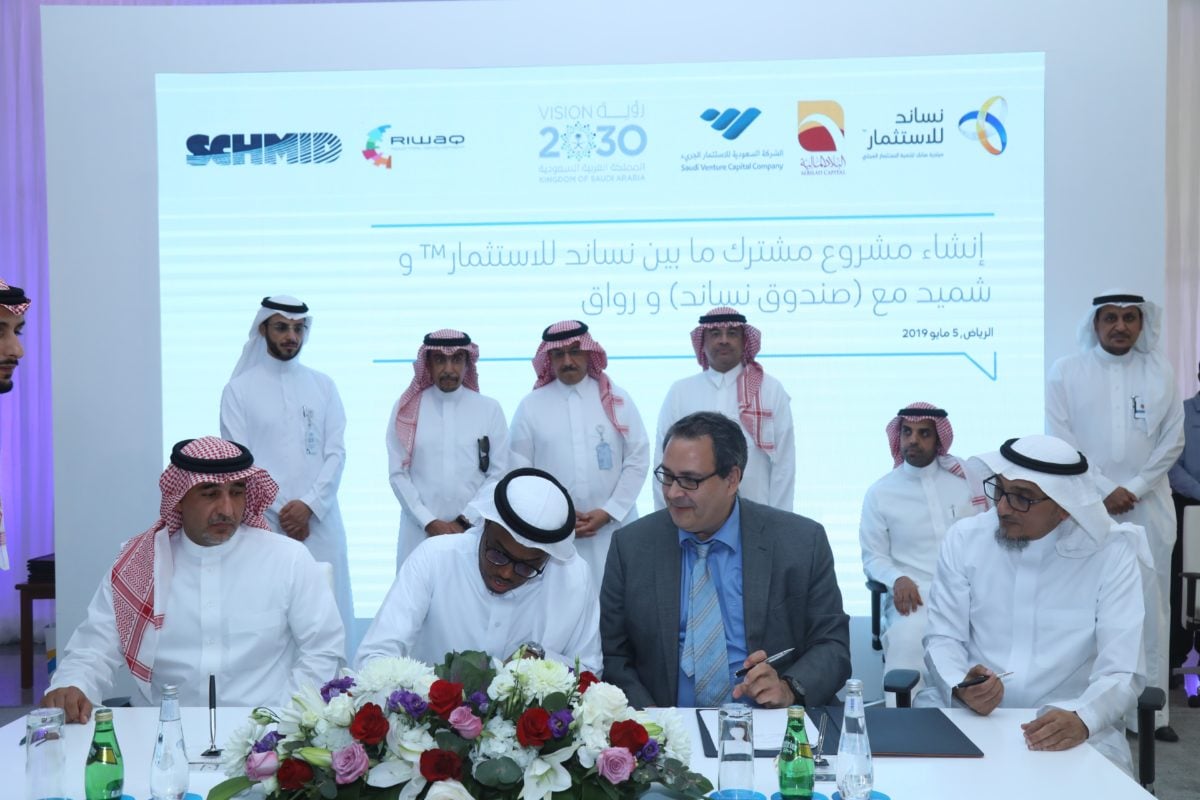
German tech firm Schmid Group has therefore agreed to form a joint venture with two local entities, Nusaned Investment, an investment company owned by one of the world’s largest petrochemicals manufacturers, Saudi Basic Industries Corporation (SABIC), as well as another Saudi investment firm, RIWAQ Industrial Development Company.
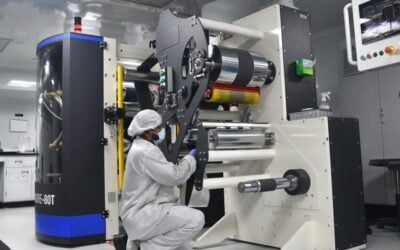
The JV will focus on developing and manufacturing Vanadium Redox Flow Batteries. Moreover, with R&D facilities in both Germany and Saudi Arabia, the companies plan to build a Gigawatt-scale manufacturing facility in the Kingdom to go into production in the next year.
A Schmid release suggested that Saudi Arabia may consider adding this technology to its NEOM project, a planned cross-border city in the Tabuk Province of northwestern Saudi Arabia, as well as its luxury tourism development plan, known as the Red Sea Project.
It’s worth noting that back in February, SABIC also acquired a majority stake in Texas-based nanotechnology company Black Diamond Structures, which produces modified carbon nanotubes for energy storage applications. The firm hopes to apply this technology to improve charge rates, battery cycle-life and energy density, as well as to downsize battery designs for use in lighter EVs and lower production costs.