
Olga Sypula, VP and regional director for Central Europe at developer and IPP European Energy, shares her views on the key trends, opportunities and challenges across the Central and Eastern Europe (CEE) energy storage market.
Sypula will be peaking on the opening ‘CEE Energy Storage 2026: Lessons Learned, Opportunities Ahead’ panel discussion at the Energy Storage Summit CEE 2026 which is now right around the corner, running next week on 6-7 October in Warsaw, Poland.
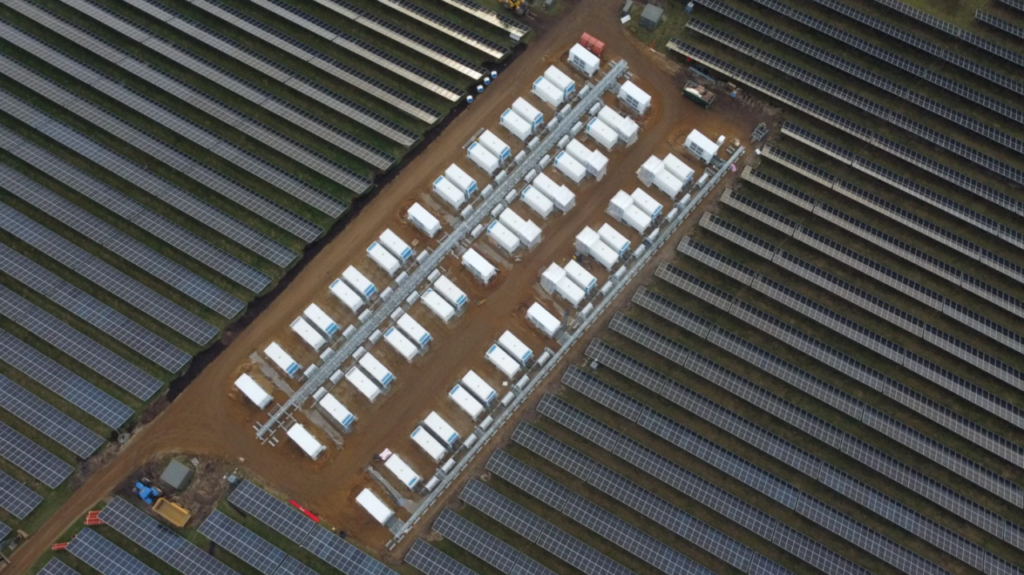
European Energy is headquartered in Denmark and has been busy deploying solar-plus-storage, both on home turf and abroad. This year it completed co-located solar and BESS projects in Lithuania and Latvia and made final investment decisions on ones in Australia too.
Energy-Storage.news: How would you characterise the current state of the energy storage market in the CEE region, in terms of the key trends, major successes and achievements, and challenges still to be overcome?
Try Premium for just $1
- Full premium access for the first month at only $1
- Converts to an annual rate after 30 days unless cancelled
- Cancel anytime during the trial period
Premium Benefits
- Expert industry analysis and interviews
- Digital access to PV Tech Power journal
- Exclusive event discounts
Or get the full Premium subscription right away
Or continue reading this article for free
Olga Sypula: CEE now has an active storage market, although countries are at very different stages of development. Poland is one of the regional leaders, with the capacity market helping to drive investment. According to the Polish regulator, storage accounted for 15% of contracted capacity in the 2028 main auction, compared with less than 7% in previous years. Installed capacity is still relatively small compared with the project pipeline, which is typical of an emerging market.
As a renewable developer, we already have much of what a standalone BESS developer has to establish: land, grid connections, permits, local relationships, energy-market knowledge and experience with lenders. Adding storage to that platform can create significantly more value than developing a battery project from scratch. This matters particularly in CEE, where grid capacity is becoming one of the biggest constraints. We increasingly see the grid connection as an asset in its own right.
The business case still needs to be assessed market by market, down to the connection point, project configuration and mix of revenues. Poland, Czechia, Slovakia, Hungary and Romania may all have attractive fundamentals, but their connection rules, ancillary services, access to balancing markets, capacity mechanisms, permitting and market liquidity differ.
I think the biggest challenge now is for regulation to keep pace with project development. In Poland, (transmission system operator) PSE’s recent adequacy assessments already include BESS as an important part of the future capacity mix, so storage is becoming a regular part of system planning.
What are the other key policy questions and grey areas which industry and government in CEE still need to find solutions for, to unlock storage’s full potential for the grid?

As a developer, I’d put predictable market rules ahead of subsidies. That starts with how storage is treated on the grid. A battery can absorb electricity when the network has excess capacity and supply it when power is needed, helping us make better use of the existing network. Regulation should recognise that flexibility instead of simply charging BESS as both a generator and a consumer.
The rules also need to allow batteries to earn revenue from the range of services they can provide. In a single day, a battery may offer energy arbitrage, balancing, frequency response, capacity, congestion management and renewable energy shifting. If the rules limit it to one or two sources of income, much of that capability has little commercial value.
For renewable developers, clear rules on co-location are particularly important. We increasingly see solar or wind combined with BESS as a more useful product than either technology on its own. That requires clarity on metering, grid capacity, charging from the grid and from co-located generation, curtailment, dispatch rights and losses.
Governments and TSOs also need a clearer view of how much flexibility they will need. Batteries can be built relatively quickly, but we invest for the long term and need confidence that demand will still be there in five, ten or fifteen years. These discussions are starting. In Poland, regulator URE has begun examining whether privately owned storage could provide system services to network operators cost-effectively. I see that as a useful direction.
What new markets and applications for energy storage are opening up, and what opportunities and challenges come with these?
Storage is moving beyond arbitrage. For us as a renewable developer, shifting renewable generation to a different time of day is particularly useful. As more solar comes onto the system, an additional megawatt-hour generated at noon can have a very different value from one delivered in the evening. A battery lets us offer more choice over when that energy is supplied.
Balancing and ancillary services are also well suited to batteries because they can respond so quickly. Poland already offers several relevant revenue streams, including FCR, aFRR, activated aFRR energy, the intraday market, mFRR and the capacity market.
Grid flexibility is perhaps the most interesting long-term opportunity, although it is the least commercially mature. A battery in the right location could defer or reduce the need for conventional grid reinforcement. Location therefore matters almost as much as the battery itself: a 100MW battery at a constrained node is not equivalent to one elsewhere on the network. I expect grid needs to play a much greater role in where and how the next generation of BESS projects is developed.
How is the financing of BESS projects evolving?
Over the last two years, banks have become much more comfortable with BESS technology and the risks involved. Their main concern now is revenue. With a renewable project, a PPA or CfD can provide a contracted price that is relatively straightforward for a lender to assess. A battery earns income across several markets, and that income can change every hour.
Lenders are therefore looking much more closely at the optimiser, historical market data, capture rates, battery degradation, augmentation assumptions and downside scenarios. I welcome that scrutiny because it encourages more disciplined project development. Debt structures are becoming more sophisticated too: tolling and other contracts can support leverage, while equity investors can retain merchant exposure. BESS financing is becoming closer to conventional infrastructure financing, with more emphasis on modelling market risk.
How is the balance between merchant and tolling / fixed revenue schemes changing?
I expect a growing mix of contracted and merchant revenues rather than a complete move to tolling. For a developer, the question is how much contracted revenue a project needs. A long-term offtake or tolling agreement can provide the visibility lenders need, but committing all of a battery’s revenues for 15 years may mean giving up much of the flexibility that makes it valuable.
Hybrid structures are likely to become more common, with a contracted floor or fixed availability payment covering the core economics and the owner retaining additional market upside. Renewable developers are familiar with this balance from PPAs. With BESS, we need to be particularly careful about how much flexibility we commit under long-term contracts.
What are the key evolutions in how BESS projects are being optimised and dispatched?
I think optimisation is where the biggest differences in competitiveness will emerge. The early focus was on buying electricity when it was cheap and selling when it was expensive. An optimiser now has to work across several markets while accounting for state of charge, degradation, reserve requirements, expected future prices and technical availability.
For a developer like European Energy, that means considering the battery alongside the rest of the portfolio. Co-located solar and storage should be managed as one flexible energy asset, and it may also make sense to optimise standalone BESS within a wider generation and storage portfolio. As hardware becomes more standardised, an increasing share of the value comes from software, trading capability and market access.
What is the current mix of ‘full wrap’ and ‘multi-contracting’ for BESS project delivery in CEE, and how is this expected to change going forward?
The choice depends largely on the developer’s experience. On a first project, a full wrap can be valuable because one party takes responsibility for the battery, PCS, EMS integration, performance, warranty and potentially O&M. By the tenth project, a developer is likely to understand the risks better and feel more comfortable separating the contracts.
I expect more multi-contracting as the CEE market matures, provided developers can manage the interfaces. We’ve learned the same lesson in renewable development: a cheaper EPC package can cost more overall if it creates risks between the grid, civil works, HV equipment, inverter, battery and control systems. The right contracting model depends on how much of that risk the developer can manage itself.
What are the factors and strategies that are determining which BESS suppliers succeed in the region?
Price matters in supplier selection, but we look well beyond it when assessing whether a supplier can deliver a project through to commercial operation and support it afterwards. We consider bankability, warranty quality, degradation assumptions, augmentation, delivery history, local service capability, cybersecurity, spare parts, software and the supplier’s willingness to stand behind the product throughout its life.
Experience with local grid and regulatory requirements is particularly important in CEE. Thousands of installations elsewhere are of limited use if a supplier cannot meet the specific grid-code, protection, communication and certification requirements in Poland, Slovakia or Hungary. That is why I find a simple division into ‘Tier-1’ and ‘non-Tier-1’ suppliers unhelpful.
Newer Chinese suppliers are already winning projects with competitive technology and pricing. For a 15-year infrastructure investment, though, we also need to know how a supplier will respond on site if an unexpected problem arises three years after commissioning.
How is the role of TSOs and DSOs in the energy storage market evolving?
TSOs and DSOs are increasingly looking at batteries as assets they may need to operate their networks, as well as projects they need to connect. For TSOs, the most obvious uses are balancing and ancillary services. I think the opportunity for DSOs could eventually be even greater as more wind, solar, EVs and electrified industry connect to distribution networks, increasing local congestion and the need for flexibility.
A battery could provide that flexibility much faster than a new substation or an upgraded line, but the commercial arrangements still need to develop. DSOs need to buy flexibility as well as manage connections. Poland’s work on the possible use of third-party storage for system services gives an indication of how this could evolve.
For developers, this means considering the value of a battery’s location on the network alongside its power-market revenues. I expect both to play an increasing part in how we optimise projects.
We are seeing the CEE region emerge as a major manufacturing hub for batteries and BESS. What is driving this, and will this impact or support the downstream energy storage market?
CEE already has a strong industrial base, which gives it an advantage in battery manufacturing. Poland has built substantial battery-manufacturing capabilities through the automotive sector and is now expanding into stationary storage. LG Energy Solution, for example, is developing dedicated ESS production capability in Poland.
For developers, the question is how that manufacturing base can benefit projects in the region. Local production could shorten lead times, reduce logistics costs and improve access to local service teams with a better understanding of European certification and grid requirements. It could also help make European battery supply chains more resilient and diversified, which fits with the EU’s efforts to strengthen the battery value chain in Europe.
That does not automatically mean lower prices. Chinese suppliers have enormous economies of scale, and European manufacturers still need to prove they can compete on cost as well as quality. I see CEE manufacturing as a support for the downstream storage market, without assuming it will guarantee cheap batteries.
Head to the event website to learn more about it, browse the agenda and buy tickets: use our discount code ESN20 for 20% off tickets.
