Australian energy major Origin Energy has submitted an 800MWh wind-plus-storage project in New South Wales to Australia’s Environment Protection and Biodiversity Conservation (EPBC) Act.
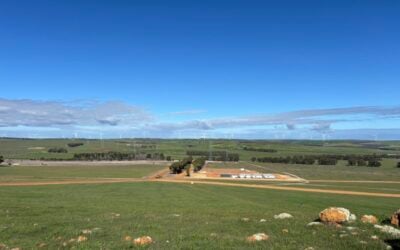
The Yanco Delta Wind Farm, which will have a generation capacity of 1,500MW and an 800MW/800MWh battery energy storage system (BESS), will be located 10km northwest of the small rural town of Jerilderie in the Riverina region of New South Wales.
The wind development has already received approval from the New South Wales government (December 2023) and the EPBC Act in February 2024.
However, Origin Energy has resubmitted the application to the EPBC Act due to a proposed modification to “improve and optimise the constructability of the approved Yanco Wind Farm and incorporate changes to infrastructure layout and the associated disturbance footprint, while retaining the same number of wind turbine generators.”
Try Premium for just $1
- Full premium access for the first month at only $1
- Converts to an annual rate after 30 days unless cancelled
- Cancel anytime during the trial period
Premium Benefits
- Expert industry analysis and interviews
- Digital access to PV Tech Power journal
- Exclusive event discounts
Or get the full Premium subscription right away
Or continue reading this article for free
The Yanco project will be located within the South-West renewable energy zone (REZ), one of the state’s five zones it is pursuing. Last month, the Energy Corporation of New South Wales (EnergyCo) confirmed that 3.56GW of solar PV, wind generation and BESS had been granted access rights to the REZ.
The Yanco project was one of the successful projects in which EnergyCo granted access rights to connect to the REZ. Origin Energy acquired the development rights to the project from Virya Energy in April 2024.
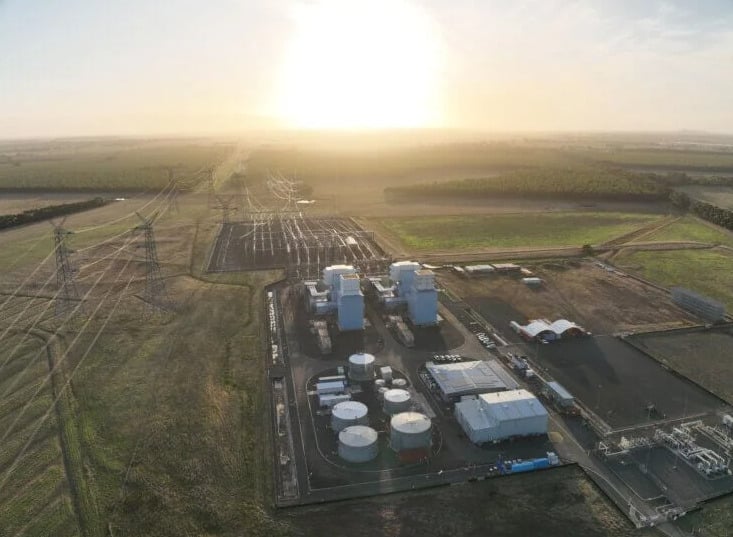
According to documents submitted as part of the EPBC Act application, the project will feature up to 208 wind turbines, each with a maximum tip height of around 270 metres. A central primary substation will be developed as part of the project.
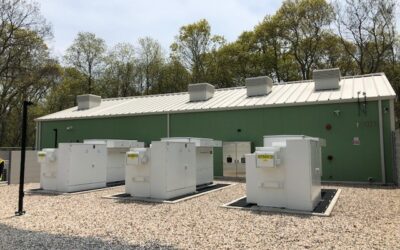
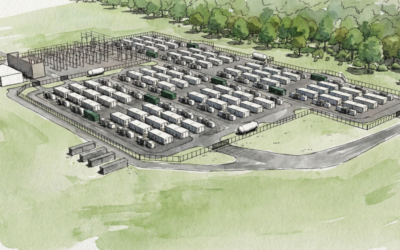
The BESS will be co-located on site, enabling the power plant to dispatch renewable energy when demand peaks. It will be connected to the National Electricity Market (NEM), which spans Australia’s eastern and southern coasts, alongside the island state of Tasmania.
The Yanco wind development will cover 25,700 hectares of land. Construction is anticipated to begin in 2027 and be completed in 2031. The project will operate for 30 years before being decommissioned.
Tasmania sees influx of wind-plus-storage proposals
Like solar-plus-storage, wind-plus-storage sites are becoming increasingly popular in Australia and globally for optimising power plants.
In recent months, several notable developments in Australia have integrated storage into their design to achieve this feat. Two of these are situated in Tasmania, the island state located south of the mainland.
Cellars Hill Wind Farm, a community-driven initiative led by local landowners, was recently granted ‘Major Project’ status by the state government. The development is expected to cost in the region of AU$1.5 billion (US$970 million) and feature a 600MW/2,400MWh. The wind element of the site will have a generation capacity of 350MW.
By being declared a major project under the Land Use Planning and Approvals Act 1993 (LUPAA), the site will be assessed by an independent panel assembled by the Tasmanian Planning Commission. The independent panel makes the final decision on the project. It is not subject to an appeal on planning merit but can be appealed under judicial review on legal matters.
Alongside this development, a 450MW wind-plus-storage project is being pursued by developer Goldwind Australia in Tasmania, featuring a 200-400MWh BESS. Dubbed the Bashan Wind Farm, it is also being proposed for the Central Highlands region. The project would include 56 wind turbines and three substations.