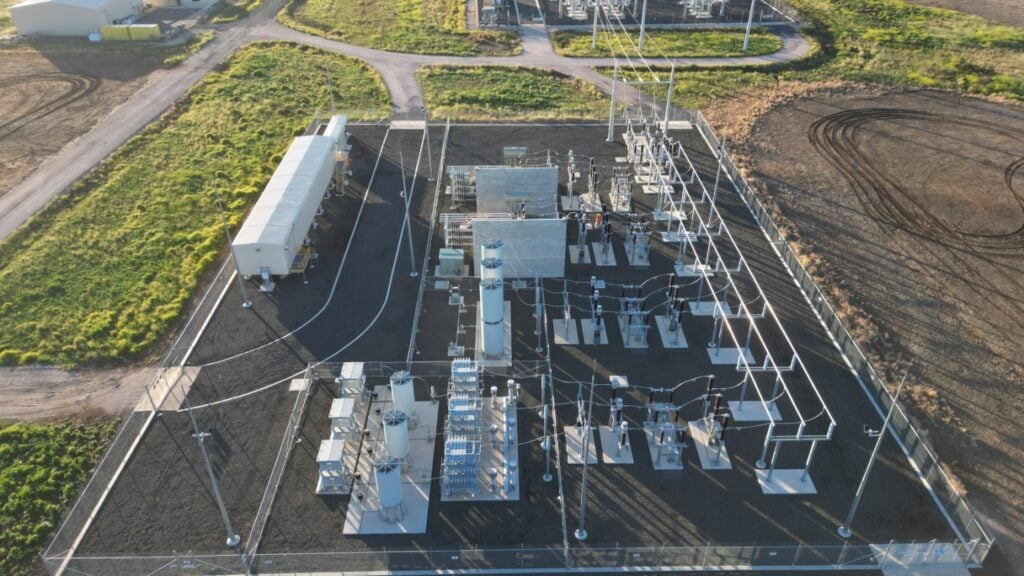
Octopus Australia has announced plans to develop what it claims is Australia’s “largest planned battery energy storage system (BESS)” in New South Wales.
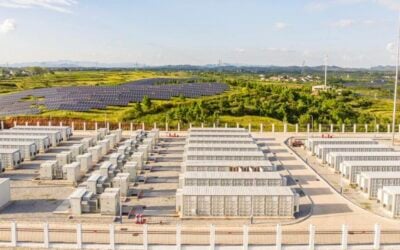
The company has acquired the proposed 1.2GW/4.8GWh Hanworth Battery Energy Storage System near Bannaby, west of Bowral in New South Wales, which will become the largest planned battery project in Australia, the company said.
Indeed, once completed, the battery storage project will be larger than Origin Energy’s 760MW/3,160MWh Eraring BESS in New South Wales, as well as Akaysha Energy’s 850MW/1,680MWh Waratah Super Battery, which is currently operational.
The facility will connect to Transgrid’s Bannaby Terminal Station and provide sufficient storage capacity to power more than half a million homes during evening peak demand periods. It will connect to the National Electricity Market (NEM), which spans Australia’s eastern and southern states and territories.
Try Premium for just $1
- Full premium access for the first month at only $1
- Converts to an annual rate after 30 days unless cancelled
- Cancel anytime during the trial period
Premium Benefits
- Expert industry analysis and interviews
- Digital access to PV Tech Power journal
- Exclusive event discounts
Or get the full Premium subscription right away
Or continue reading this article for free
The Hanworth battery project will support long-term electricity supply contracts for large customers seeking firm renewable energy, facilitating low-emissions power delivery at stable pricing.
Hanworth was acquired from Australian energy developer Enervest.
Enervest CEO Ross Warby described the Hanworth transaction as reflecting the strength of the company’s development portfolio and the significant investment completed to advance the project.
Octopus Australia has simultaneously acquired the Dunmore Solar Farm and Battery project in Queensland from Samsung C&T Renewable Energy Australia, marking the Korean company’s first renewable energy transaction in Australia.
The hybrid solar-plus-storage development combines a 300MW solar PV power plant with a 150MW/300MWh battery storage system near Toowoomba, designed to capture surplus daytime solar generation and discharge during evening demand peaks.
Samsung C&T Renewable Energy Australia managing director Jung Park highlighted the Dunmore project’s quality and strategic location as factors contributing to successful market demand.
Octopus Australia CEO Sam Reynolds emphasised the company’s commitment to replacing retiring coal-fired generation with reliable renewable energy alternatives.
“Australia still needs new power stations to replace ageing coal plants. The difference is that today we can build them using a mix of solar, wind and batteries instead of smokestacks,” Reynolds said.
The investment strategy aligns with International Energy Agency assessments that power systems require flexible assets capable of rapid response and grid stabilisation to maintain reliability as clean generation increases.
With approximately 75% of Australia’s coal-fired power stations scheduled for retirement within nine years, large-scale replacement capacity has become a national infrastructure priority.
Technology integration and market positioning
Octopus Australia’s approach integrates multiple renewable energy technologies within a single portfolio structure, allowing energy shifting across geographic locations and temporal demand patterns.
The company maintains 100% ownership of portfolio assets, providing operational flexibility to match supply with demand without commercial constraints that affect multi-owner project structures.
Octopus Australia said its integrated model enables the company to supply customers with predictable power while reducing exposure to volatility in wholesale electricity prices.
The strategy has attracted investment from major institutional investors, including the Clean Energy Finance Corporation, European pension fund APG and Australian superannuation funds Rest and Hostplus.
The Dunmore project acquisition builds upon Octopus Australia’s expanding Queensland presence, which includes multiple solar and battery developments across the state. The company has previously secured financial close on a 486MWh DC-coupled solar-plus-storage facility and acquired the 400MWh Coleambally battery project in New South Wales.
The Energy Storage Summit Australia 2026 will be returning to Sydney on 18-19 March. It features keynote speeches and panel discussions on topics such as the Capacity Investment Scheme, long-duration energy storage, and BESS revenue streams. ESN Premium subscribers receive an exclusive discount on ticket prices.
To secure your tickets and learn more about the event, please visit the official website.