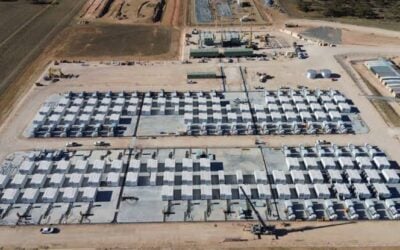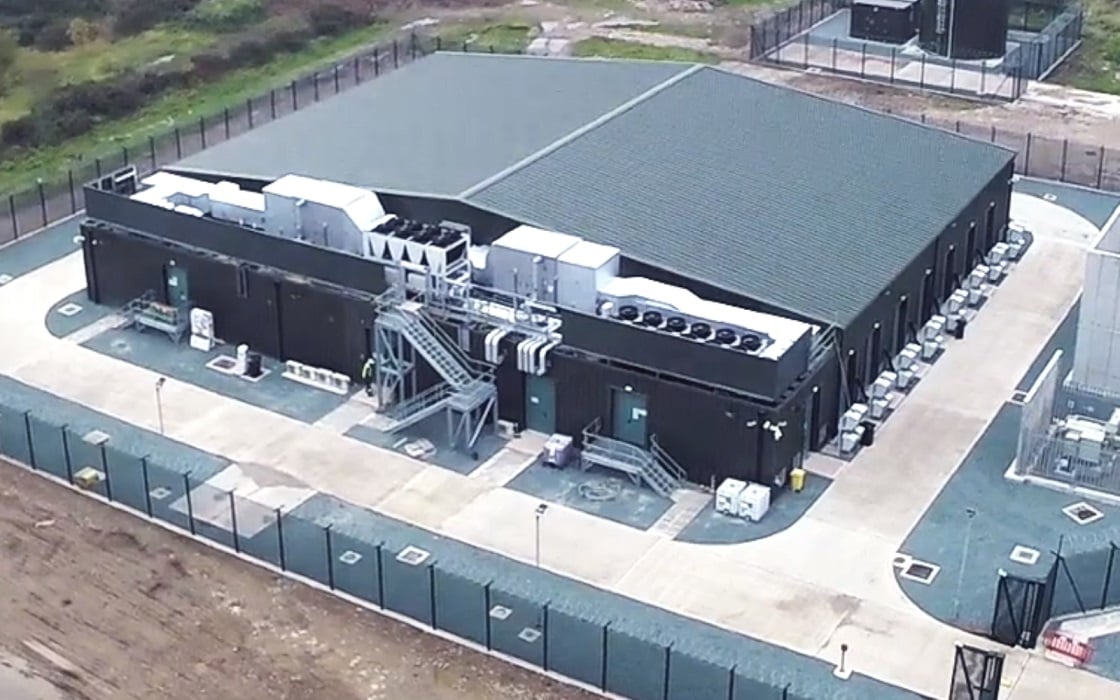
Britain’s government is set to remove a significant barrier to utility-scale storage sites, proposing changes to planning regulations to allow projects over 50MW to proceed without government approval.
The new proposals, unveiled yesterday by the Department for Business, Energy and Industrial Strategy (BEIS) follow a previous consultation in January on planning policy for storage sites.
As it stands, projects over 50MW in England and 350MW in Wales must secure approval via the Nationally Significant Infrastructure Project (NSIP) process. The previous consultation proposed to keep the 50MW threshold but create a new capacity threshold for storage co-located with generation to bypass the requirement for NSIP approval.
But under the new proposals, larger storage projects could receive consent from local planning authorities under the country’s Town and Country Planning Act.
Try Premium for just $1
- Full premium access for the first month at only $1
- Converts to an annual rate after 30 days unless cancelled
- Cancel anytime during the trial period
Premium Benefits
- Expert industry analysis and interviews
- Digital access to PV Tech Power journal
- Exclusive event discounts
Or get the full Premium subscription right away
Or continue reading this article for free
Projects were capped at 49.9MW
Requiring storage projects to go through the NSIP has been cited as a significant hurdle for large storage projects, in particular by the Electricity Storage Network (ESN), for the additional time and cost it requires.
According to ESN members, NSIP adds an estimated 18 months to three years to project lead times and costs can reach hundreds of thousands, compared to tens of thousands through the local planning regime.
Madeleine Greenhalgh, policy lead for the Electricity Storage Network, said the new proposals are a “significant and positive change”.
“It will help many developers who are currently capping projects at 49.9 MW and allow larger storage projects to progress.
“Applying rules created for generation to storage results in distortions such as this and we are pleased to see the government acknowledge that storage should be treated differently in this case.”
The consultation states that although energy storage is considered to be a subset of generation for planning and licensing purposes, it is “not always suitable” to treat storage in the same way as other generation as it may fail to account for the “distinctive characteristics” and benefits of storage.
It follows industry feedback that the original proposals would not alleviate the additional costs and time associated with the NSIP. Responses also pointed to a potential loophole of co-locating a large storage project with a small turbine, as well as examples of projects which had been either deliberately capped at 49.9MW or split into multiple 49.9MW projects to avoid the NSIP.
Clustering of projects just under the 50MW threshold were also cited as a reason for the need for either a higher threshold or complete removal.
The consultation document says that as lithium-ion storage projects typically have a smaller footprint compared to other forms of generation such as wind and solar with equal capacity, as well as a relatively quick construction time, NSIP approval is not required.
While the proposals apply to lithium-ion batteries, as well as several forms of storage including flow batteries and liquid air that could be deployed at scale as the technology matures, pumped hydro is excluded due to the larger planning impacts, as well as the projects often requiring other consents.
Solar Trade Association, Renewable Energy Association welcome ‘promising step’
Frank Gordon, head of policy at the Renewable Energy Association, said the consultation shows the government is “recognising the value that energy storage can bring to the electricity system”.
“This proposal should significantly reduce the relevant pre-construction costs for larger energy storage projects, unlocking more flexibility in the system and leading to less hardware upgrades and back up capacity for the networks.”
In the consultation document, BEIS outlines the possibility of one-off familiarisation costs for market participants to read and understand the proposed legislation, which it estimates to be a total of £70,000 (US$89,190).
There may also be some transitional costs for projects at the pre-application phase by the time the change is enacted, the consultation says, but this is unlikely due to developers having time to adapt their planning due to the changes not coming into play for six months after the consultation.
However, the change in policy is set to result in savings in planning costs and/or infrastructure costs as the capacity threshold will no longer potentially distort the sizing or investment decisions of some developers and the change will help ensure storage projects are not incurring “undue additional planning costs”.
Chris Hewett, chief executive of the Solar Trade Association, said: “This is a promising step forward for enabling energy storage to be connected more swiftly, and giving local communities a stronger voice in determining which developments are right for them. Energy storage is safe, low-impact, and essential for delivering on the UK’s legally binding net zero commitments.”
The consultation closes 10 December.
This story first appeared on our UK sister site, Solar Power Portal.