Kokam has been awarded contracts to deliver 40MWh of battery energy storage at solar power plants in South Korea, including its newest High Energy Lithium Nickel Manganese Cobalt Oxide (HE NMC) batteries.
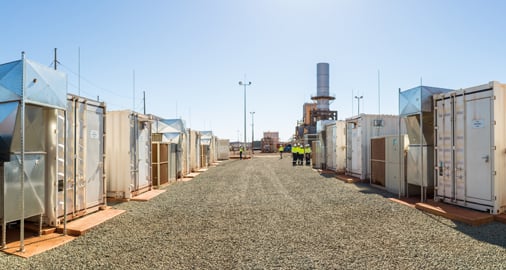
The South Korean battery manufacturer and energy storage system (ESS) provider installed 5MW / 12MWh of energy storage across three sites in Chungchoeng, constituting one project, while the other project has seen 8MW / 28MWh of energy storage connected to 10MW of PV, distributed around the country at nine sites. The first tranche was completed with EPC firm Razzler, the second executed for Korea Midland Power. Both projects will offer capacity firming for the PV systems and load shift the output of solar to the grid.
South Korea has placed a great deal of importance on ESS-connected PV, with the country targeting a 20% share of energy generation from renewables by 2030, from just 4% in 2016 and has incentivised the combined technologies accordingly. Higher value Renewable Energy Certificates (RECs) can be earned by solar-plus-storage systems which output their energy to the grid during off-peak hours, between 4pm and 10am.
Kokam’s Power Solutions Division VP Ike Hong said the two projects introduce Kokam’s latest high-energy 100 Ah HE NMC cell. “We provide the technology and expertise that PV and other renewable energy project developers and owners need [in order] to integrate safe, high-energy storage into their projects,” he said.
Try Premium for just $1
- Full premium access for the first month at only $1
- Converts to an annual rate after 30 days unless cancelled
- Cancel anytime during the trial period
Premium Benefits
- Expert industry analysis and interviews
- Digital access to PV Tech Power journal
- Exclusive event discounts
Or get the full Premium subscription right away
Or continue reading this article for free
The 28MWh delivered for Korea Midland Power will consist for the most part of the 100Ah HE NMC cells, which has a new active material in the anode. Kokam claims the cell’s energy density is boosted by 26% to 204.4Wh per kg, due to a new additive in the electrolyte. All systems have battery management systems (BMS), battery protection units (BPU) and fire suppression built in by the manufacturer.
SolarEdge recently signalled its intent to take over Kokam, already buying 75% of shares for around US$88 million. In a recent earnings call, SolarEdge CEO Guy Sella said that this was done with an expectation of a world where at least one-third of PV systems come with integrated energy storage, while fellow executive Lior Handeslman told Energy-Storage.news that the acquisition will allow SolarEdge to become a “one-stop-shop” destination for solar-plus-storage and other distributed energy solutions.