Spanish renewables developer Acciona Energía has unveiled plans to install two battery energy storage systems (BESS).
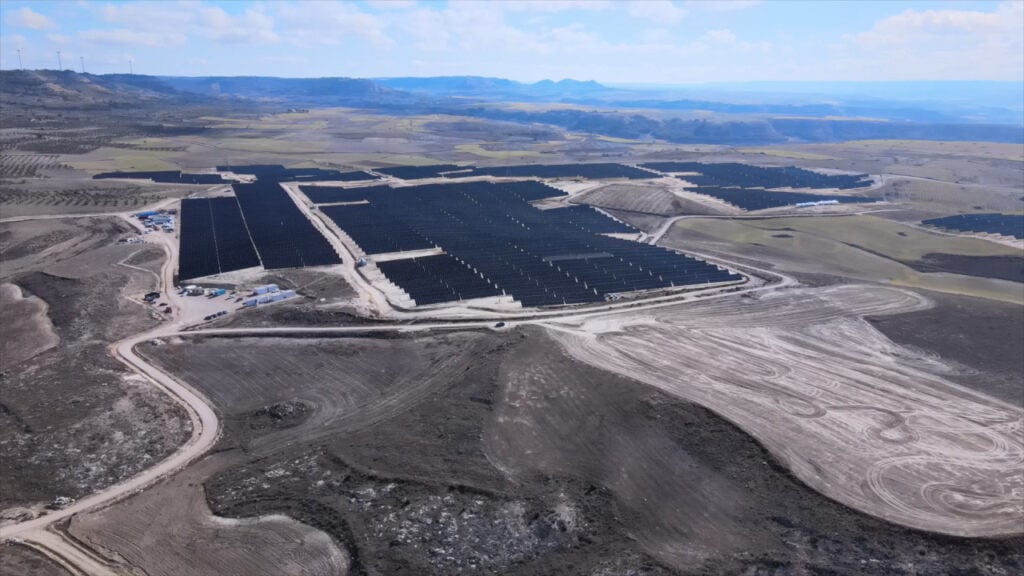
Both projects will be located near operational renewable energy plants. The first project will have a 20MW and 2-hour storage duration installed near the 50MW Bolarque solar PV plant in the centre-east province of Cuenca.
The second BESS project will have an installed capacity of 13MW/26MWh and be built near the El Cuadrón wind farm in the northern province of Palencia.
This isn’t the developer’s first foray into hybridising renewables with energy storage. According to Acciona Energía, it commissioned Spain’s first hybrid BESS integrated with a grid-connected wind farm project back in 2017. The company also installed an energy storage system using second-life batteries from electric vehicles at its Extremadura III PV complex in Badajoz, central-eastern Spain.
Try Premium for just $1
- Full premium access for the first month at only $1
- Converts to an annual rate after 30 days unless cancelled
- Cancel anytime during the trial period
Premium Benefits
- Expert industry analysis and interviews
- Digital access to PV Tech Power journal
- Exclusive event discounts
Or get the full Premium subscription right away
Or continue reading this article for free
Interest in hybrid renewables-plus-storage projects in Spain comes not only from developers but also from the Spanish government. Earlier this month, the Spanish Ministry of Ecological Transition (MITECO) awarded €433 million (US$500 million) in funding to 524 renewable energy projects co-located with BESS, most of which were for solar-plus-storage.
The programme, called RENOINN 2, awarded a total of 2.3GWh of energy storage capacity, eight times the awarded capacity (351.6MWh) in the first iteration of the programme.
Moreover, outside of its home country, the company has made plans to double its BESS portfolio in Chile with the addition of a gigawatt-hour-scale BESS at an operational solar PV plant in the Atacama Desert, northern Chile. Integrated into the solar PV plant El Romero (246MWp), the BESS project is expected to begin commercial operations by the end of 2027 and will have a 196MW/980MWh capacity.
The company has also started construction on another 1GWh BESS project in the South American country last year. The project will be located at the Malgarida solar PV complex which has been operational since 2021.