There are several potential benefits to pairing electricity generation with energy storage, but US network operators still have some way to go to best accommodate the fast-growing interest in so-called ‘hybrid resources’.
That was one of the key takeaways of a recently published white paper, authored by staff at the US’ Federal Energy Regulatory Commission (FERC). Across the country’s six major regional transmission organisations (RTOs) and independent system operator (ISO) jurisdictions, there were more than 62GW of hybrid projects in interconnection queues at the end of 2020, according to research FERC quoted from Lawrence Berkeley National Laboratory.
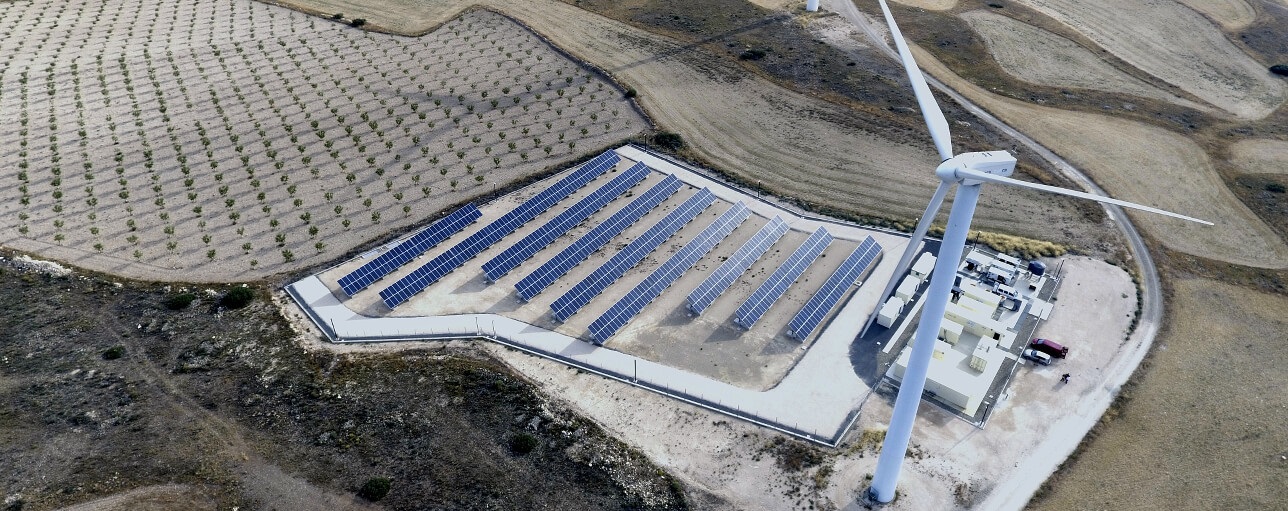
The majority of these are solar-plus-battery storage but there are also projects in development that combine wind with electricity storage, natural gas with electricity storage and solar-wind-storage. FERC staff noted that as well as encompassing different technologies, hybrids are often separated out into generation and storage projects that share a point of interconnection to the grid but act as separate resources (co-location), versus projects where the two resources are combined, for example to make solar PV dispatchable to the grid as required (integrated).
RTOs and ISOs are responsible for wholesale electricity markets in their service territories as well as the reliable delivery of electricity down the wires. FERC noted that both co-located and integrated hybrids can offer numerous benefits in RTO and ISO markets including:
Try Premium for just $1
- Full premium access for the first month at only $1
- Converts to an annual rate after 30 days unless cancelled
- Cancel anytime during the trial period
Premium Benefits
- Expert industry analysis and interviews
- Digital access to PV Tech Power journal
- Exclusive event discounts
Or get the full Premium subscription right away
Or continue reading this article for free
1. Facilitating the integration of variable renewable energy resources
2. Shifting generation from lower priced, off-peak periods, to higher priced peak periods
3. Increase operational flexibility, thereby enhancing technical performance and capability
However, current market rules are not always such that they recognise these values.
FERC’s white paper comes as a result of a technical conference on hybrid resources hosted last July by the Commission. At that online conference, which was extensively reported on by Energy-Storage.news, FERC Commissioner Richard Glick (now FERC Chairman) said that it was necessary to examine whether market rules had been acting as barriers and assess what actions could be taken to lower those barriers.
During that technical conference, stakeholders from renewable energy tech companies, developers, utilities, wholesale electricity suppliers and assorted RTOs and ISOs as well as trade associations and experts presented their views and findings. The white paper has been put together with findings from these presentations as well as from further submissions from stakeholders made post-conference.
The white paper as such deals with the many complexities that integrating the new class or classes of assets presents for RTOs and ISOs. Among these include that software and market power mitigation rules used by the network organisations do not yet accurately represent the different factors considered by asset operators to determine when they should charge or discharge the energy stored.
However, several RTOs and ISOs have said that they will learn from experience from hybrid resources that are being deployed today and others said that they will continue to hear views from stakeholders to figure out the best market participation rules and structures.
Berkeley Lab said in a recent study that it can often also be difficult to determine whether hybrid resources or standalone battery storage can offer the most value to the electric grid and that such determinations might have to be calculated on a case-by-case basis.
The FERC Hybrid Resources White Paper can be downloaded from the Commission’s site here.