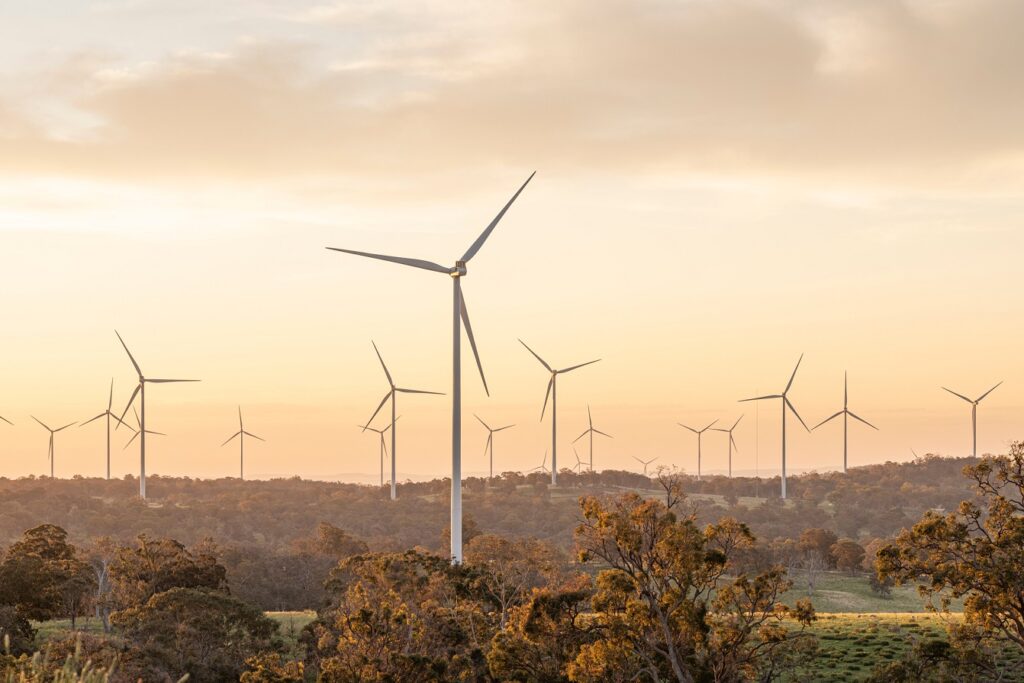
Huge wind power deployments and the limitations of the existing fleet of pumped hydro energy storage (PHES) are driving the battery storage market in Finland, a local system integrator said.
That’s according to executives from Merus Power speaking to Energy-Storage.news at Energy Storage Summit last week. The firm provides turnkey battery energy storage solutions including system integration, long-term operation and management (O&M) and optimisation through its energy management system (EMS).
“The big driver for energy storage here is wind power. We have around 4GW online, covering some 30% of the current load, and that is set to double every year in the coming years to around 50/60GW,” said Mikko Marttala director project development & financing.
Battery storage projects in Finland are mainly focused on an ancillary services market of around 400MW, with around 100MW of operational batteries playing in the market today. Pumped hydro has in the past dominated this market but, as is happening in Sweden, this is starting to change.
Try Premium for just $1
- Full premium access for the first month at only $1
- Converts to an annual rate after 30 days unless cancelled
- Cancel anytime during the trial period
Premium Benefits
- Expert industry analysis and interviews
- Digital access to PV Tech Power journal
- Exclusive event discounts
Or get the full Premium subscription right away
Or continue reading this article for free
Marttala: “Historically the ancillary service market has been dominated by pumped hydro power but with more wind you need faster response and hydro cant do that – that is creating a new need for batteries.”
What’s more, pumped hydro operators are actually looking to bring in batteries to their operations for this very reason, as sales manager for Central and Southern Europe Jaakko Poutamo explained.
“The pumped hydro facilities are also interested in battery storage themselves to complement their units. They want to use batteries for the initial, rapid response and then use PHES for the rest once it’s warmed up,” he said.
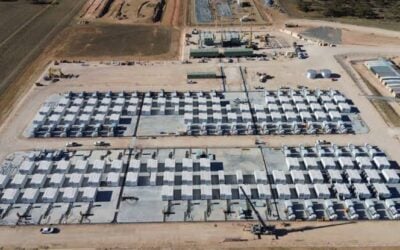
Merus Power is providing a 30MW/36MWh standalone battery energy storage system to developer Taaleri Energia, the country’s largest by energy capacity, for an April 2024 delivery date. French renewable independent power producer Neoen has deployed a 30MW/30MWh system first announced in 2020.
Marttala and Poutamo do expect to see more wind power projects to be colocated with battery storage although point out that they don’t need to share the same site to be linked in that way.
“Finland is moving to this 15-minute settlement period which will increase the balancing cost of the wind companies so we expect to see more combined wind-battery projects in Finland,” Marttala said. Energy-Storage.news recently reported on a project pairing both wind and solar with battery storage.
While grid and electricity market reform were a huge talking point at the two-day event in London, Marttala was relatively sanguine on the need for substantial changes.
“Fingrid (the country’s transmission system operator or TSO) is one of the most accommodating TSOs we have come across. They understand they have a huge need for fast reserves so they are pushing to get these ESS projects online, they’re very helpful.”
“The market is at a very good point. The rules are such that if you understand them you can make feasible projects. What we need is for investors to understand how the battery markets have developed over time, and who are willing to take the risk. I don’t believe in things like TSO giving us long-term revenues, the market-based approach is fair to everyone. If you know how to develop it and be cost-effective, you will succeed. What you need is an investor to take that risk.”
Merus will deploy around 100MW of battery storage a year over the next three years, the pair said. Alongside the 100MW of batteries online participating in frequency markets today, another 100MW is sited at nuclear power plants as backup power.
Whether a new 530MWh pumped hydro energy storage unit going online at the end of 2025 will affect the battery storage market remains to be seen.