The Ministry of Economic Affairs and Employment in Finland has granted €19.5 million (US$19.3 million) to a hybrid plant project combining wind, solar and 25MW/50MWh of battery storage.
The government body is providing the funding to independent power producer (IPP) Ilmatar Energy for the construction of the renewable energy parks in the areas of Alajärvi and Kyyjärvi, at a total cost of €314.8 million.
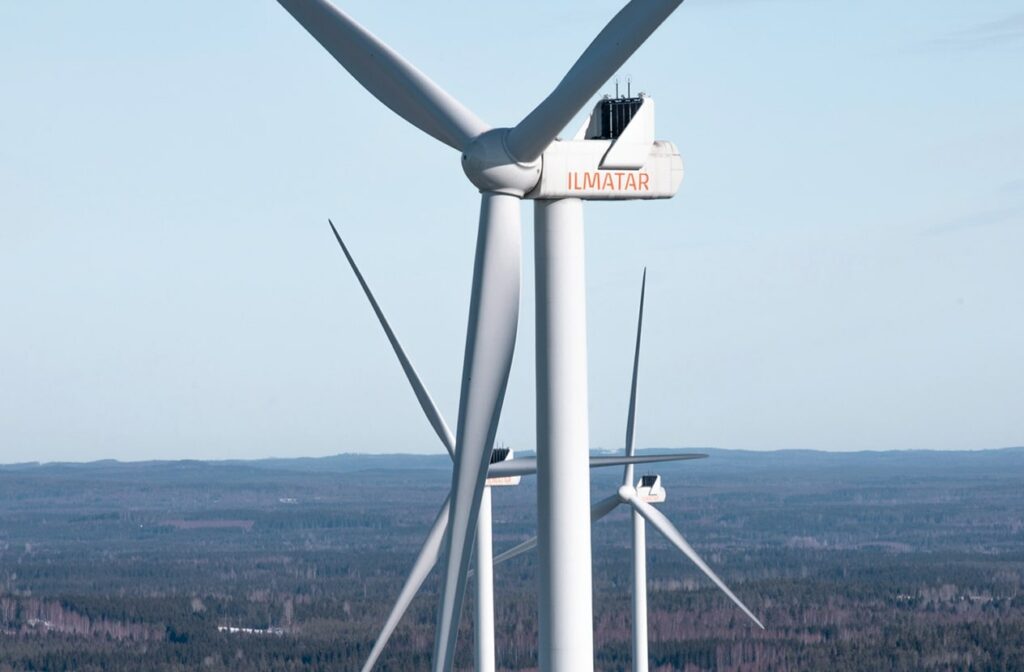
A wind farm in Alajärvi will comprise 36 wind turbines totalling 216MW of power, costing €217 million to build. The company said that this portion of the project is not receiving any of the grant money, and that construction has already begun.
The solar array will have a capacity of 150MWp with an attached battery energy storage system (BESS) of 25MW/50MWh, a two-hour duration. Those two assets make up the remaining €97.8 million of project investment.
Try Premium for just $1
- Full premium access for the first month at only $1
- Converts to an annual rate after 30 days unless cancelled
- Cancel anytime during the trial period
Premium Benefits
- Expert industry analysis and interviews
- Digital access to PV Tech Power journal
- Exclusive event discounts
Or get the full Premium subscription right away
Or continue reading this article for free
The company was less clear on when the solar and storage project would be built, saying that the ‘project planning phase’ will be launched at the beginning of 2023.
The project is in line with Finland’s Recovery and Resilience Plan, the EU-wide initiative to help member states recover from the effects of the Covid pandemic, meaning it qualified for the grant aid scheme. The scheme is also aimed at reducing the technological and economic risks of renewable energy and new energy technology, to accelerate the green transition and reduce dependency on energy imports from Russia.
Juha Sarsama, CEO of Ilmatar, said: “The hybrid park project will make use of the electrical infrastructure built for wind power in the park area. The combination of different energy generation and storage solutions will bring significant synergy benefits, enhancing both land use and the use of equipment. Solar power and wind power also directly balance each other – strong winds often occur when the sun doesn’t shine, while the air is often still during sunny weather.”
Finland has a growing array of wind farms and BESS projects can help balance out their wide variability, although it’s not clear if the two assets are directly connected in Ilmatar’s project.
The country has been notable in the energy storage space more for non-lithium-ion projects recently, including a sand-based thermal energy storage system which made headlines around the world. In March, it was announced that a plant processing vanadium, the mineral integral to vanadium redox flow batteries (VRFBs), would open in 2024.