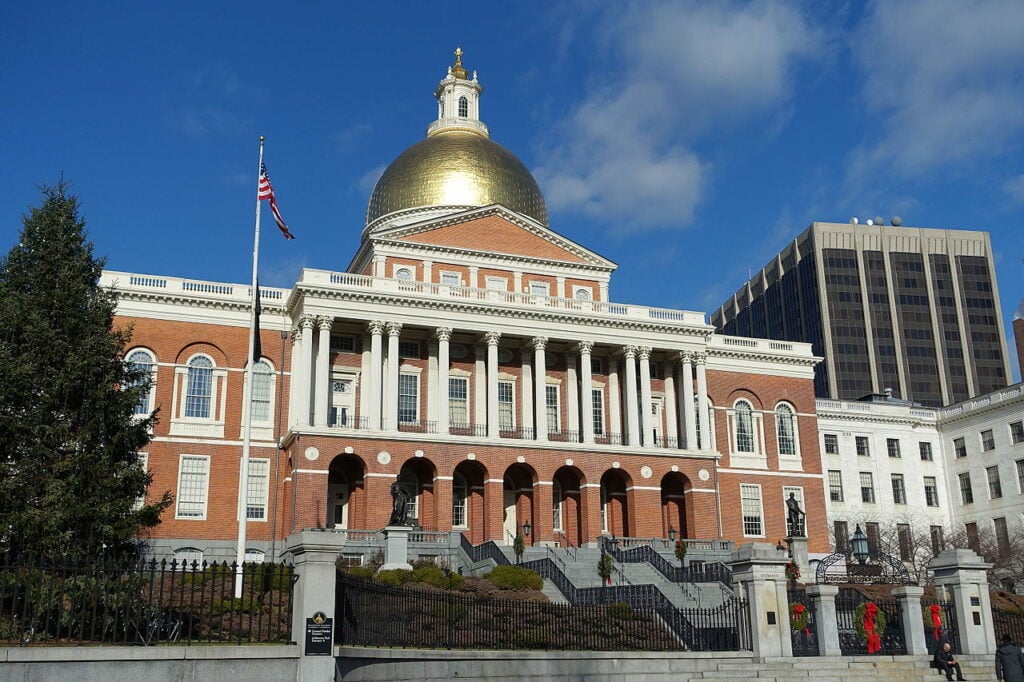
The US state of Massachusetts has taken steps to further its goal of procuring 5,000MW of energy storage by 2030.
The state’s Department of Energy Resources (DOER) has partnered with the state’s electric distribution companies (EDCs) to file a draft request for proposals (RFP) to the MA Department of Public Utilities (DPU) for procuring 1,500MW of mid-duration battery energy storage systems (BESS).
The EDCs, also the investor-owned utilities (IOUs), in the state are Eversource, National Grid and Unitil.
Eversource and National Grid have switched between serving the most customers in the state depending on the year.
Try Premium for just $1
- Full premium access for the first month at only $1
- Converts to an annual rate after 30 days unless cancelled
- Cancel anytime during the trial period
Premium Benefits
- Expert industry analysis and interviews
- Digital access to PV Tech Power journal
- Exclusive event discounts
Or get the full Premium subscription right away
Or continue reading this article for free
In 2017, DOER communicated an energy storage procurement target of 200MWh, signed by then-Massachusetts Governor Charlie Baker, Lt Governor Karyn Polito, secretary Matthew Beaton and commissioner Judith Judson.
As explained by the law firm Foley Hoag in a recent company blog post, the current Massachusetts Governor, Maura Healey, signed a new, expansive energy legislation in November 2024, which expanded the procurement of energy storage systems to 5,000MW by 31 July 2030.
Of the total 5,000MW, the act designates 3,500MW for mid-duration storage (more than 4 hours and up to 10 hours), 750MW for long-duration storage (more than 10 hours and up to 24 hours), and, if commercially feasible at a reasonable cost, 750MW for multi-day storage (more than 24 hours).
Existing storage systems can take part in the procurement.
The DOER and the EDCs’ joint draft RFP, which is not yet approved, is the first of at least four planned solicitations for securing 5,000MW by 31 July, 2030.
This filing is a staggered procurement schedule, outlined as follows:
- 1,500MW of mid-duration storage (environmental attributes) by 31 July, 2025 (the subject of this RFP).
- 1,000MW by 31 July, 2026.
- 1,000MW by 31 July, 2027.
- The remaining capacity (approximately 1,500MW) by 31 July, 2030.
An Independent Evaluator (IE) report of the draft RFP found it likely to attract competition and provide a cost-effective result for ratepayers.
The IE also suggested enhancements for future procurements, such as giving stakeholders more time to provide input, considering the addition of distribution-connected projects and examining regional collaboration with other states to maximise benefits and lower costs.
DOER and the EDC proposed issuing the RFP on 31 July 2025, but that date will depend on the DPU issuing an order.
As of 31 December 2024, Massachusetts’ utilities have made considerable progress in achieving the goals set out by the legislation.
Eversource had approximately 4,546MWh and 1,244MW of energy storage installed or in the pipeline in its service territory.
National Grid had approximately 8,826MWh and 1,059MW of energy storage installed or in the pipeline in its service territory.
These both represent over 100% of the previous statewide energy storage target of 1,000MWh to be achieved by 31 December, 2025.
Unitil had approximately 62.2MWh and 20.7MW of energy storage installed or in the pipeline in its service territory.
Unitil’s energy storage projects represent 6.2% of the statewide target.
Massachusetts is a part of the regional transmission organisation ISO New England, which also includes Connecticut, New Hampshire, Maine, Rhode Island and Vermont.
According to ISO New England, Massachusetts leads the region in demand growth and in both existing and proposed electric generating capacity.
Of the proposed generation, battery storage makes up the majority in the region, with 47%, wind follows with 45% and solar with 8%.