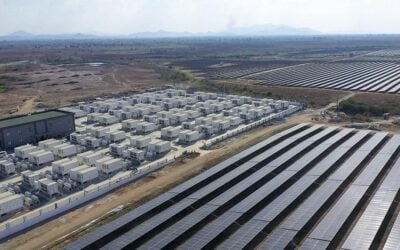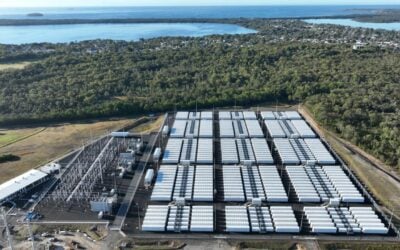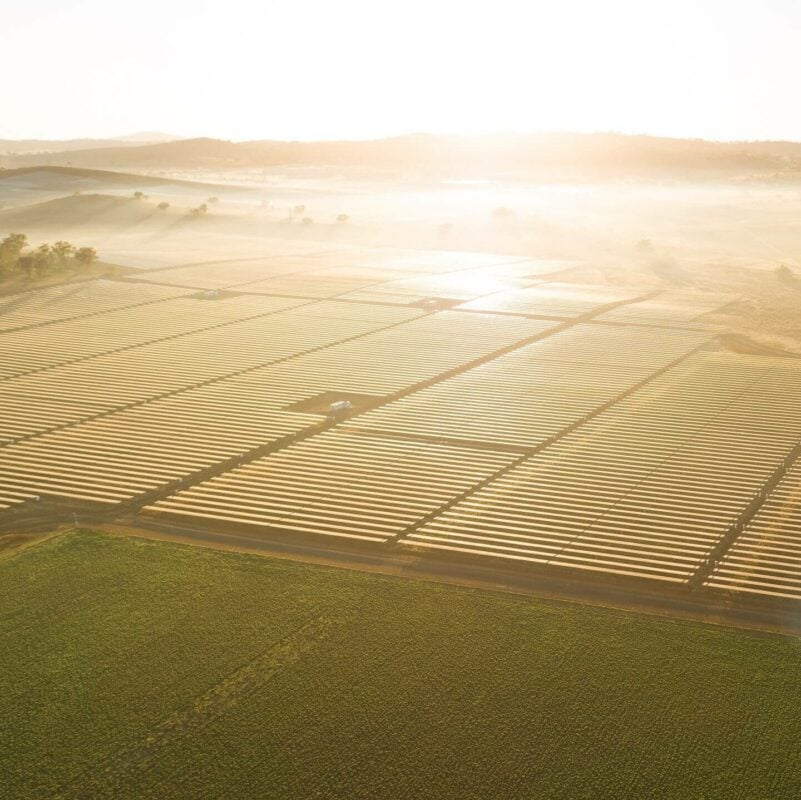
Lightsource bp has referred the Narrogin East Renewable Energy Project, a hybrid wind, solar and battery storage facility, to Australia’s federal government for assessment under the Environment Protection and Biodiversity Conservation (EPBC) Act.
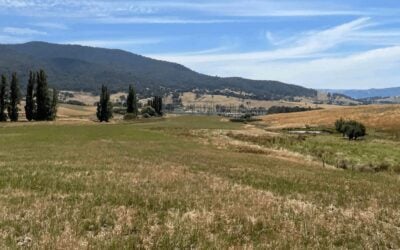
The project combines approximately 250MW of wind generation, 150MW of solar PV and a 200MW/800MWh centralised battery energy storage system (BESS), located around 190km southeast of Perth in the Wheatbelt South region of Western Australia.
The development envelope covers approximately 4,481 hectares, with a disturbance footprint of 470 hectares, roughly 79% of which has already been cleared for agricultural use.
Lightsource bp, the Australian arm of British-headquartered solar and battery developer Lightsource bp, lodged the referral on 27 August 2026 through consultancy GHD.
Try Premium for just $1
- Full premium access for the first month at only $1
- Converts to an annual rate after 30 days unless cancelled
- Cancel anytime during the trial period
Premium Benefits
- Expert industry analysis and interviews
- Digital access to PV Tech Power journal
- Exclusive event discounts
Or get the full Premium subscription right away
Or continue reading this article for free
The project is designed to connect to an existing 220kV Western Power transmission line traversing the site, avoiding the need for new transmission infrastructure. Construction is expected to run from October 2027 to October 2057, spanning the project’s operational life.
The referral’s ecological assessment identified impacts to four conservation-significant fauna species within the development envelope, including Carnaby’s Black Cockatoo and the Forest Red-tailed Black Cockatoo, both listed as threatened under the EPBC Act.
The project is designed to clear up to 0.68 hectares of remnant native vegetation and 1.21 hectares of planted vegetation, with Lightsource bp stating the design avoids all identified breeding and roosting habitat for the two cockatoo species, including eight potential nesting trees.
No offsets are currently proposed, with Lightsource bp concluding the project is unlikely to result in a significant impact on matters of national environmental significance and therefore does not consider it a controlled action.
Narrogin East adds to a cluster of large-scale storage projects moving through EPBC assessment
The referral extends a run of sizeable battery storage and hybrid projects submitted for EPBC assessment in Australia over recent months. Octopus Australia referred the 500MW/2,000MWh Blackstone BESS in Queensland in September, a standalone facility built on a former coal mining site within the Swanbank Industrial Area, following the company’s earlier submission of the 1.2GW/4.8GWh Hanworth Battery Project in New South Wales.
Other developers have pursued the same site cluster. ZEBRE, a joint venture between HD Renewable Energy and ZEN Energy, submitted the 180MW/360MWh Noblevale Battery for EPBC assessment in August, also connecting to the Blackstone substation from a separate site within the same precinct, despite ZEN Energy’s administration process earlier in the year.
Hybrid projects combining generation and storage have also featured heavily in the pipeline. Samsung C&T Renewable Energy Australia submitted the 1,000MWh Boro solar-plus-storage project in New South Wales in July, pairing 150MW of solar PV with a 250MW/1,000MWh BESS, one of at least five projects the company has under development or technical study in the state.
The volume of submissions has drawn scrutiny over implementation speed. The Clean Energy Investor Group published a report in July calling on the federal government to prioritise faster, more consistent decisions under the reformed EPBC Act, representing developers and investors with more than 16GW of installed capacity and a project pipeline exceeding 46GW nationally.
The group’s report found that National Environmental Standards, an offsets calculator and a formal definition of “net gain” remained under development as of mid-2026, despite most assessment powers having already been delegated to the newly established National Environmental Protection Agency, with full commencement of the reforms required by December 2026.
Never miss an Australian energy storage story. Sign up for our Australia newsletter and get the latest project announcements, policy updates and market analysis delivered directly to you.