A new joint venture (JV) is evaluating building battery cell gigafactories in the US, based on advanced lithium-ion technologies, formed by investor Koch Strategic Platforms and manufacturer FREYR Battery.
Owned 50:50 by Koch Strategic Platforms (KSP) and FREYR, an initial 50GWh of manufacturing capacity would be developed by the JV by 2030, based on a platform developed by 24M Technologies, called SemiSolid.
Creating thicker electrodes than in other batteries which can enable higher energy density, 24M has claimed manufacturing processes the platform enables can reduce the steps, complexity and cost associated with manufacturing batteries for electric vehicles (EV) and energy storage systems (ESS).
Cells built using the SemiSolid platform are also more easily recyclable, according to 24M.
Try Premium for just $1
- Full premium access for the first month at only $1
- Converts to an annual rate after 30 days unless cancelled
- Cancel anytime during the trial period
Premium Benefits
- Expert industry analysis and interviews
- Digital access to PV Tech Power journal
- Exclusive event discounts
Or get the full Premium subscription right away
Or continue reading this article for free
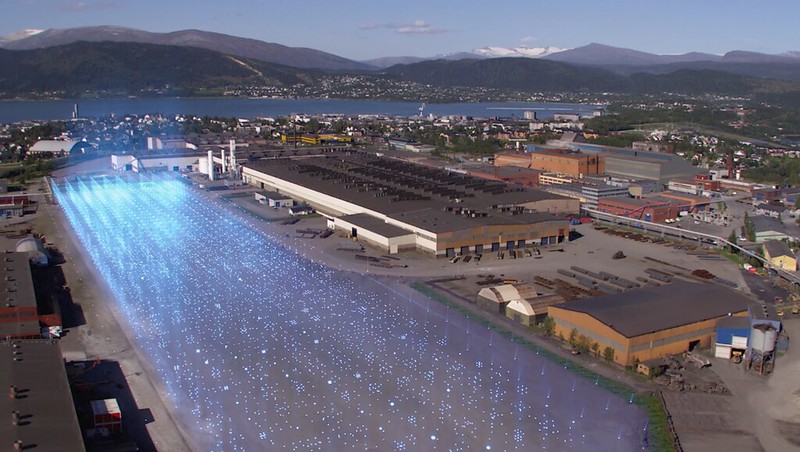
FREYR, a startup headquartered in Norway, is planning to build 43GWh of battery cell manufacturing facilities in its home country by 2025 and in June 2020 received financial backing for its initial 2GWh fab in the town of Mo i Rana. It has said its longer-term ambition is to build up to 83GWh of capacity by 2028.
The startup’s stocks and shares publicly listed on the New York Stock Exchange (NYSE) earlier this year, raising more than US$700 million in gross proceeds towards building what FREYR has described as “low-cost, low-carbon” cell manufacturing capacity.
Its strategy includes a focus on powering battery production with renewable energy and leveraging localised cell production and local supply chains.
FREYR’s NYSE listing was achieved in July through a merger with special purpose acquisition company (SPAC) Alussa Energy Acquisition Corp, and the combined company had a balance sheet worth about US$650 million in cash and cash equivalents.
FREYR had said in June that it was in negotiations over US production facilities. Yesterday it announced the JV with Koch Strategic Platforms, a high impact investment subsidiary of Koch Industries.
The initial 50GWh could be built by 2030 and a Final Investment Decision is expected next year.
US$70m investment into 24M Technologies
While each partner has so far committed to putting US$3 million into the gigafactory JV at this stage, the creation of the JV also entailed a US$70 million joint investment into 24M Technologies.
The licensing agreement allows for potential equity ownership in the tech company, as well as deep partnerships at the strategic, operational and financial level. KSP is investing US$50 million and FREYR US$20 million into 24M.
“This initiative could create jobs here in the US and foster continued adoption of transformative energy technology,” KSP president David Park said.
The potential of the 24M platform has been discussed by experts and industry insiders for several years. A spin-out from research groups at MIT, one of its co-founders is its chief scientist, Dr Yet-Ming Chiang, an MIT professor of material science and engineering.
Energy storage technology co-development or supply agreements have been signed with Japanese technology manufacturers Kyocera and Itochu and with Canada’s Eguana Technologies. The partnership with FREYR was announced in November last year.
In September, Energy-Storage.news reported that an automotive manufacturer in India, Lucas TVS, is planning to open a gigafactory using the platform by the second half of 2023.
Koch Strategic Platforms meanwhile is becoming something of a prolific investor into potentially disruptive energy storage technologies: the likes of iron flow battery maker ESS Inc, lithium battery recycling specialist Li-Cycle and zinc-based battery storage company Eos Energy Enterprises are among its recent investment targets.
Parent company Koch Industries is still better known for its background in fossil fuels industries, although it and its many group companies have diversified to be involved in a large number of different industry areas today, from chemicals and biofuels to polymers and fibres, software and data analytics and many others.
With nearly all battery products in the US imported from abroad today, supporting the domestic lithium value chain has become an important strategic policy focus for the country. Recently published research from BloombergNEF showed that this is poised to drive the country to be the biggest lithium battery industry player after China within a few years.