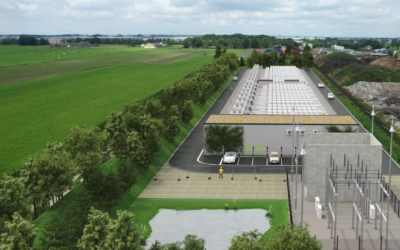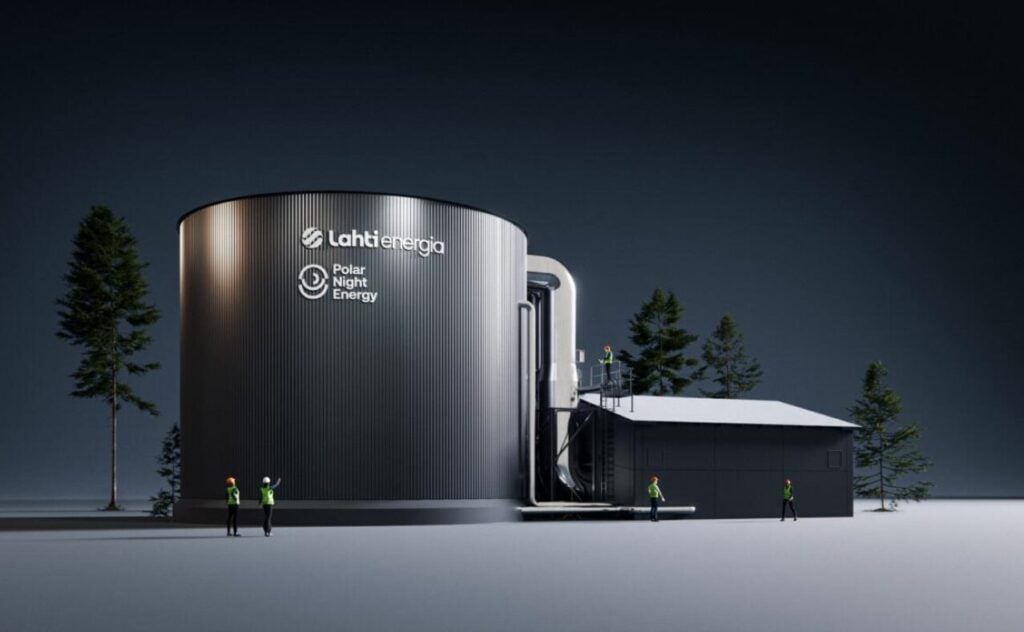
Technology provider Polar Night Energy and utility Lahti Energia have partnered for a large-scale project using Polar’s ‘Sand Battery’ technology for the latter’s district heating network in Vääksy, Finland.
The project will have a heating power of 2MW and a thermal energy storage (TES) capacity of 250MW, making it a 125-hour system and the largest sand-based TES project once complete.
It will supply heat to Lahti Energia’s Vääksy district heating network but is also large enough to participate in Fingrid’s reserve and grid balancing markets.
Polar Night Energy’s technology works by heating a sand or a similar solid material using electricity, retaining that heat and then discharging that for industrial or heating use.
Try Premium for just $1
- Full premium access for the first month at only $1
- Converts to an annual rate after 30 days unless cancelled
- Cancel anytime during the trial period
Premium Benefits
- Expert industry analysis and interviews
- Digital access to PV Tech Power journal
- Exclusive event discounts
Or get the full Premium subscription right away
Or continue reading this article for free
The project will cut fossil-based emissions in the Vääksy district heating network by around 60% each year, by reducing natural gas use bu 80% and also decreasing wood chip consumption.
It follows Polar Night Energy completing and putting a 1MW/100MWh Sand Battery TES project into commercial operations this summer, for another utility Loviisan Lämpö. That project uses soapstone as its storage medium, a byproduct of ceramics production.
This latest project will use locally available natural sand, held in a container 14m high and 15m wide. Lahti Energia received a grant for the project from state body Business Finland.
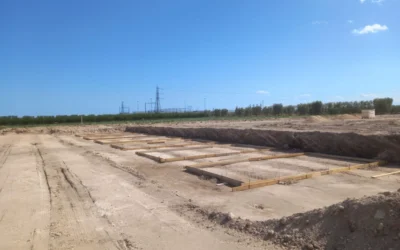
Polar Night Energy will act as the main contractor for the construction project, with on-site work beginning in early 2026, and the Sand Battery will be completed in summer 2027.
“We want to offer our customers affordable district heating and make use of renewable energy in our heat production. The scale of this Sand Battery also enables us to participate in Fingrid’s reserve and grid balancing markets. As the share of weather-dependent energy grows in the grid, the Sand Battery will contribute to balancing electricity supply and demand”, says Jouni Haikarainen, CEO of Lahti Energia.