Update 29 June 2022: The non-compliance with frequency control ancillary services (FCAS) obligations for which Hornsdale was penalised was accidental, and related to a defective firmware upgrade, according to Neoen Australia managing director Louis de Sambucy.
“We have co-operated with AEMO and the AER in a transparent and accountable manner throughout the investigation. Even though the AER has acknowledged that no actual loss or damage occurred due to the events in 2019 in the circumstances as they unfolded, we have since improved our systems, processes and training and have implemented remedial actions to minimise the risk of similar issues arising again,” de Sambucy said in a statement sent to Energy-Storage.news shortly after initial publication of this story.
The ruling yesterday resolves the matter, and Hornsdale Power Reserve (HPR) had already admitted its contraventions of three National Electricity Rules clauses at a February hearing, according to the managing director. HPR has worked with AEMO and AER to improve its compliance with laws and rules around FCAS, de Sambucy said.
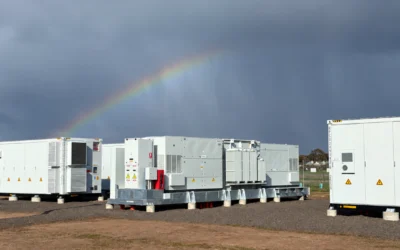
Hornsdale Power Reserve in South Australia has been fined for breaching National Electricity Rules over a three month period in 2019.
Try Premium for just $1
- Full premium access for the first month at only $1
- Converts to an annual rate after 30 days unless cancelled
- Cancel anytime during the trial period
Premium Benefits
- Expert industry analysis and interviews
- Digital access to PV Tech Power journal
- Exclusive event discounts
Or get the full Premium subscription right away
Or continue reading this article for free
Operators of the then-100MW/129MWh battery energy storage system (BESS) project – since expanded to 150MW/193.5MWh – made offers to the Australian Energy Market Operator (AEMO) that it could provide contingency services into the National Electricity Market (NEM) between late July and late August 2019.
However, when a coal power plant in the region tripped and Hornsdale was called on to provide those services, it did not do so. The Federal Court ruled this week that a fine of A$900,000 (US$620,000) is payable for this failure to meet its obligations.
As reported by Energy-Storage.news last September, the Australian Energy Regulator instituted proceedings in the Federal Court on AEMO’s request.
AEMO became aware of the situation after Queensland’s Kogan Creek 750MW coal power station ran into problems and caused network disruptions, leading to AEMO asking Hornsdale to make good on its contingency services promise and deliver frequency control ancillary services (FCAS).
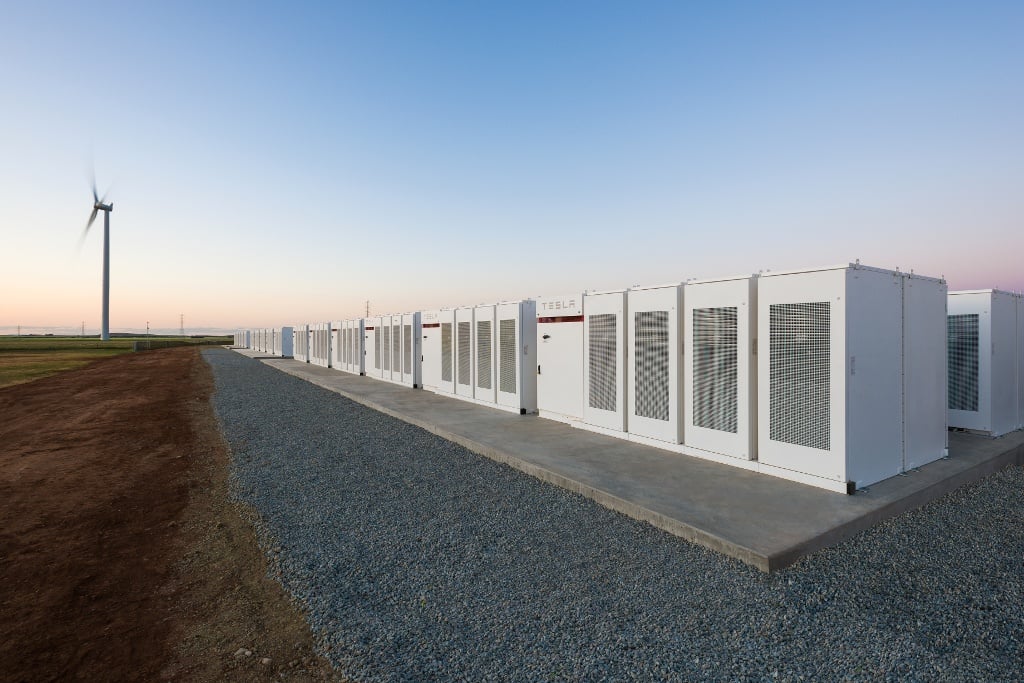
Hornsdale is one of the most famous large-scale battery storage systems in the world, built and connected to the grid in just 100 days, following a 2016 Twitter exchange between Tesla CEO Elon Musk and Australian tech billionaire Mike Cannon-Brookes.
Developed by French company Neoen using Tesla’s grid-scale BESS equipment, reports on the system’s technical operation and market participation have been positive besides this latest penalty being applied.
Last year, Neoen Australia’s managing director Louis de Sambucy pointed out that in its first two years of operation the BESS successfully reduced the costs of providing FCAS to South Australian consumers by A$150 million.
Hornsdale is “a critical positive contributor to maintaining the reliability and stability of the South Australian electricity network,” de Sambucy said.
While there was the one incident that alerted AEMO to Hornsdale’s inability to deliver, during proceedings the asset’s operators admitted it would have been unable to provide contingency services between 23 July and 14 August 2019. This was despite it receiving payments under the scheme.
Australian Energy Regulator chair Clare Savage said the penalty sent out a strong message to the market, although it remains to be seen whether any punishment will be forthcoming for some 3,000MW of coal plants which went offline for various reasons earlier this year. Those outages, many unplanned, helped plunge Australia into an energy crisis, as electricity prices soared.