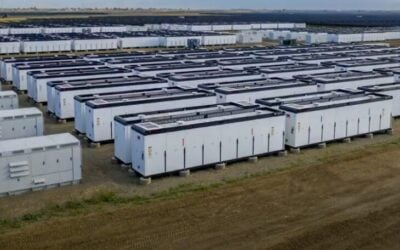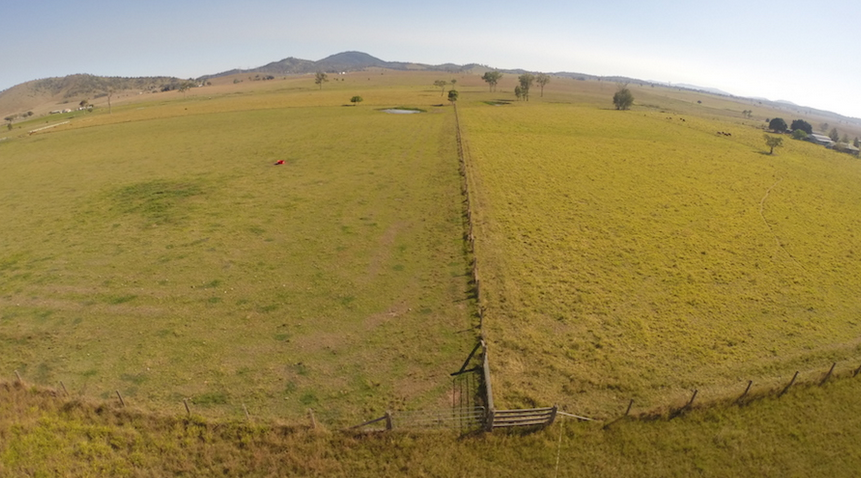
Queensland-based developer SolarQ is planning to build a 350MW(AC) solar plant combined with a ground-breaking 4,000MWh of lithium-ion battery storage in the Gympie Region of Queensland, Australia.
Scott Armstrong, SolarQ managing director, told Energy-Storage.News that there are plans to ramp up the Lower Wonga PV project to 800MW(ac) within four years. While the hybrid project is at concept stage, the company put in a council development application on Tuesday for the more than AU$2 billion proposal, generating a significant amount of media interest.
Armstrong said the firm has allocated a lay down area that can carry up to 4,000MWh of battery storage, and when asked about how he planned to carry out what would be perhaps the most ambitious storage project globally to date, he claimed that the project size is probably is biggest benefit – even an enabling factor.
Aiming to complete a first phase of 892MWh storage within a 12-month period by Q3 2018, with another three phases of roughly 1,000MWh to follow, Armstrong said: “From a technical point of view I can give thousands of reasons of why you need higher volumes of storage and the big one is economies of scale. You get some really good pricing when you’re doing big orders because it allows [the manufacturers’] factories to run at full production.”
Try Premium for just $1
- Full premium access for the first month at only $1
- Converts to an annual rate after 30 days unless cancelled
- Cancel anytime during the trial period
Premium Benefits
- Expert industry analysis and interviews
- Digital access to PV Tech Power journal
- Exclusive event discounts
Or get the full Premium subscription right away
Or continue reading this article for free
Having held discussions with the government, SolarQ is already working with a tier one storage provider and it has an in-house EPC team to develop the balance of plant and the inverter interface.
Explaining the overall need for storage, Armstrong added that gas resources have become scarce in Australia after being “oversold” into LNG markets, while gas plants are beginning to be mothballed. With gas once a “transitionary fuel” now being sold elsewhere, Armstrong said “that opens up an opportunity for other solid state peaking replacement plants”.
Thus, without open cycle gas turbines, the next go-to technology would be pumped hydro – which power firm Genex plans to combine with solar also in Queensland – but this has geographical limitations, unlike battery storage which can be installed exactly where the customer wants.
Referring to the newly-proposed project, Armstrong said: “The hub that we are connecting to connects to Southeast Queensland, which has an asset utilisation of around 54%, so it’s a very high flexing load. [So] you need a lot of peaking type plants or a lot of plants that have a capability of turning down and turning up. We believe that with the gas withdrawing and ageing coal plants, that leaves the gap then for battery technology to come in.”
Armstrong uses the terms “solid state peaker” to describe lithium-ion technology as it has no moving parts and is computer operated and instantaneous, in contrast to the pneumatics of pumped storage.
Prices are falling on a daily basis, according to Armstrong. Just three months ago the firm saw the battery prospect as 3-5 years away but now it expects to bring them in one year.
Solar PV plant
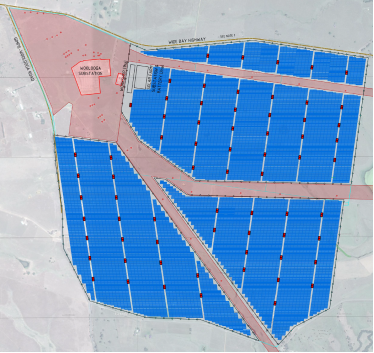
At 350MW(ac), the proposed PV plant would already be one of the largest PV systems in Australia, even before being ramped up. The project would be located adjacent to the high voltage substation in the Lower Wonga area. Power will be supplied via high voltage transmission lines to Gin Gin, Teebar Creek, Mungar, Kilkivan region, Gympie region, Palmwoods/Sunshine Coast, and Brisbane areas. It would generate roughly 735GWh per annum, enough to supply the equivalent of 127,000 homes.
Armstrong said the project is two hours from the nearest port and all its energy will be consumed within 100 kilometres of the site via connection to a fringe substation just north of Brisbane.
The project, with 1.3 million panels, would cover 572 hectares of cleared grazing land, with around 60 hectares allocated for transmission lines. It would create 450 jobs during an 18-month construction phase, with six to eight jobs at the servicing stages.
The company’s website reveals executives who have worked in the fossil fuels, renewables, mining, and energy storage sectors, with Armstrong having spent time working with pumped hydro and coal-fired power technologies.
The announcement is the latest in a flurry of major large-scale solar and battery energy storage proposals for Australia. Brisbane-based renewable energy investor Lyon Group will soon start building a AU$1 billion solar-plus-storage farm in South Australia. Meanwhile, both South Australia and Victoria have announced large-scale storage tenders.
However, Armstrong said that South Australia is looking for an hour’s worth of storage, but he believes more than an hour is needed to manage risks in terms of managing dispatch during times of volatility in power demand, something that mega-scale storage can provide.
Australia’s renewable energy industry has started to boom following the Australian Renewable Energy Agency’s large-scale solar funding round and investor confidence rebounding after the setting of the Renewable Energy target (RET) and the removal of former prime minister Tony Abbott.