The European Commission (EC) must “acknowledge the clear role of long-duration energy storage (LDES),” ten organisations, including Energy Storage Europe and the LDES Council, have urged.
The groups argue that long-duration energy storage, which they define as resources capable of providing power for 8-hour durations or longer, should be considered strategic infrastructure that will play a major role in Europe’s security and competitiveness.
As the European Union’s (EU’s) energy transition accelerates, LDES is essential in providing reliable baseload power without fossil fuel backup and maximising the use of renewable energy resources, while supporting the electrification of industry and enhancing the reliability of the energy system, according to a joint letter signed by the clean technology and energy storage associations.
The joint letter sent in May and announced publicly yesterday was addressed to EC Commissioner for Energy & Housing Dan Jørgensen, Executive VP for a Clean, Just and Competitive Transition Teresa Ribera and Commissioner for Industry, SMEs and the Single Market Stéphane Séjourné.
Try Premium for just $1
- Full premium access for the first month at only $1
- Converts to an annual rate after 30 days unless cancelled
- Cancel anytime during the trial period
Premium Benefits
- Expert industry analysis and interviews
- Digital access to PV Tech Power journal
- Exclusive event discounts
Or get the full Premium subscription right away
Or continue reading this article for free
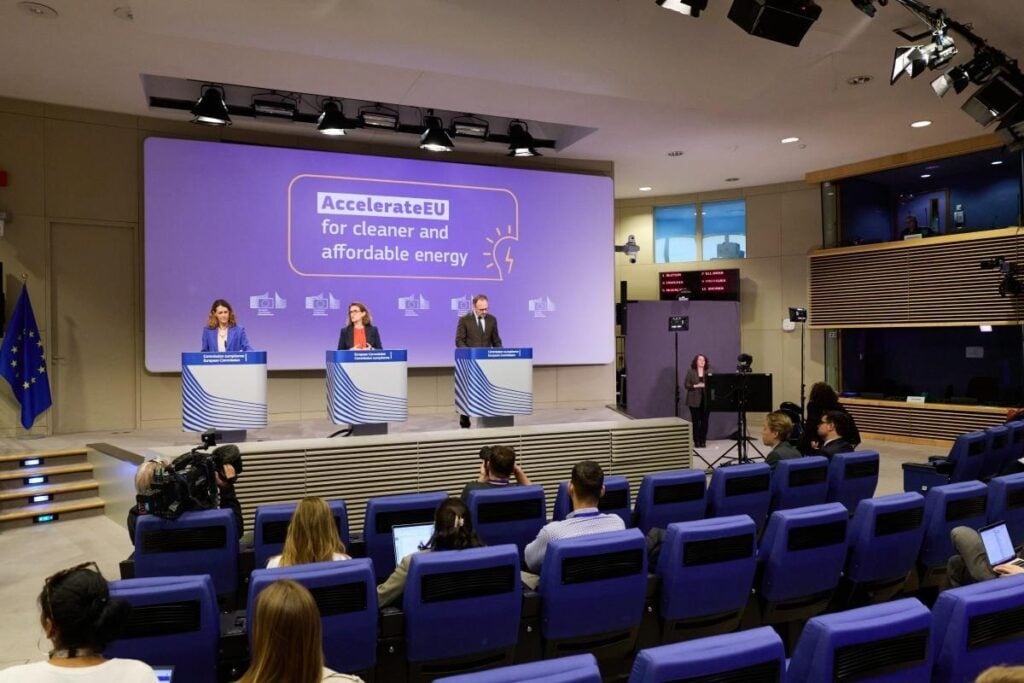
The call has been made within the context of both the EU’s overall energy transition goals and specific initiatives. These include the AccelerateEU plan to decouple from imported Russian fuel, the Electrification Action Plan and the strengthening of the bloc’s energy security framework.
Electrification is central to EU independence from external energy sources, the letter reads, with the ongoing wave of electrification across buildings, transport, heating, cooling, and digital infrastructure and services requiring emissions- and air-pollution-free flexibility to shift energy use over longer periods.
Energy Storage Europe (formerly the European Association for Storage of Energy, EASE), was part of a similar call back in January. Energy Storage Europe (ESE) policy director Jacopo Tosoni discussed the lack of consideration for long-duration technologies in a video interview with Energy-Storage.news back in February.
The European Union “never did proper modelling” and never correctly assessed energy system “adequacy and stability,” Tosoni said.
“Therefore, we’ve always undervalued long-duration energy storage. It has a huge role to play as we deploy more renewables, but already right now … the system is already telling us that something is not working.”
This can be seen in the huge amount of renewable energy curtailment during times of oversupply, he said, with the EU Joint Research Centre (JRC) projecting the cost of curtailment at €100 billion (US$116.1 billion) by 2040.
“We need to start thinking about deploying long-duration energy storage,” Tosoni said, speaking at the Energy Storage Summit 2026 in London, UK.
See Jacopo Tosoni’s video interview with ESN below. The clip is queued to begin where LDES enters the discussion.
The open letter also argues that LDES technologies could become an important industry and driver of economic growth within Europe, including manufacturing, supply chains and development of technical expertise.
Four recommendations for Commissioners
The open letter made four recommendations to the Commissioners:
- Explicit recognition of LDES as a separate asset class in the forthcoming EU Electrification Action Plan and the EU’s energy security framework. Characteristics such as duration, resilience and flexibility without emissions should be properly reflected in system planning, market design and frameworks for investment.
- Develop an EU roadmap for LDES. The EU has ordered Member States to create flexibility assessments for their energy systems. However, its requirements do not include assessment of long-duration needs, adequacy, grid planning, curtailment data and stress tests of energy security. A roadmap would identify priority use cases for LDES, the relevant duration ranges as well as barriers to deployment and investment needs.
- Sectors and regions where LDES can deliver immediate value should be identified, and markets should be created in those areas. These could include energy-intensive industries, data centres, critical infrastructure, islands and remote areas, regions with grid constraints and those rich in renewable energy resources.
- Bankability and revenue certainty for LDES should be enabled, recognising and rewarding the high value to the system that the technologies can provide. At the Energy Storage Summit 2026, Tosoni highlighted the UK’s Cap and Floor LDES revenue underwriting mechanism as a good example.
These actions would support European Union objectives, the organisations said, inviting the Commissioners to meet with them and discuss how LDES can be better integrated into planning and policy.
The letter has been signed by three energy storage-specific trade organisations:
- Energy Storage Europe
- LDES Council
- Flow Batteries Europe
Alongside renewable energy and industry transition groups:
- Cleantech for Europe
- Cleantech for Iberia
- Cleantech for Italy
- EnergyTag
- International Hydropower Association
- Future Clean Architects
- Tech for Net Zero