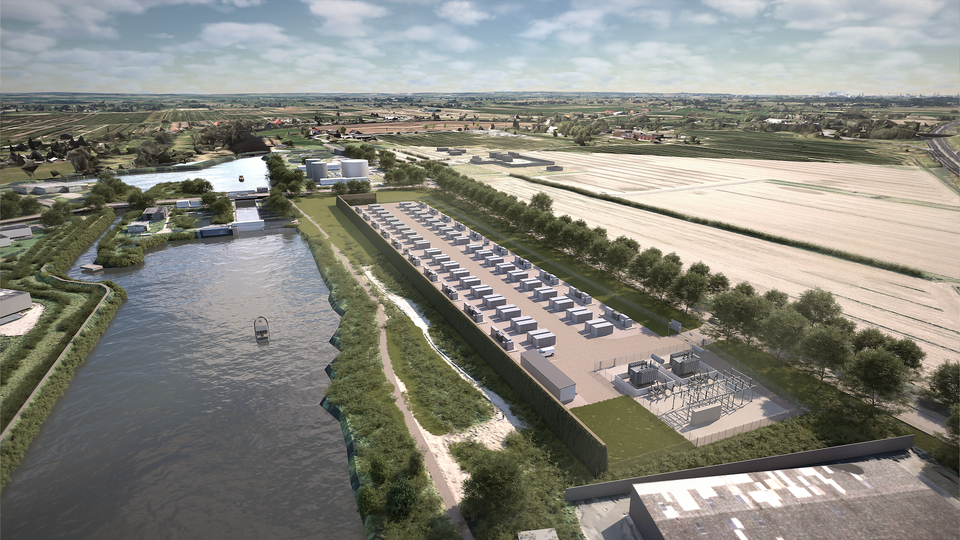
Flower and ENGIE have signed a seven-year virtual Flexibility Purchase Agreement covering 126MW of battery storage in Germany, effective from January 2029.
Meanwhile, DRI has selected Entrix to provide full-stack optimisation and trading for its 133MW Trzebinia BESS in Poland – currently the largest battery storage system in the country with a capacity market obligation starting in 2027.
Flower and ENGIE agree seven-year virtual toll for 126MW in Germany
Swedish energy technology company Flower and French utility ENGIE have signed a seven-year virtual Flexibility Purchase Agreement covering 126MW of battery energy storage system (BESS) output across two projects in Germany, effective from 1 January 2029.
The agreement covers Flower’s 100MW/400MWh project in Hamburg, which has been described as the largest BESS project in the city, and a 63MW/257MWh system in Döllnitz, Saxony-Anhalt, which Flower acquired from renewable energy company CCE in March 2026.
Try Premium for just $1
- Full premium access for the first month at only $1
- Converts to an annual rate after 30 days unless cancelled
- Cancel anytime during the trial period
Premium Benefits
- Expert industry analysis and interviews
- Digital access to PV Tech Power journal
- Exclusive event discounts
Or get the full Premium subscription right away
Or continue reading this article for free
Under the virtual toll structure, ENGIE secures long-term access to Flower’s flexibility and integrates it into its market activities, while Flower retains operational control and ownership.
ENGIE Germany’s managing director, Katrin Fuhrmann, said the partnership “illustrates how long-term partnerships can support the scaling of battery storage and reinforce flexibility in the energy system.”
Flower CEO John Diklev described the agreement as a new commercial model combining long-term partnerships with continued asset portfolio growth.
The deal arrives as Germany’s battery storage market navigates structural uncertainty. Industry participants at the Energy Storage Summit at The Battery Show Europe earlier this month argued that the design of Germany’s forthcoming capacity market is “critical” to enabling BESS participation, with warnings that current draft legislation is not technology-neutral and may disadvantage storage compared to thermal generation.
ENGIE has been active across European battery markets through a combination of direct ownership and structured agreements. The utility acquired 1.1GWh of synchronous condenser-paired BESS in Spain and began building a 220MWh project in France, while hiring former subsidiary NHOA Energy for a 320MWh Belgium storage project.
Entrix selected to optimise DRI’s 133MW Trzebinia BESS in Poland
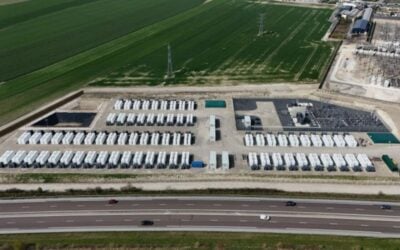
Renewable energy company DRI has selected battery optimisation specialist Entrix as the full-stack optimisation and trading partner for its 133MW Trzebinia BESS in southern Poland, following a competitive multi-stage tender process that included backtesting, live testing and cybersecurity review.
The Trzebinia project is among the first large-scale batteries in Poland to secure a 17-year Capacity Market contract, commencing in 2027, and is currently the largest BESS in the country with a capacity market obligation beginning that year.
DRI CEO Murat Cinar said the company conducted a “rigorous, multi-stage tender process” given the strategic importance of its first battery storage project in Poland and its long-term contracted obligations.
Under the agreement, Entrix will provide AI-based multi-market optimisation across all relevant Polish energy markets, targeting revenue stacking while maintaining compliance with the project’s Capacity Market obligations.
Entrix country lead, Poland, Aleksandra Radwanska, said that for assets with long-term capacity market obligations, “optimisation must go hand in hand with reliability and compliance.” Entrix currently manages 1.5GW of battery storage in Poland.
DRI secured approximately PLN 470 million (US$125.23 million) in construction financing backed by the Polish export credit agency KUKE, with lenders Erste Bank Polska, PKO Bank Polski, and UniCredit in June 2026, one of the first and largest standalone BESS project financings in Poland.
The Entrix mandate reflects a pattern of specialist optimisers winning contracts on large Polish BESS assets as the market matures. Earlier this month, four large-scale BESS projects totalling 2.2GWh in Poland, Spain and Belgium reached financial close in the same week targeting 2027 commercial operations.
In the most recent Polish capacity market auction, approximately 2.5 GW of new battery storage capacity was contracted, a roughly 44% year-on-year increase. EDF completed its 120MWh BESS in Poland while Eurus, NGN and Aretis progressed separate Central and Eastern European projects.