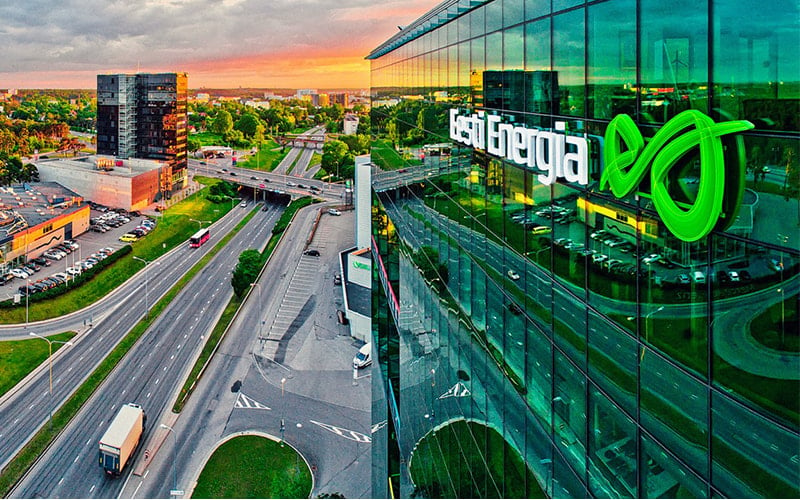
A state agency in Estonia has provided €5.2 million (US$5.7 million) in grants for 10 energy storage projects, including a 4MW/8MWh battery storage project from utility Eesti Energia.
The state-funded Environmental Investment Centre announced the grant funding for the ten projects being developed by six companies today (28 June). The six companies are Utilitas Tallinn, Utilitas Estonia, Sunly Solar, Prategli Invest, Five Wind Energy, and Eesti Energia, and three out of the ten are heat storage projects, with the remainder for storing electricity.
Estonia aims to produce 100% of electricity from renewable energy sources by 2030, and energy storage will be needed to balance the system, the country’s climate minister Kristen Michal said.
Kristjan Kalda, the EIC’s Project Coordinator for Energy added: “The ten pilot projects that have received a grant will also show other interested parties how the energy storage systems can be used.”
Try Premium for just $1
- Full premium access for the first month at only $1
- Converts to an annual rate after 30 days unless cancelled
- Cancel anytime during the trial period
Premium Benefits
- Expert industry analysis and interviews
- Digital access to PV Tech Power journal
- Exclusive event discounts
Or get the full Premium subscription right away
Or continue reading this article for free
Utilitas Eesti received €660,000 for heat storage projects in central water heating systems in Jõgeva and Rapla while Utilitas Tallinn receive a similar amount for a system next to the Tallinn Power Plant, which will increase the use of renewable energy in Tallinn’s integrated district heating network. The electricity storage projects accounted for the remaining bulk (75%) of the funding.
Sunly Solar OÜ received a grant for four projects, totalling €1.22 million including one at a solar plant in Tartu County, while OÜ Prategli received €273,500 for its own project co-located with solar PV.
The remaining two projects received the highest individual amount and will pair battery energy storage systems (BESS) with both wind and solar.
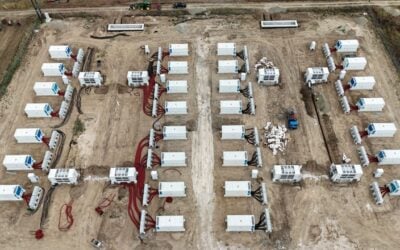
Five Wind Energy OÜ got €720,000 for a BESS for wind and solar energy in Saaremaa while Eesti Energy received €1 million for a 4MW/8MWh BESS at the Purtse wind and solar farm in Ida-Viru County.
Ida-Viru is also where Eesti Energia recently announced it plans to develop a 25MW/50MWh BESS through a competitive procurement, which it announced two months ago. It is not clear if the grant-funded project is part of that figure or an entirely separate project.
The funding came from Estonia’s portion of the Recovery and Resilience Facility, the EU-wide pot of money for helping countries to mitigate the negative effects of the Covid-19 pandemic. Other countries to have used the funding for energy storage (or other EU-wide schemes) recently include Hungary – reported on last week – Greece, Romania, Finland, Croatia and Slovenia.
As part of its push to balance growing renewable generation, Estonia is also building two-large pumped hydro energy storage (PHES) facilities. A 225MW project, also by Eesti Energia, could be completed by 2025-26 (duration not yet disclosed) while a 550MW/6GWh system from private investors could start commercial operations in 2028.
Although the PHES projects will clearly increase the country’s MWh energy storage capacity by a much greater degree than BESS, the latter is still needed. BESS can react much faster and so are better suited to providing certain ancillary services to the grid operator.
Energy-Storage.news’ publisher Solar Media will host the inaugural Energy Storage Summit Central Eastern Europe on 26-27 September this year in Warsaw, Poland. This event will bring together the region’s leading investors, policymakers, developers, utilities, energy buyers and service providers all in one place, as the region readies itself for storage to take off. Visit the official site for more info.