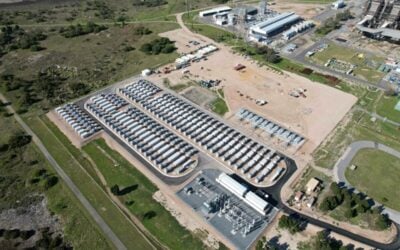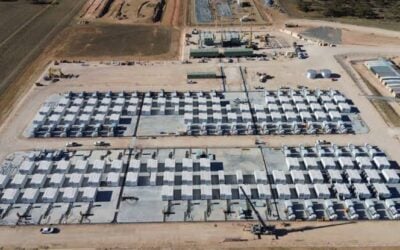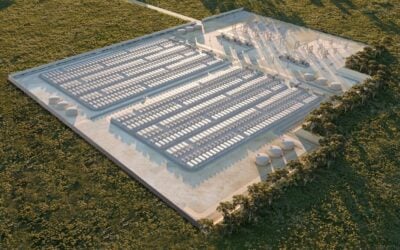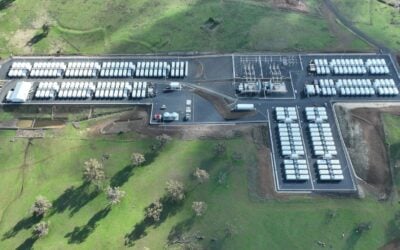
The Belgium arm of France-headquartered multinational utility Engie is proposing three battery storage projects totalling 380MW.
Engie Belgium announced it had submitted the permit applications last week in a post on business social network LinkedIn, saying the country’s growing renewable production meant an increased need for energy storage.
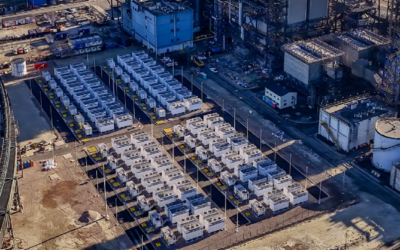
The battery energy storage system (BESS) projects are being proposed for sites in Drogenbos (80MW), Kallo (100MW) and Vilvorde (200MW).
Engie said they will help the power grid to manage peak demand by absorbing excess energy when renewables are abundant and discharging that back to the grid when needed, supporting the integration of more renewables and dampening price volatility.
Try Premium for just $1
- Full premium access for the first month at only $1
- Converts to an annual rate after 30 days unless cancelled
- Cancel anytime during the trial period
Premium Benefits
- Expert industry analysis and interviews
- Digital access to PV Tech Power journal
- Exclusive event discounts
Or get the full Premium subscription right away
Or continue reading this article for free
It concluded the post by saying the projects would be in collaboration with its subsidiaries research centre and engineering, procurement and construction (EPC) arm Tractebel.
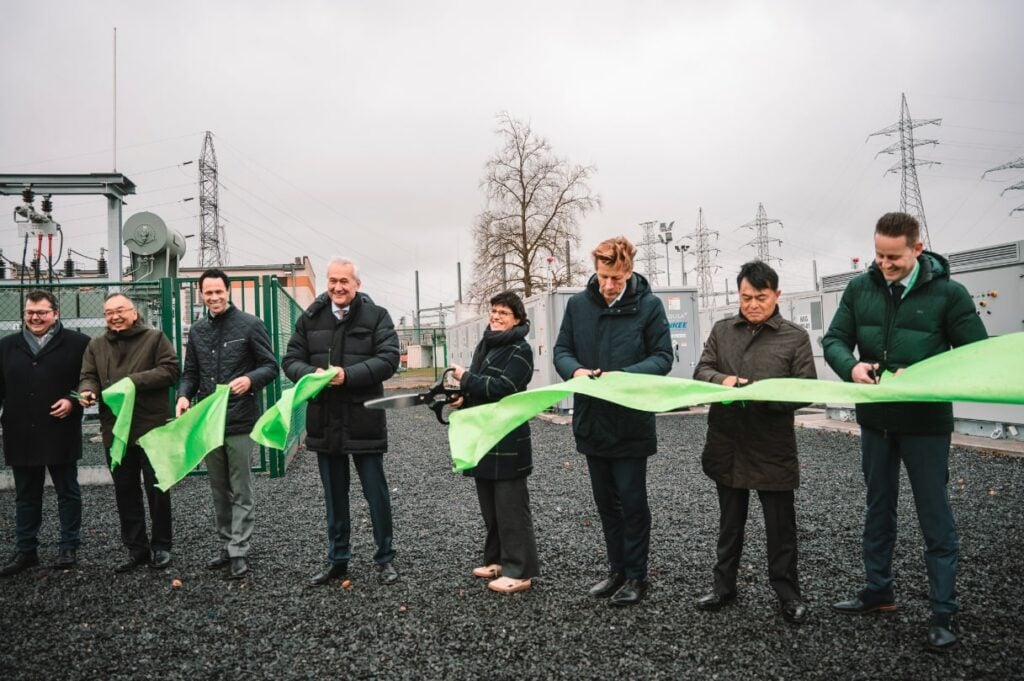
Whilst cutting the ribbon on a recently-commissioned 25MW/100MWh project last month, the Belgian Minister of Energy Tinne Van der Straeten said that more than 550MW of battery storage projects would be deployed in Belgium in the next few years. It is not clear if that includes the 380MW of projects proposed by Engie.
Another 100MWh project, this time with a nameplate power of 50MW, came online just before the turn of the year. Renewable energy company Yuso was involved in the development of both 100MWh projects and is optimising the systems’ discharge going forward.
BESS projects in Belgium can be monetised through energy trading, as Engie indicated its projects would target, or other revenue streams like flexibility services to grid operator Elia.
Harold Potvliege, product manager at optimiser Flexcity, recently said that distributed energy assets in Belgium can now provide all flexibility services needed by Elia, namely FCR and aFRR frequency response services. This means all utility scaled gas-fired power plants (CCGTs) in the country can be shut down.
Part of that flexibility can be provided by a residential energy storage virtual power plant (VPP), which Elia last year said can provide 15% of its flexibility needs.
Engie is active in battery storage markets across the world. Late last year, it ordered a 638MWh BESS from inverter and energy storage solution firm Sungrow for a Chile project, and acquired a 6GW pipeline of solar and storage projects in the US.
See more coverage of the Belgian energy storage market here.