Energy storage developer and system integrator Energy Vault has released its Q4 and full year 2025 financial results, showing growth credited to entering the AI infrastructure market, expanding projects in Australia and its ‘Asset Vault’ subsidiary.
Energy Vault gained recognition as the developer and intellectual property owner of a gravity-based energy storage solution. Since then, it has broadened its scope to include lithium-ion battery energy storage systems (BESS) and long-duration hydrogen storage technology.
The company’s latest financial results show 2025 revenue of US$203.7 million, a 340% increase from US$46.2 million in the prior year.
2025 GAAP net loss was US$103.6 million, reflecting a US$32.2 million improvement from the previous year’s loss of US$135.8 million.
Try Premium for just $1
- Full premium access for the first month at only $1
- Converts to an annual rate after 30 days unless cancelled
- Cancel anytime during the trial period
Premium Benefits
- Expert industry analysis and interviews
- Digital access to PV Tech Power journal
- Exclusive event discounts
Or get the full Premium subscription right away
Or continue reading this article for free
2025 Adjusted EBITDA decreased to a loss of US$21.2 million, compared to a US$58 million loss in the previous year. The company claims this improvement was fueled by increased revenue, improved gross margins resulting from lower costs per unit during project execution, and reduced operating expenses.
For 2025, the adjusted net income improved to a loss of US$42.1 million, better than the US$65.4 million loss in the previous year. As of 31 December 2025, total cash, including restricted cash, reached US$103.4 million, more than tripling the previous year’s amount and increasing by 67% from Q3 2025, also exceeding the earlier guidance range.
Energy Vault reaffirmed its Q3 2025 statement, noting that its improved financials were partly due to an increase in ESS projects in Australia and initial revenue from US-based, owned, and operated Asset Vault projects.
Asset Vault is the company’s wholly owned subsidiary dedicated to developing, constructing, owning, and managing energy storage assets worldwide.
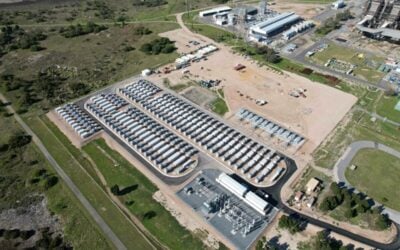
Energy Vault remains active in Australia. The company recently supplied BESS technology for a 320MWh project in the country, scheduled for completion later this year.
In February, Energy Vault finalised a supply agreement for 1.5GWh of sodium-ion (Na-ion) batteries, produced in the US by Peak Energy. The two firms will collaborate on developing a storage platform that integrates Peak Energy’s Na-ion batteries with Energy Vault’s proprietary digital stack, emphasising Energy Vault’s AI infrastructure portfolio. They assert that this approach accelerates deployment, enhances safety, and reduces costs by eliminating “complex legacy systems.”
Energy Vault projects total revenue for 2026 to be between US$225 million and US$300 million. This estimate considers the schedule of US battery deliveries, third-party project timelines, revenue from operating assets within Asset Vault throughout the year, and initial income from modular data centre and AI infrastructure projects.
The Energy Storage Summit USA 2026 will be held from 24-25 March 2026, in Dallas, TX. It features keynote speeches and panel discussions on topics like FEOC challenges, power demand forecasting, and managing the BESS supply chain. ESN Premium subscribers can get an exclusive discount on ticket prices. For complete information, visit the Energy Storage Summit USA website.