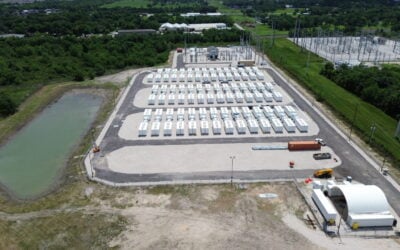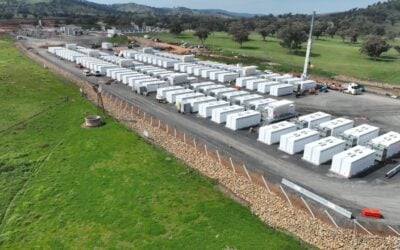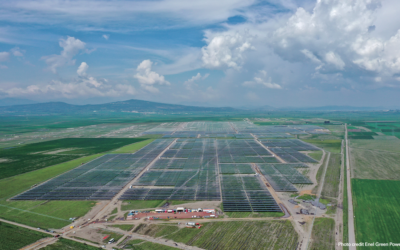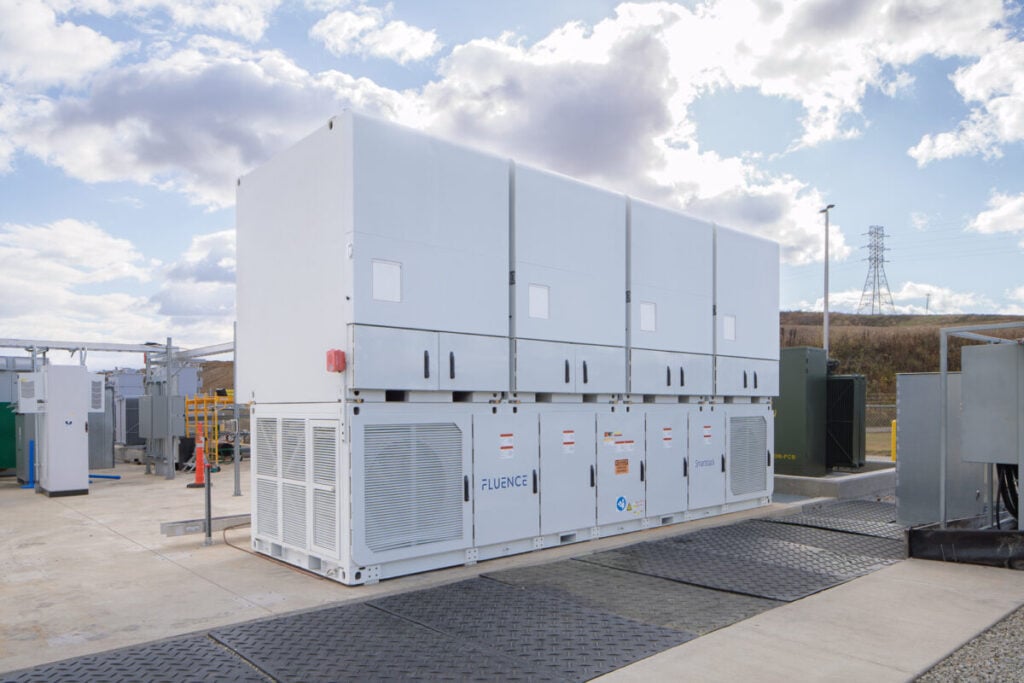
DNV has independently verified that Fluence’s global fleet of battery energy storage systems (BESS) achieved 98.7% MW-weighted availability.
The energy storage technology and software services company said it was a benchmark figure that customers and investors can rely on amid an industry where availability claims are common but rarely independently checked.
DNV reviewed Fluence-provided fleet-level availability data, the calculation methodologies incorporated into the company’s contracts and operational data for select projects.
The assessment validated Fluence’s internal findings of 98.7% MW-weighted availability across the reviewed global fleet, with a separate figure of 99.3% availability confirmed across reviewed operating fleets of 50MW and larger.
Try Premium for just $1
- Full premium access for the first month at only $1
- Converts to an annual rate after 30 days unless cancelled
- Cancel anytime during the trial period
Premium Benefits
- Expert industry analysis and interviews
- Digital access to PV Tech Power journal
- Exclusive event discounts
Or get the full Premium subscription right away
Or continue reading this article for free
Fluence chief customer success officer John Zahurancik framed the result as addressing a long-standing transparency gap.
“Customers invest in energy storage to deliver power exactly when it is needed, and every minute of downtime represents lost revenue and grid vulnerability. We worked with DNV to establish a validated benchmark that Fluence customers can count on,” Zahurancik said.
“Fluence systems are delivering availability among the best-performing power assets in the world, including thermal generation, renewable power, and other energy storage, maximising the return on investment.
Fluence noted that across the energy storage industry, availability figures of 95% to 98% are often promoted, but that definitions and measurement approaches vary considerably, making it difficult for customers, investors and asset owners to compare performance across suppliers.
What 98.7% actually means
The verification arrives at a moment when availability and uptime, related but distinct metrics, are becoming central to how BESS assets are bought, financed, and contracted.
Availability typically measures the proportion of time a system operates as intended, while uptime more narrowly refers to the time a system is actually online and not in an outage.
The two can diverge depending on how planned maintenance, derating and partial outages are treated in the underlying calculation.
That definitional ambiguity is precisely the issue Fluence’s announcement gestures toward but does not resolve.
Writing for Energy-Storage.news, Intertek CEA senior energy storage engineer Yilin Huang discussed the gap between contracted performance guarantees and real-world outcomes, describing scenarios in which a project “has delivered less than it modelled, less than the offtaker expected, and less than the financing assumed” even while remaining technically within the bounds of its contractual availability definition.
That distinction is critical for evaluating Fluence’s 98.7% figure against the competitive landscape.
Just days before DNV’s verification was announced, Sineng Electric used SNEC 2026 to launch a new liquid-cooled BESS platform that it says “ensures annual availability exceeding 99.5%, improving long-term economic value for utility-scale energy storage applications.”
The figure was attributed to a modular design that reduces downtime risks and maintenance complexity, alongside liquid-cooling technology that reduces internal temperature rise by 5K and cuts auxiliary power consumption by 30%.
On a simple percentage basis, Sineng’s claimed figure sits notably above Fluence’s DNV-verified 98.7%, even though Fluence’s number now carries third-party validation that Sineng’s does not.
The gap between 98.7% and 99.5% looks small on paper but is considerable in practice. The difference between 98.7% and 99.5% availability translates to roughly 70 additional hours of downtime per year for the lower figure, and the commercial impact of those hours depends entirely on when they occur.
A system that runs reliably for 362 days a year but goes offline during a three-day summer heatwave, when wholesale prices and capacity payments are at their highest, could underperform a competing system with nominally lower annual availability that stays online during those critical windows.
Fluence’s own Smart Service Plans offer an Availability Guarantee of up to 99% alongside what the company describes as the industry’s first Dispatchable Energy Guarantee, designed to enable 24/7 dispatchable energy availability with reduced buffers.
The timing of DNV’s verification is not incidental. Fluence’s order intake for the first half of its financial year reached US$2 billion, twice the prior year’s figure, with the company confirming master supply agreements with two hyperscale data centre customers.
For data centre operators, availability is not an abstract financial metric; even momentary disturbances to the 99.999% uptime guarantees that data centre tenants contract for can be costly, with analysts estimating the revenue impact of outages at AI-focused facilities at up to US$1 million per megawatt per day.
Against that backdrop, the difference between 98.7% and 99.5% availability for the battery systems protecting those loads is not a rounding error. It is the difference between a battery that occasionally fails to do its job during the load fluctuations it was installed to manage, and one that does not.