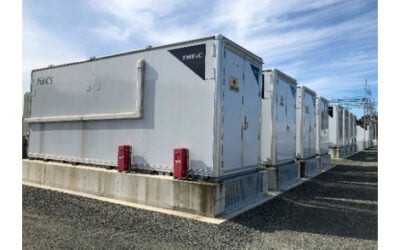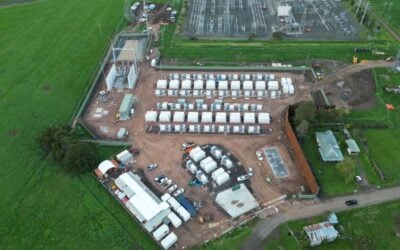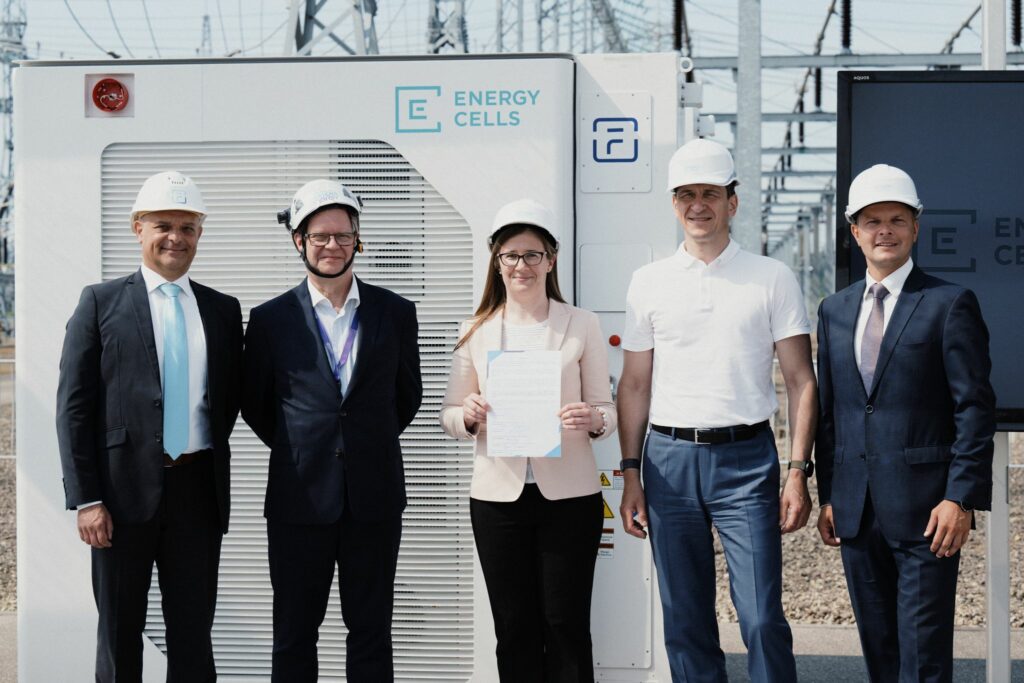
Construction has begun on the first of four battery energy storage systems (BESS) totalling 200MW/200MWh from global system integrator Fluence in Lithuania.
The Ministry of Energy of the Republic of Lithuania announced the launch yesterday (June 29) of “one of the most important energy projects in terms of national security”.
The project, which was confirmed in December 2021, will see state-owned special purpose group Energy Cells take responsibility for installing and operating the lithium-ion systems in partnership with Fluence and Siemens Energy.
The latter two will design, manufacture and connect the BESS to the transmission system and provide maintenance services for 15 years thereafter. Energy Cells is a subsidiary of state-owned energy sector holding company EPSO-G.
Try Premium for just $1
- Full premium access for the first month at only $1
- Converts to an annual rate after 30 days unless cancelled
- Cancel anytime during the trial period
Premium Benefits
- Expert industry analysis and interviews
- Digital access to PV Tech Power journal
- Exclusive event discounts
Or get the full Premium subscription right away
Or continue reading this article for free
The storage units will connect to substations in Šiauliai, Alytus, Utena and Vilnius, the capital where the construction was announced yesterday. They will enable the country’s energy security and reliable operation of the grid, mainly providing the instantaneous restoration of power through primary reserve.
They are set to be completed by the end of 2022 and will total €109 million of investment (US$114 million). Funding was allocated to the project under the EU‘s Recovery and Resilience Facility (RRF) NextGenerationEU plan called New Generation Lithuania.
The project is part of a wider push to synchronise and connect the grids of Baltic states and Ukraine with European grids, partially in order to make them independent of Russian energy and fuel (though obviously the project pre-dates the latter’s invasion of Ukraine).
Lithuania recently cut off its Russian fossil fuel supplies and is targeting a domestic energy generation mix of 70% by 2030, of which half will be renewables.
“The 200 MW portfolio of battery-based energy storage will be a critical component in providing resilience and energy security to the Lithuanian power system and continue to enable the accelerated integration of renewables,” commented Fluence’s growth & market development director EMEA Julian Jansen in a LinkedIn post.
Energy Minister Dainius Kreivys said that the project will help Lithuania to implement the ability to work in an isolated mode, described as ‘one of the most important tasks before synchronisation’ by the Ministry.
“The war in Ukraine has once again demonstrated the need for full energy independence, and with the beginning of installation of the batteries we are witnessing the beginning of yet another important phase for energy independence. We are ready for any action against our electricity system,” he said.
Michael Gillessen, Fluence Managing Director and Vice President EMEA Delivery added: “Despite challenges brought by the current geopolitical situation in Europe and the impact of a still present global pandemic, the majority of the equipment, including Fluence Gridstack storage products, have been already delivered in accordance with the project schedule.”