Renewable energy investment group CleanCapital and artificial intelligence-driven energy storage provider Stem Inc have provisionally agreed a financing partnership for US energy storage projects of 30MW or under.
The pair announced the signing of a Memorandum of Understanding (MoU) last week with a view to formalising the partnership once a workable framework structure is in place. The target market is largely consistent with Stem Inc’s track record of projects: commercial and industrial (C&I) energy storage systems and small front-of-meter projects, including solar-plus-storage new build and retrofits.
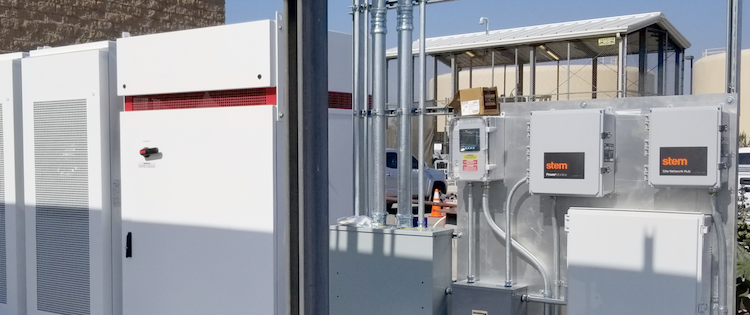
Stem Inc would help CleanCapital originate energy storage projects through providing expertise and support, as well as offering its energy storage hardware which it builds with components from a number of different manufacturers, and also Stem’s software platform, called Athena. Stem would then get to be CleanCapital’s preferred energy storage provider with right of first refusal on all projects the partners originate together.
It is roughly two months since Stem Inc gained a New York Stock Exchange listing for its shares after completing a business combination with special purpose acquisition company (SPAC) Star Peak Energy Transition Corp, becoming the first pureplay energy storage company in the US to go public.
Try Premium for just $1
- Full premium access for the first month at only $1
- Converts to an annual rate after 30 days unless cancelled
- Cancel anytime during the trial period
Premium Benefits
- Expert industry analysis and interviews
- Digital access to PV Tech Power journal
- Exclusive event discounts
Or get the full Premium subscription right away
Or continue reading this article for free
As a public company, Stem released its first quarterly financial reports last month, although it should be noted that the reports covered Q1 2021 — prior to the listing. In doing so the company said that it has reached 1.1GW of contracted battery assets under management and has a sales pipeline of potential projects in excess of US$1 billion.
It is also roughly two months since CleanCapital secured US$300 million funding from Manulife Investment Management. CleanCapital owns and operates the renewables assets in its portfolio and has made over US$840 million worth of acquisitions and 230MW of clean energy capacity to date, including large portfolios of distributed solar projects.
Latterly CleanCapital has also branched out into energy storage and the company’s CEO, Thomas Byrne told this site in April that with energy storage a “critical component to transitioning to a clean energy future,” it was necessary for CleanCapital to become an “active participant in the space”. Byrne said that the Manulife investment would enable the provision of long-term, flexible capital to energy storage developers at a scale that could help accelerate growth in the market.
Partnering with Stem Inc looks like a step towards that goal of actively pursuing investments in energy storage, with the pair likely to seek out projects for C&I electricity users and electric cooperatives. Projects that qualify for incentives under the Solar Massachusetts Renewable Target (SMART) programme will be a part of that, with Stem Inc latterly having worked on several such projects.
Indeed, Stem Inc announced its involvement in one such project earlier this month. The energy storage company will provide smart energy storage services to renewable asset developer, owner and operator Altus Power America for a solar-plus-storage project in New Marlborough, Massachusetts.
The behind-the-meter project will combine a 2.9MW DC-coupled solar PV system with 2MWh of battery storage. It’s expected to be commissioned in Q2 2021. Stem Inc’s storage system and software platform will enable the project to be used for automated demand response to benefit the local network, including making the generated solar energy dispatchable to the grid at peak times when it is most needed.
Also during June, Stem Inc has said it will design the systems for a battery storage project in Colorado which developer Ameresco is doing for electric cooperative group Holy Cross Energy. As Energy-Storage.news reported in brief back in April, Ameresco will own and operate the system, which will have a 15MWh battery system alongside 5MW of solar PV, on land leased from a local college. Ameresco will sell the output to Holy Cross Energy, which is targeting serving 100% clean electricity to its customers by 2030.