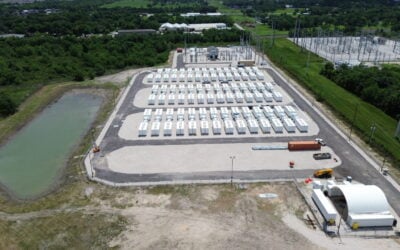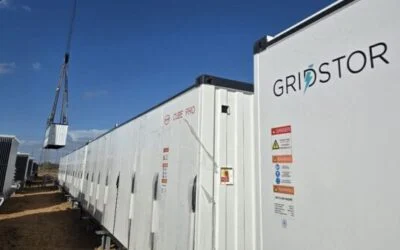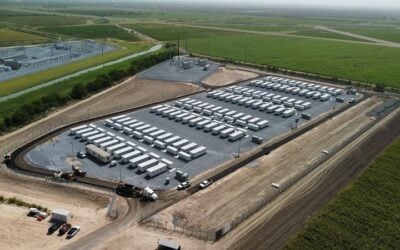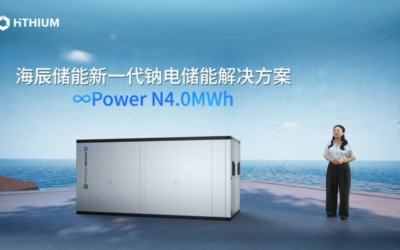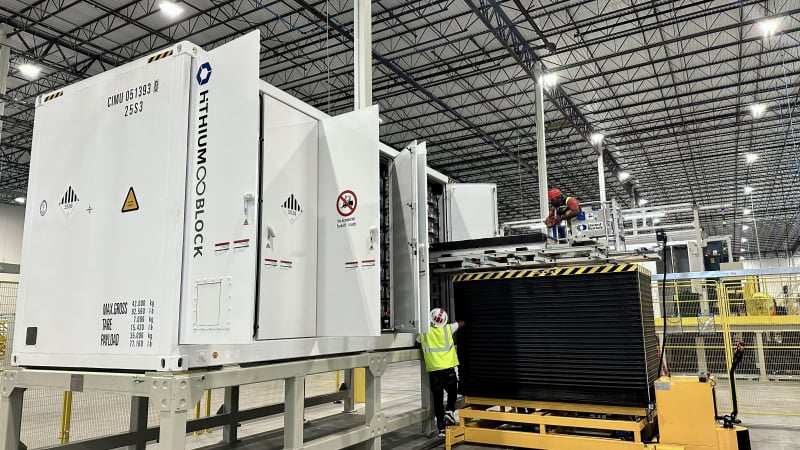
Hithium has shipped the first battery energy storage systems (BESS) manufactured at its new plant in Texas, US.
The Xiamen, China-headquartered manufacturer, announced the start of shipments from its new factory in Mesquite, Texas, a few days ago (28 August).
The vertically integrated company, which makes battery cells, modules and complete systems for stationary BESS applications, officially opened the 484,441-square foot facility in May.
The factory’s construction was first announced in July 2024, when the company said it would invest an initial US$100 million in the plant, although this sum had doubled by its opening.
Try Premium for just $1
- Full premium access for the first month at only $1
- Converts to an annual rate after 30 days unless cancelled
- Cancel anytime during the trial period
Premium Benefits
- Expert industry analysis and interviews
- Digital access to PV Tech Power journal
- Exclusive event discounts
Or get the full Premium subscription right away
Or continue reading this article for free
Planned annual production capacity is 10GWh, although Hithium has not shared how that capacity is split between battery modules and complete systems. The Mesquite factory is not thought to include cell production lines.
“Local manufacturing lets us meet American standards, respond quickly to demand, and work with communities and partners to drive the clean energy transition,” Hithium VP of North America operations James Boswell said.
At the time the factory was announced last year, the US government under then-president Joe Biden was seeking to promote domestic clean energy supply chains, leading to a rush of investments in manufacturing being announced across the country.
Policy uncertainty over issues such as import tariffs and stricter rules on using Chinese imported battery products since Donald Trump took office has contributed to an estimated 21GWh of planned BESS cell manufacturing capacity being cancelled since the beginning of this year, according to market intelligence firm Clean Energy Associates (CEA).
However, despite this reduction in planned capacity, coming mainly from startups with greenfield developments, investments by bigger players in the BESS space in both cell and BESS assembly are bearing fruit.
Solar Media Market Research analyst Charlotte Gisbourne recently wrote in a Guest Blog for this site that capacity additions from Tesla, Canadian Solar and LG Energy Solution will bring US-based annual BESS cell manufacturing capacity to more than 50GWh by the end of 2026.
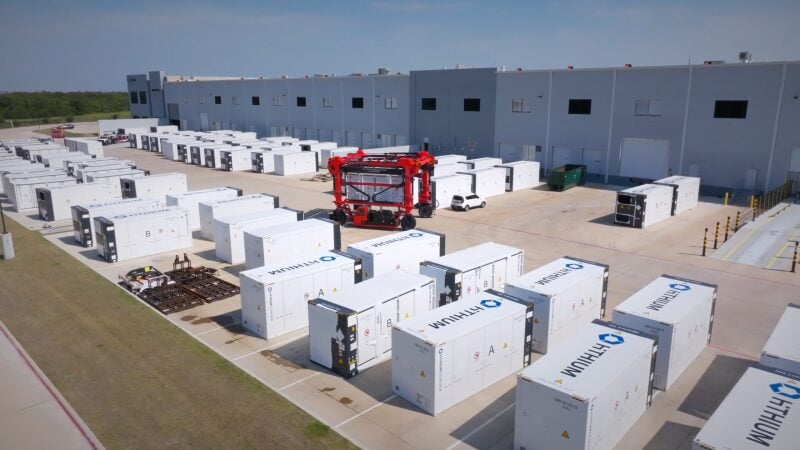
There will be about the same amount of BESS assembly capacity in the country by the end of this year, Gisbourne wrote, noting that cell production plants take longer to build and cost more than module and systems assembly facilities.
Under the current administration, BESS project developers are still able to avail of a 10% adder through domestic content bonuses to the investment tax credit (ITC) and manufacturers the 45x production tax credit (PTC) worth US$35/kWh for cells and US$10/kWh for modules made in the US.
However, new restrictions on imported materials or investment from foreign entity of concern (FEOC) companies from China apply since the passing of the H.R.1 ‘One, Big, Beautiful Bill Act’ legislation, intended to drive further self-reliance and lessen dependency on a country the US deems unfriendly.
Hithium has yet to announce plans to onshore some of its cell production to the US. The company has, however, made recent headlines for its battery cell technologies made in China. It launched an industry-first 1175Ah large-format lithium iron phosphate (LFP) cell in June. Mass-produced at a facility in Chongqing, central China, it equips Hithium’s new 6.25MWh containerised BESS solution.
The company also said in late August that it had begun mass production of its ∞Cell 587Ah high-capacity energy storage battery cells from its Xiamen factory. The 587Ah cell is based on the same technology as the 1175Ah device but has been adapted for 2-hour duration applications, where the larger cell is suited to applications requiring 4-hours or more duration.
According to Solar Media Market Research, Hithium is publicly known to supply cells to four BESS system integrators or manufacturers: NHOA, Risen Energy, Powin (which recently went out of business and its assets substantively acquired by FlexGen) and the company’s own in-house BESS integration projects.