Solar Media’s Liam Stoker and Andy Colthorpe are back for episode three of the Solar Media Podcast after what’s been a bumper month for energy storage.
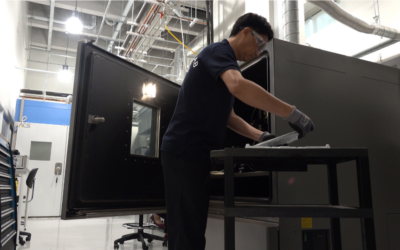
The rapid acceleration in energy storage deployment expected over the coming years will require innovation in the quality and safety standards underpinning new battery and associated technologies. VDE’s Jan Geder looks at the technical work underway to ensure the coming storage boom has firm bankability and insurability foundations.
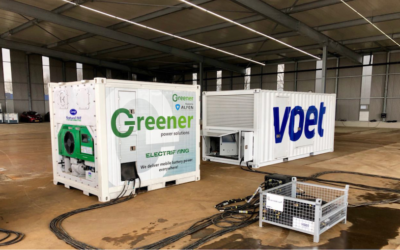
Batteries are increasingly widely used in grid balancing, but there are many more applications where a battery can play an important role. With electric grids requiring periodic maintenance, batteries can stand in for the grid during downtime in order to reduce the impact on industry and households, writes Dieter Castelein.
Distributed renewables and energy storage are now the cheapest form of baseload power and if Western Australia’s remote areas can benefit from that, we can all benefit, argues David Martin, founder of energy trading platform provider Power Ledger.
New technologies and designs aimed at driving down the cost of energy storage facilities are currently the focus of intense industry R&D. Sara Verbruggen reports on DC coupling, an emerging system architecture that many believe will soon become the industry standard.
The business models and technologies underpinning the development of stationary energy storage markets are evolving rapidly. Dr. Kai-Philipp Kairies, Jan Figgener and David Haberschusz of RWTH Aachen University look at some of the key trends driving the sector forwards, in a paper which first appeared in PV Tech Power’s Energy Storage Special Report 2019.
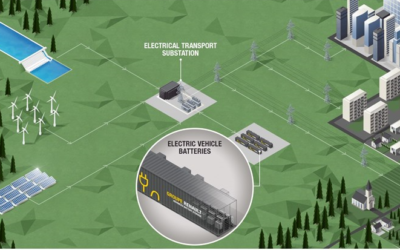
A battery storage project using second-life electric vehicle (EV) batteries is set to be built in Germany, with an aim of developing an installed capacity of 20MW.
A legislative package for energy storage research and development has been welcomed by the US Energy Storage Association after receiving approval from the Senate Energy and Natural Resources Committee.
The huge upsurge in lithium-ion battery deployment expected over the next two decades poses a particular problem: what to do with cells that have reached the end of their useful life. Stefan Hogg investigates how lithium recycling will come into its own to handle spent batteries