An energy storage target policy could be an effective way for Australia’s new government to follow through on decarbonisation promises while insulating consumers from electricity price shocks.
That’s according to a new report from the Victoria Energy Policy Centre (VEPC), which has proposed a Renewable Electricity Storage Target (REST) to enable the country to reach the high levels of storage needed to integrate wind and solar onto the grid.
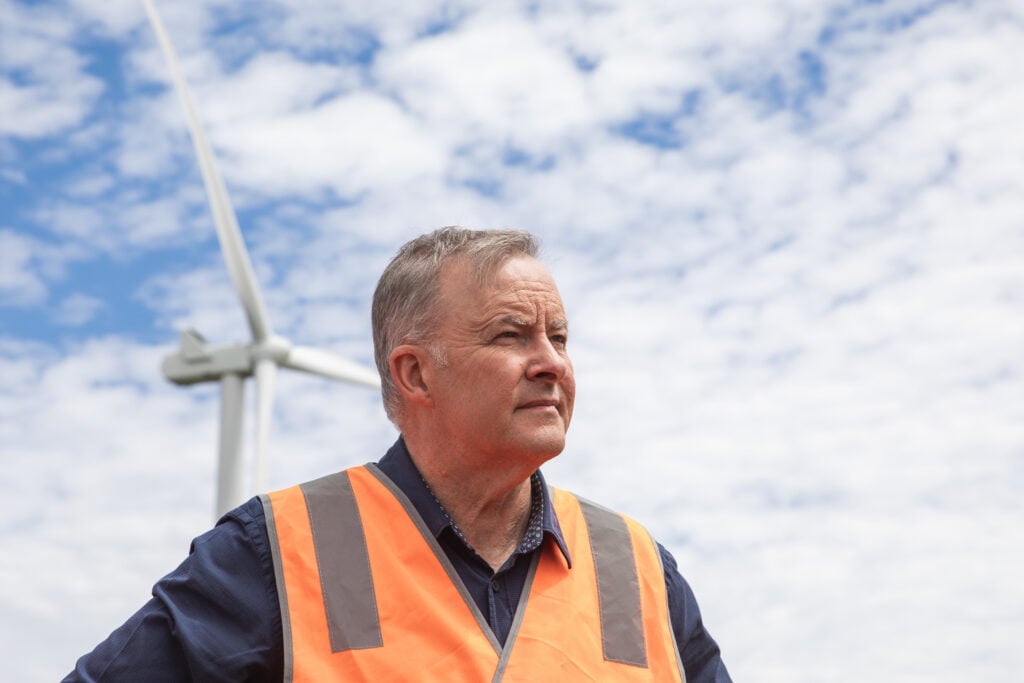
The recently inaugurated Australian Labor Party government led by Prime Minister Anthony Albanese promised an end to the ‘Climate Wars’ that have characterised Australian politics. Among its election pledges was the creation of a new A$20 billion (US$14.83 billion) corporation called Rewiring the Nation, which could be used to fund transmission upgrades.
However, Rewiring the Nation, as explained by Albanese’s campaign team, would largely constitute investment into Australia’s networks of poles and wires. Dr Bruce Mountain, one of the authors of the new VEPC report, told Energy-Storage.news that government intervention is still needed in the energy sector, but may be better directed elsewhere.
Try Premium for just $1
- Full premium access for the first month at only $1
- Converts to an annual rate after 30 days unless cancelled
- Cancel anytime during the trial period
Premium Benefits
- Expert industry analysis and interviews
- Digital access to PV Tech Power journal
- Exclusive event discounts
Or get the full Premium subscription right away
Or continue reading this article for free
“We started work on this about three months ago, before we knew what the outcome [of the election] would be and we did it as a way to figure out what we thought the main focus of the future government should be,” Mountain said.
VEPC is part of Victoria University in Melbourne, conducting research and analysis on regional and national energy policies, with a core background in economics.
“We felt that Labour was likely to win, and they’d promised this A$20 billion corporation, ostensibly focused on building poles and wires for the new wind and solar farms that that are planned. We felt that that was not the right priority for the Commonwealth governments, because the states are already well and truly on to this.”
State governments in Australia are responsible for supplying electricity and have programmes and policies in place to support extensions to the transmission network.
Rather than the Commonwealth Government putting money and efforts into transmission, Mountain and his colleagues at VEPC felt that electricity storage was instead a “missing ingredient” of the energy transition on which Albanese and co could have maximum impact.
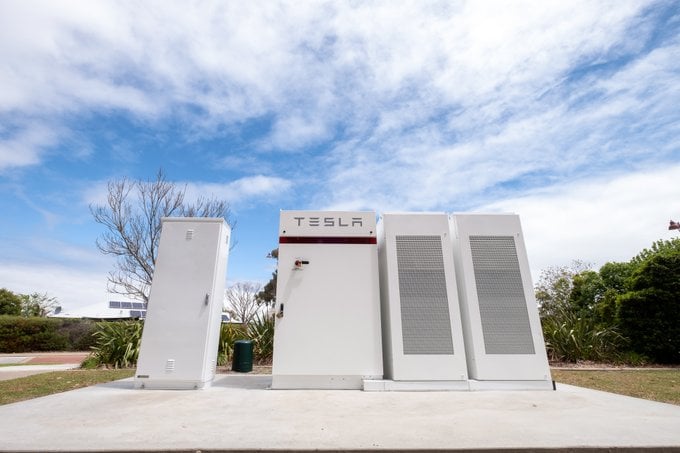
Labor was elected partly on the promise of reducing greenhouse gas emissions by 43% compared to 2005 levels by 2030. The Australian Energy Market Operator (AEMO) meanwhile has estimated that by 2050, about 59GW of energy storage will be needed to integrate 204GW of variable renewable energy (VRE), equivalent to about 29% of output.
Battery storage has become a viable economic opportunity in Australia, with frequency control ancillary services (FCAS) perhaps the easiest to tap of revenue streams. However, leaving it to the market alone to decide won’t prioritise the kind of drastic emissions reductions the country needs, according to Mountain.
“We aren’t going to decarbonise just by providing FCAS, we have to decarbonise by storing electricity, and that’s an energy arbitrage economic proposition, moving electricity from the day into the evening.”
Emissions reduction has become a bipartisan effort, with state and Commonwealth government ministers alike pushing for it.
“But none of them are willing to price emissions in the electricity market. Once you have a policy to reduce, but you’re not willing to reflect that in the prices in the market, there is no alternative but to intervene,” he said.
“This is entirely justifiable as a emission reduction policy. In the same way that the RET ultimately became, although it didn’t start out as one, it did alter, and it served a role. So, this will improve the economics of storage. You can liken it to, for example, putting a A$50 to A$100 tonne of carbon price on coal.”
Bruce Mountain is keen to point out that the report largely represents a thought exercise at this point, with details, regulatory and policy framework and implementation of any target to be determined if the politicians bite and decide to adopt one.
Mountain suggested however that all types of energy storage – not just batteries – should be eligible for a REST programme, which could be paid out per kilowatt of storage installed and connected to the grid.
Despite it being a call for government intervention, VEPC asserted in the report and in Mountain’s interview with this site that there should be ample opportunity for free market activity for energy storage assets that benefit from it.
“My thinking is that this REST should be set at a level that’s likely to recover about 15% of the cost of the storage device. The rest of the income should be raised in the market, whether it’s the provision of very short-term services, as is currently the main role of batteries in the market, or whether it’s arbitrage or network support or a combination of those, they’ll need to gather that income from the market itself,” Mountain said.
Read the full report from Victoria Energy Policy Centre, ‘Electricity storage: the critical electricity policy challenge for our new Government,’ here.