In the past couple of weeks, national and state government organisations in Australia have announced various stages of consideration for solar projects with a range of advanced and innovative storage solutions attached.
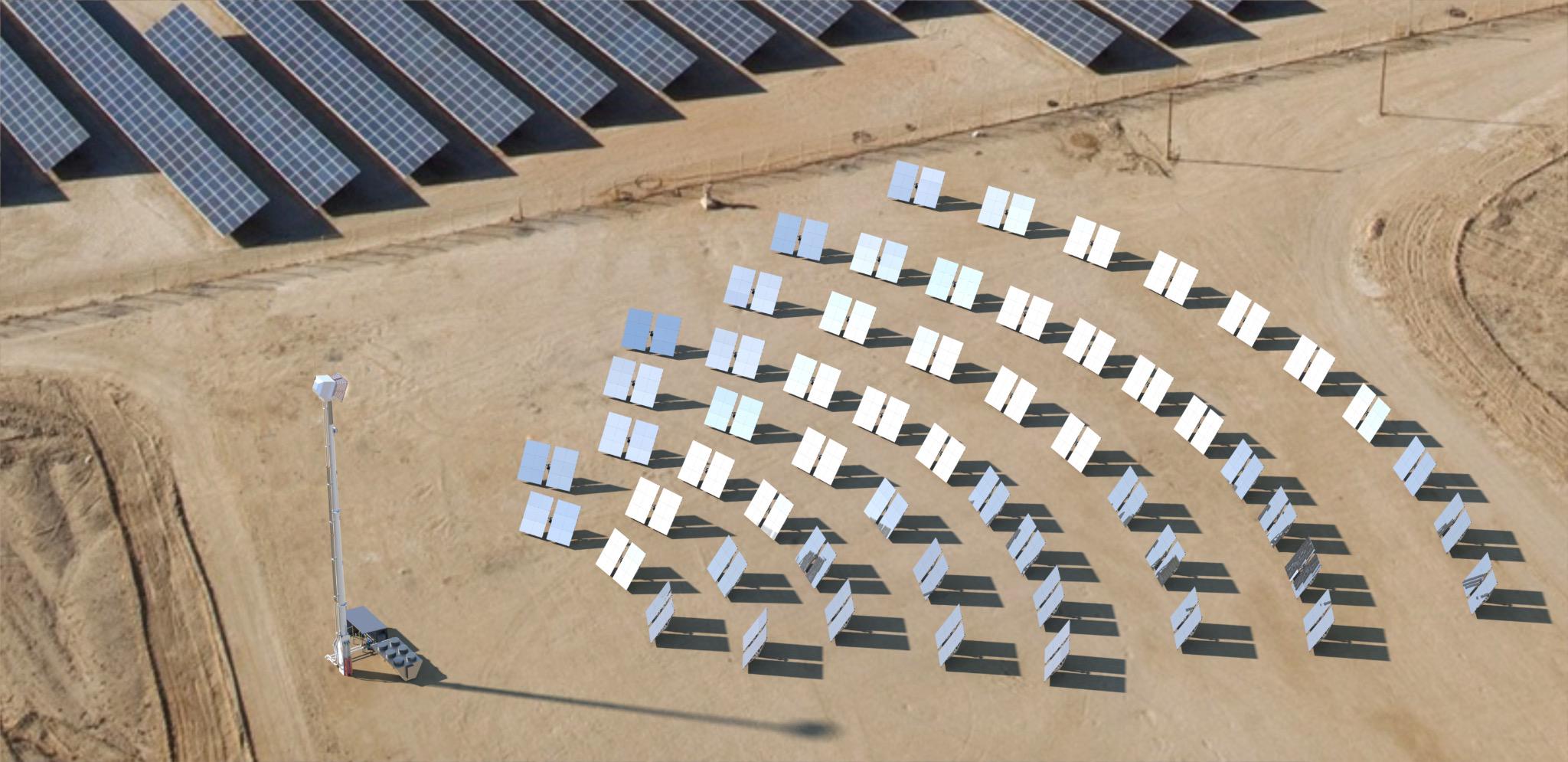
Via the Australian Renewable Energy Agency (ARENA), the national government said last week that it is funding a feasibility study for a 4MW / 50MWh solar ‘thermal hydro’ electric plant which has been proposed by Melbourne-headquartered startup RayGen.
ARENA CEO Darren Miller said the project could be “shovel ready by the end of this year”, with utility AGL and engineering consultancy GHD already signed up as partners to the project, with a 1MW PV Ultra pilot project already up and running for two years in the state.
The fully dispatchable power plant would use RayGen’s own technology PV Ultra, which is a combination of photovoltaic (PV) solar generation with the more expensive and engineering-intensive concentrated solar technology using angled mirror towers (heliostats). The PV Ultra system would generate both electricity and heat.
Try Premium for just $1
- Full premium access for the first month at only $1
- Converts to an annual rate after 30 days unless cancelled
- Cancel anytime during the trial period
Premium Benefits
- Expert industry analysis and interviews
- Digital access to PV Tech Power journal
- Exclusive event discounts
Or get the full Premium subscription right away
Or continue reading this article for free
This generation technology would in turn be co-located and connected to a ‘Thermal Hydro’ energy storage facility, with 17 hours of storage, which again is based on a technology RayGen is developing. Unlike pumped hydro energy storage which uses two reservoirs at different heights, relying on gravity to drive turbines, the Thermal Hydro plant would use a hot reservoir and a cold reservoir, linked together.
The PV Ultra solution will therefore cool one reservoir using photovoltaic power and grid power when needed, while also heating the other reservoir using the heliostats. The difference in temperature would then generate electricity, via an Organic Rankine Cycle engine, a device which uses thermodynamic cycles to convert steam into mechanical energy and is widely used for biomass, waste incinerators and other existing generation types. The ORC engine has around 70% round trip efficiency, ARENA said in a press release.
“RayGen’s flagship 4 MW / 50 MWh plant is expected to offer storage at a fraction of the cost of recent battery projects,” ARENA CEO Darren Miller said.
“The project is in a renewable energy zone that has limited capacity to support pumped hydro. We will also be supplying synchronous power to the grid where it is critically needed in the West Murray region”.
New South Wales community projects supporting 17.2MW of solar and 39.3MWh of energy storage
Elsewhere in Australia, the government of New South Wales approved grants earlier this month to assist the development of seven solar projects, all but one of which will include energy storage. Notably, five out of the seven will also be community distributed energy projects, including one standalone shared battery energy storage site.
The list of seven also includes the state’s first solar-plus-battery storage plant co-located with hydrogen electrolysis and storage, at a community solar project in the town of Manilla. That one will have 4.5MW of solar PV paired with a 4.5MW / 4.5MWh battery system and then 2MW / 17MWh of hydrogen energy storage.
The state government grants come from the NSW Regional Community Energy Fund and are worth around AU$15.4 million (US$9.28 million) in total. The projects altogether will add 17.2MW of solar generation and “up to” 17.9MW / 39.3MWh of energy storage to the state’s energy mix and will leverage about AU$36 million in private investment. The projects can be seen listed below, courtesy of the NSW government’s website.
“These grants will help regional communities right across NSW take control of their energy bills and benefit from the economic opportunities presented by changes in our energy system,” NSW energy minister Matt Kean said, with the Community Fund administered through the NSW Climate Change Fund.
| Grant recipient | Project title | Primary technology & capacity | Location (nearest town) |
|---|---|---|---|
| Byron Bay Solar Farm Holdings | Byron Bay Solar Farm + Battery Storage Facility | 5 MW Solar PV 5 MW / 10MWh battery | Ewingsdale |
| Energise Gloucester | Gloucester Community Solar Farm | 0.5 MW Solar PV | Gloucester |
| Community Energy for Goulburn | Goulburn Community Dispatchable Solar Farm | 1.2 MW Solar PV 0.4 MW / 0.8MWh battery | Goulburn |
| Pingala – Community Renewables for Sydney | Haystacks Solar Garden | 1 MW Solar PV | Grong Grong |
| Manilla Community Renewable Energy | Manilla Community Solar | 4.5MW Solar PV 4.5 MW / 4.5MWh battery 2 MW /17MWh hydrogen energy storage system | Manilla |
| ITP-NHT DevCo | Orange Community Renewable Energy Park | 5 MW Solar PV Up to 5 MW / 5 MWh battery | Orange |
| Enova Community Energy Ltd | Shared Community Battery Scheme | 1 MW / 2MWh battery | Regional NSW |