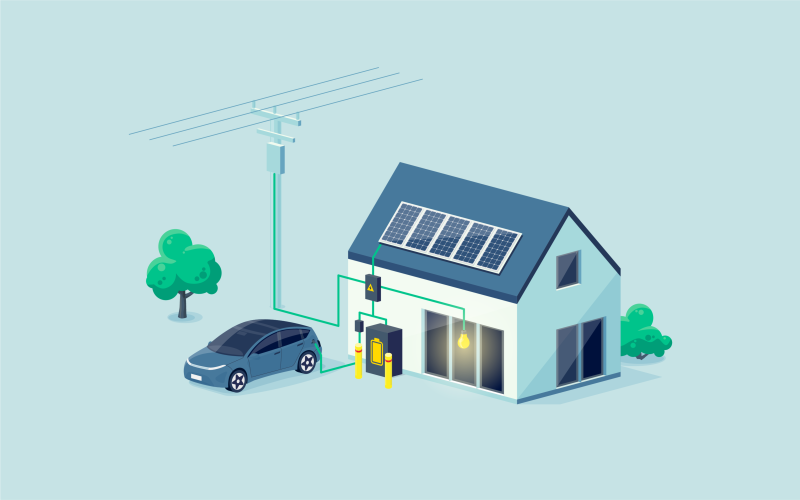
The New South Wales government has stacked the incentives available for a solar and home battery energy storage system (BESS) should it connect to a virtual power plant (VPP).
Yesterday (11 June), the New South Wales government confirmed that it partnered with the Federal government to increase the incentives available via its home BESS subsidy scheme.
This coincides with the Australian government’s AU$2.3 billion (US$1.5 billion) Cheaper Home Batteries Program, which will commence on 1 July 2025. ESN Premium recently heard that this subsidy scheme will likely turn the country into a ‘red-hot market’ for BESS.
The New South Wales government aims to roll out its updated subsidy scheme on the same day the Cheaper Home Batteries Program launches. Up to AU$1,500 will be available for households and small businesses to install a home BESS and connect it to a VPP.
Try Premium for just $1
- Full premium access for the first month at only $1
- Converts to an annual rate after 30 days unless cancelled
- Cancel anytime during the trial period
Premium Benefits
- Expert industry analysis and interviews
- Digital access to PV Tech Power journal
- Exclusive event discounts
Or get the full Premium subscription right away
Or continue reading this article for free
Specifically, households and businesses can access the incentive by installing a home BESS via the Federal government’s Cheaper Home Batteries Program and then stacking this incentive with the New South Wales government’s VPP scheme.
Australia’s minister for climate change and energy, Chris Bowen, said that attaching more home BESS to complement the country’s world-leading rooftop solar PV will help reduce energy bills.
“We’ll help more people in New South Wales access cheap, fast and safe solar energy in their homes and businesses night or day, when they need it,” Bowen added.
According to the New South Wales government, should a household install a traditional 11.5kWh home BESS, the combined support across the two schemes would amount to almost AU$5,000.
By creating a VPP with a home BESS, households and small businesses can continue making money by selling the stored electricity. Electricity sold from a home BESS connected to a virtual power plant can attract a higher price than electricity sold through grid-connected solar PV due to higher power prices at night.
The updated VPP incentive scheme will replace the New South Wales home BESS installation incentive. The Clean Energy Regulator will be responsible for installing home BESS under the Cheaper Home Batteries Program.
Earlier this month, Western Australia became the first state to unveil a new home BESS subsidy scheme in collaboration with the Federal government. Under the Household Battery Rebate Scheme, Synergy customers will be eligible to receive up to AU$5,000 and Horizon Power customers up to AU$7,500 towards a home BESS. This scheme will have a budget of AU$337 million.
Our publisher, Solar Media, will host the Battery Asset Management Summit Australia 2025 on 26-27 August in Sydney. The Summit will prepare the industry for the road ahead by examining the core fundamentals of asset management, understanding operational challenges, and discussing the latest optimisation and software development. You can get 20% off your ticket using the code ESN20 at checkout.